This week’s Robb Report article was about a cocktail called the Archangel. You can read it here if you like, but briefly summarized: the Archangel is a neo-classic from 2006, essentially the build of a Gin Martini, but with the bold bittersweet liqueur Aperol subbed in for dry vermouth’s herbal whisperings: 3 parts gin, 1 part Aperol.
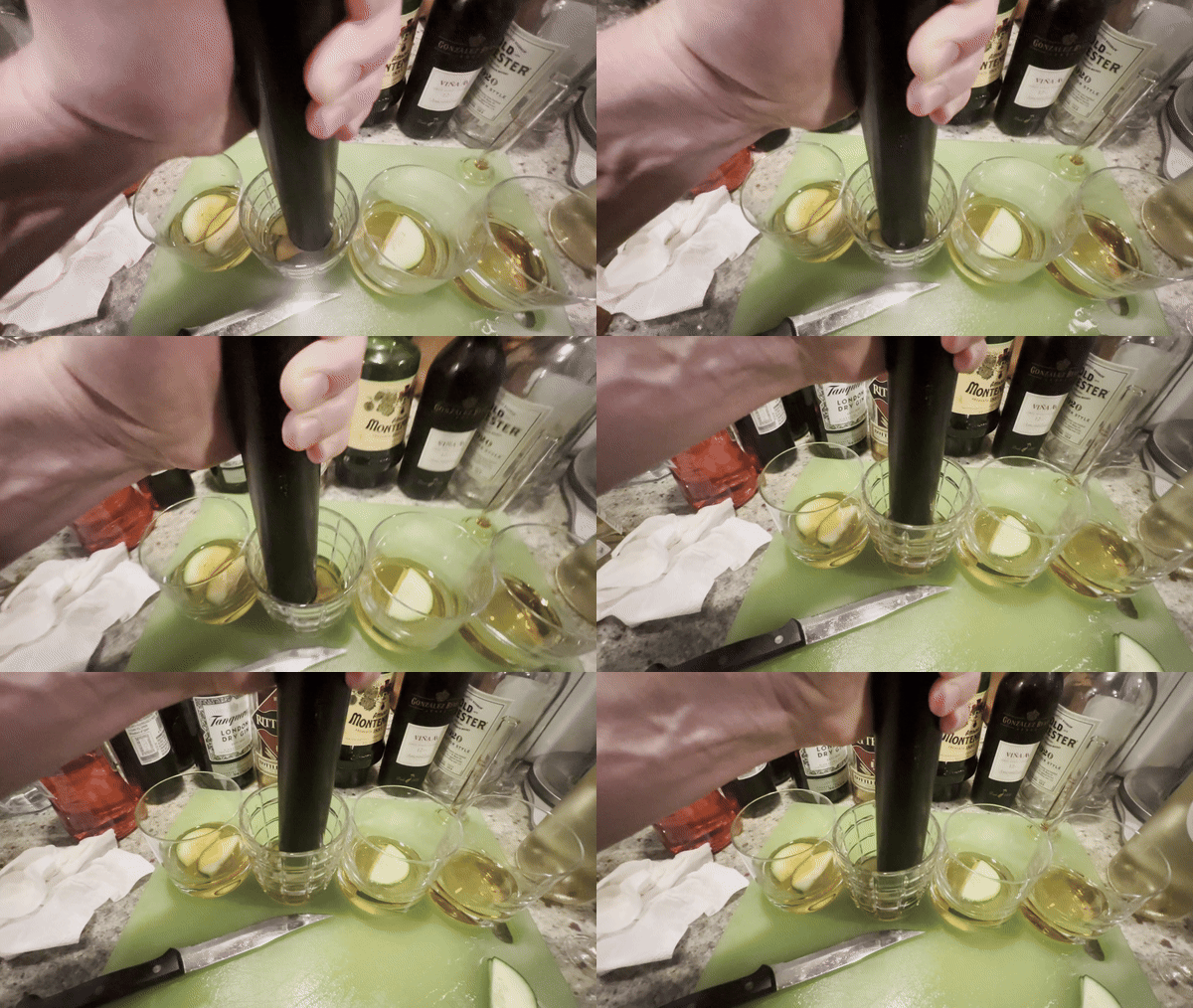
It also has one additional twist, the curious addition of a lightly muddled (or “bruised”) cucumber, stirred all together and strained up.
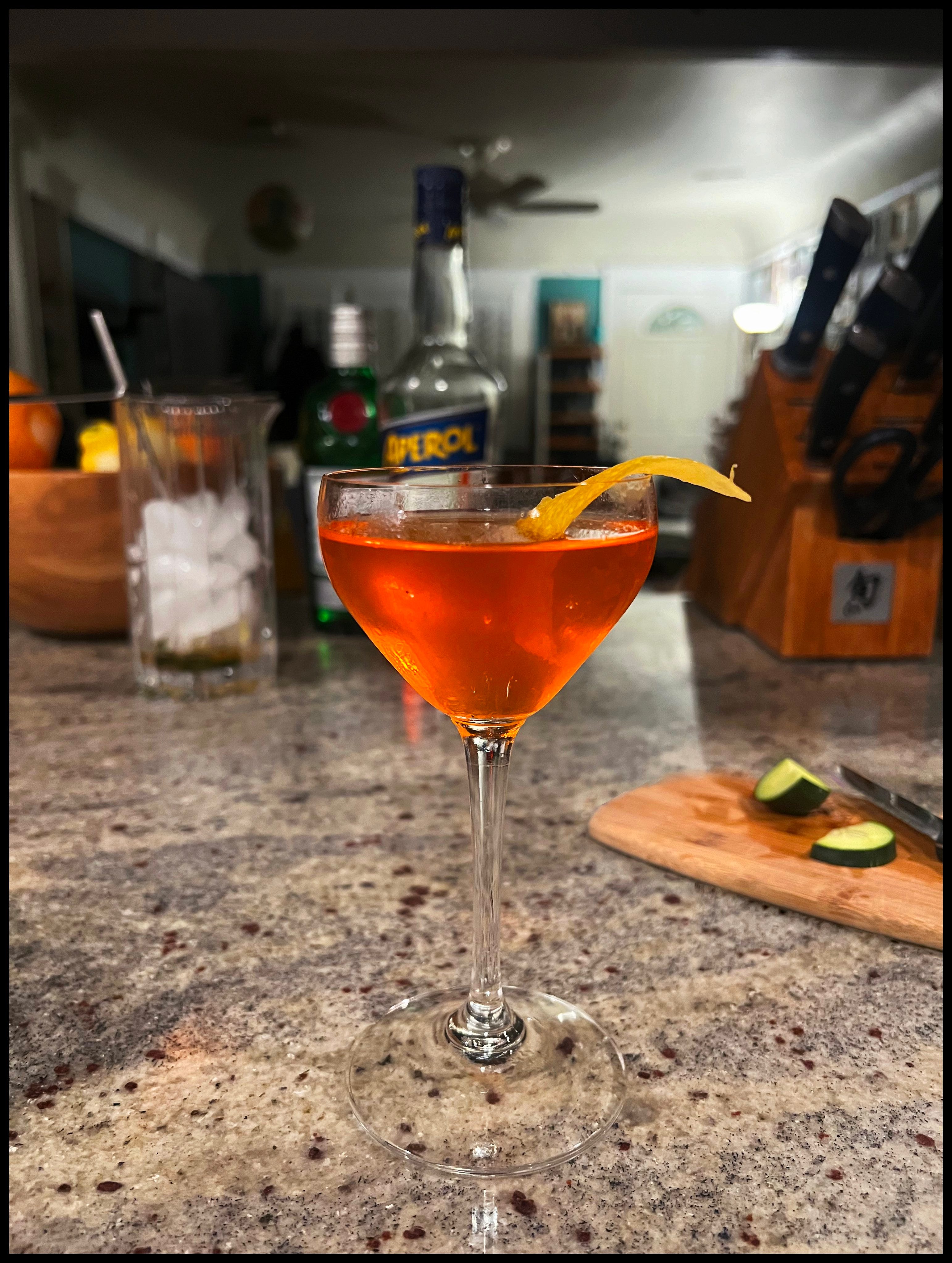
If you don’t live and work in the cocktail world, maybe you don’t know how strange this “bruised” cucumber business is. Cucumbers are for shaken refreshing drinks, not boozy stirred ones. Cucumber Margaritas. Cucumber ‘Tinis. This sort of thing. They bring a cooling herbaceousness to the palate that is broad and almost urgently refreshing, and are what make drinks like the Eastside Rickey (gin, lime, cucumber, mint, soda) so irrepressibly, grab-the-table-with-your-eyes-closed delicious. As far as I knew, the Archangel, invented in 2006, is the first time anyone specifically designed an all-booze, no-juice drink with a muddled cucumber (I wasn’t exactly correct about it being the first, more on that below).
I’ll do you one more: the Archangel is fucking amazing. The drink is a total banger — the cucumber takes on a floral resonance, a green ribbon of flavor that weaves throughout the entire tasting experience, like a smell in a cartoon that lifts you off your feet and tractor-beams you toward a pie. It’s great both on the rocks or up, and, in another big surprise to me, it’s great across styles of gin, from Tanqueray to Plymouth to Hendrick’s to even something wild like Aviation.
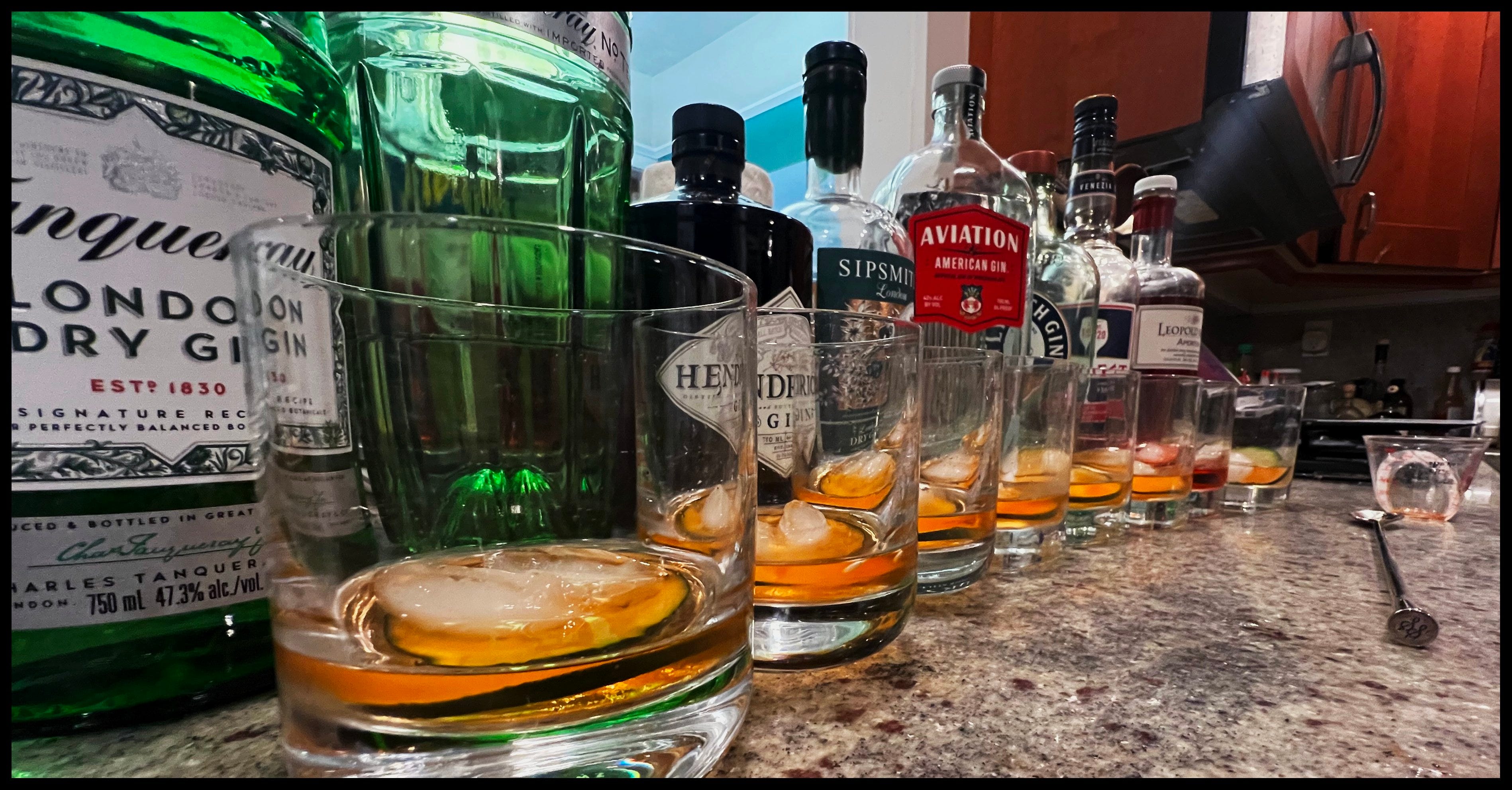
It’s just great. It’s a great drink. Full stop.
So what, we’re stirring our cucumbers now?
Every idea has to start somewhere, so I understand that maybe no one had done that exact thing before Michael McIlroy and Richard Boccatto came up with it at Milk & Honey, but that was 18 years ago. What about since? Where are the cucumbers in stirred drinks now? Surely the Archangel isn’t the only possible way to use this technique?
This is not rhetorical, it was an honest question. When Jeffrey Morgenthaler came up with barrel aging cocktails in 2010, they were doing it at Ruth’s Chris Steakhouses by like 2012. A technique breakthrough, especially one with such a delicious proof of concept, should be everywhere, but before I started writing this I only knew of one other bruised cucumber stirred drink, and that one sucked.
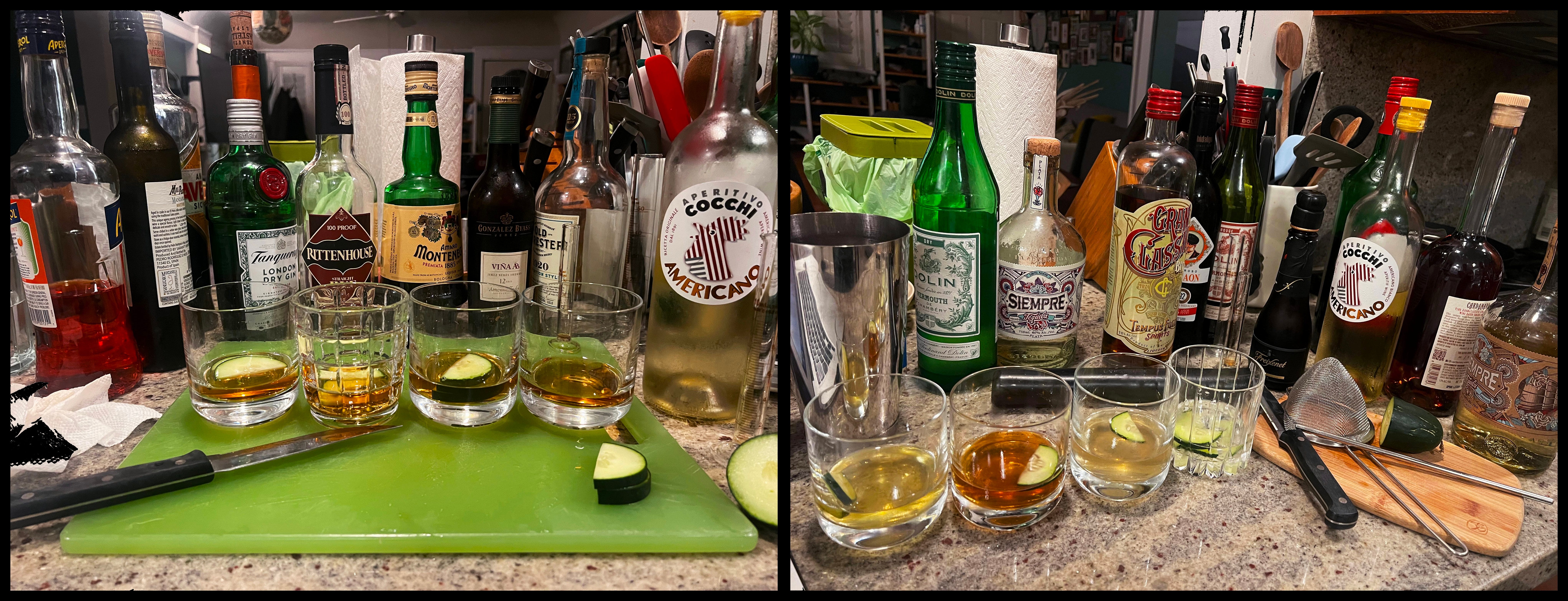
Incredulous, I scoured a bunch of cocktail books and blogs and gathered as many as I could find, which ended up as the following 10. Of those 10, I made 8 of them, because I would have needed to buy six new bottles to make the final drinks, and that’s too many.
And now, may I present:
WONDERFUL COCKTAILS with STIRRED CUCUMBER
Archangel
- 2.25oz Gin
- 0.75oz Aperol
- 3 cucumber wheels
Muddle cucumbers in a mixing glass. Add liquids and ice and stir for 10-20 seconds. Strain up into a coupe, and garnish with a lemon peel or a cucumber slice.
Green and Red — Thomas Waugh, 2012, as detailed in the Death & Co. Cocktail Book.
- 1oz Siete Leguas Blanco Tequila
- 1oz Jalapeno-infused Siembra Azul Blanco Tequila
- 0.75oz Cocchi Americano
- 0.75oz Dolin Dry Vermouth
- 0.25oz Alvear Festival Pale Cream Sherry
- 3 cucumber wheels
Muddle cucumbers in a mixing glass. Add liquids and ice and stir for 10-20 seconds. Strain up into a coupe, and garnish with a cucumber ribbon, on a pick
My notes:
Oh, that’s wonderful. Tequila and the cucumber goes super well together — the green notes from the tequila melds with cucumber like a dream, and the jalapeno infusion obviously helps. The way the cocchi + sherry interact, especially on the finish, is phenomenal. Goddamnit Cocchi is such a good product. Arcs over the palate, while the cucumber plays it’s floral game. Heat helps with sweetness. Really good.
Mexicano — Jim Meehan, 2010, as detailed in the PDT Cocktail Book
- 1.5oz Partida Reposado Tequila
- 0.75z Gran Classico Bitter
- 3 Cucumber slices
- 2oz Champagne
Muddle cucumbers in a mixing glass. Add tequila and liqueur and ice and stir for 10-20 seconds. Strain up into a coupe, top Champagne, and a lemon peel.
My notes:
Oh shit this is actually pretty good. Very bitter. Cucumber plays toward the vegetal-ness of the tequila. Cucumber more apparent on the nose than on the palate. Lemon peel helps. Robust vegetal bitterness on the back palate that the cucumber seamlessly transitions to. I hate the name but this is pretty good. Bubbles manage to lift it up. They clash with the gran classico, at least cava does, but that’s all on the finish. From the front to the midpalate it’s like “hi I’m lemon cucumber brightness” and then abruptly the Gran Classico is like “i’ll take it from here, son” and cucumber bitterness takes over.
Wheeler and Wilson — Leo Robitschek, as detailed in the NoMad Cocktail Book
- 0.5oz Amaro Montenegro
- 0.5oz Dolin Blanc
- 0.5oz Lustau Los Arcos Amontillado Sherry
- 0.75oz Diplomatico Reserva Aged Rum
- 1oz Old Forrester 100 Bourbon
- 3 cucumber slices
Stir with cucumber slices, then strain into a coupe, and garnish with 2nd cucumber slice
My Notes:
Woah. So much going on. Great though. Deep complexity. Harnesses the weirdness of the Montenegro well. There’s some noise here, and I strongly suspect it’s because I didn’t use the same brands (I had Dooley’s XO rum and Old Forrester 1920 Bourbon), but that’s not the drink’s fault. Even still, with the proof off and the rum very off, it’s solid — the cucumber gives a broad green base to a ton of complexity. If you’ve got the brands on hand, or even if you don’t, I recommend.
A STIRRED CUCUMBER DRINK that ALMOST BROKE MY BRAIN
Spring Sting — Pietro Collina, as detailed in the NoMad Cocktail Book
- 1oz Pierre Ferrand 1840 Cognac
- 0.75oz Cocchi Americano
- 0.5oz Laphroig 10
- 0.5oz Chareau
- 1 tsp Amaro Nardini
Stir all together (no cucumber), then strain into a Nick & Nora, and garnish with a cucumber ball, placed into the drink.
My Notes:
WHAT THE FUCK. This is so fucking cool. Chareau and Laphroig? I’m sorry, what??
The description calls this “a stirred savory grasshopper,” and I see it vividly, but I’m not sure how it’s working. Starts with minty melon from Chareau, and smoke almost immediately makes a presence. Everything fits together amazingly well, and I’m not even using the right amaro [I used Averna]. This starts almost chocolaty, from what, the amaro+cognac? Then Chareau, then Laphroig. Cucumber supports Chareau aromatically and otherwise. Fabulous.
I’m not supposed to muddle cucumber but I did anyway. It’s great. Made it again without muddled cucumber, just placing a freshly cut cucumber into it after it’s made. Also great. Too insane for me to pick a favorite, I’ll have to try it side by side. I will be making this again.
STIRRED CUCUMBER DRINKS that ARE JUST FINE
For the sake of completeness, here’s the others. The next four I made and didn’t think were excellent, and won’t be making again. Listing them for completion, because there is otherwise no catalogue of all these in one place:
Polaris — Brandon Bramhall, Attaboy Nashbille, 2018, as detailed in the Bartender’s Choice App
- 1.5oz Gin
- 1oz Manzanilla
- 0.5oz Aperol
- Bruised cucumber
Stir. Up. Lemon twist
My notes:
Good. Just an Archangel plus sherry. Sherry changes it. Completely takes over the finish. Aperol to gin to sherry. Adds complexity. Not sure it’s better, but it is good. Lemon really adds this time, in a way I don’t think it adds in the Archangel itself. Sherry fans might even consider this an improvement, but I mostly just want an Archangel. Shery fits in super well, but totally dominates the finish. It shortens the tasting process of the other, and then sherry’s like HI IT’S ME SHERRY.
Cobble Hill — Sam Ross, Milk & Honey, 2005, as detailed in the Bartender’s Choice App
- 2oz Rye
- 0.5oz Dry Vermouth
- 0.5oz Montenegro
- Cucumber
Stir. Up. Garnish with a freshly sliced cucumber.
My notes:
I tried this twice, and it is unique for me in that it’s the first Sam Ross cocktail that I haven’t liked even a little. Rye is weird. First impression is that this isn’t special. At least not with Bulleit rye. Doesn’t come together. Cucumber is a presence on the front palate, but the finish is just rye and weird. I see what he’s going for I think, and maybe gets there with a different rye, but not this one.
Trying again with Rittenhouse this time. Rich on the body. Still bad. What the shit. Bad. In that it’s not at all good. Tastes like pickles. Too dry.
Chin Up — Sam Ross, Milk & Honey, 2005, as detailed in the Bartender’s Choice App
- 2oz gin
- 0.5oz Cynar
- 0.5oz Dry Vermouth
- Salt
- Cucumber
Stir. Up. Lemon Twist
My notes, such as they are:
MUCH better than the Cobble Hill. Gin is just a better call. Still, nowhere as good as the Archangel. This sticks out in all the wrong places.
False Start — Anne Robinson, Westlight, as detailed at Punch
- 1.25oz Siete Leguas Reposado Tequila
- 1oz Cardamaro
- 0.75oz Dolin Rouge Vermouth
- 0.25oz Cynar
Muddle 2 cucumbers slices, then add all ingredients and ice and stir, then fine strain into a coupe and garnish with a cucumber wheel.
My notes:
Pretty good. I see what it’s going for I think. I certainly don’t hate it, just a little anodyne. I didn’t use Siete Leguas Reposado which might make the difference [I used Siesta Repo], but I don’t think so. If the cocktail is that brand-dependent it’s a little meh. Just meh. Nothing bold, nothing sticks out, just sweetish, kinda boring. No edge. Like bobbing in an above-ground pool.
STIRRED CUCUMBER DRINKS that I HAVEN’T TRIED YET
Stone Crush — Chaim Dauermann, Up & Up Bar, as detailed in Spirited
- 3-4 cucumber slices
- 1.5oz Brennivin
- 0.5oz Blanc Vermouth
- 0.25oz Rabarbaro Zucca Amaro
- 1oz Pilsner Beer
Muddle, then shake everything but beer, strain into rocks glass, top with pilsner, and stir to combine. Garnish with a lemon twist and a couple cucumber slices.
Beau Four — Leo Robitschek, as detailed in the NoMad Cocktail Book
“A springtime Manhattan with mentholated complexity and depth”
- 1.5oz Jim Beam Black bourbon
- 0.75oz Dolin Dry
- 0.5oz Amaro Nardini
- Short 0.5oz Amaro Foro
- Cucumber slices
Stir on ice with cucumber slices. Strain into the coupe, garnish with a cucumber slice
Thanks for reading! Let me know how these strike you. Especially the Spring Sting. Good god.
FYI: I have an affiliate thing set up through Amazon, so buying the books through the links will give me a very small amount of money. It seems honorable to mention it.


 Drinks and Drinking