Barrel-Aged Vieux Carré (a.k.a. Ancien Carré)

Barrel-aging entire batches of cocktails is a relatively recent phenomenon. The idea, they say, is that the cocktail softens and sweetens in the used whiskey-barrel, picking up picking up flavors and tannins and adding a really cool complexity. The New York Times Magazine did a nice little piece on it about 18 months ago, and has since been written about extensively, including by Jeffrey Morganthaler, who more or less invented the process.

To cities a little more serious about cocktails – Portland, Seattle, New York, etc. – Barrel Aging has come, peaked, and all but left. In the rest of the country, as will happen with trends, barrel   aging   is   fucking  everywhere. But apparently, everywhere still doesn’t include San Diego, so here we are. There’s a bit at Small Bar in North Park and a bit at Vin de Syrah and The US Grant Hotel Downtown, but for the most part the trend has avoided our fair city.

This is problematic for those of us who want to put them in our mouths. So we have to do it ourselves. Enter barrel:

I’ve wanted to try to barrel age cocktails ever since I heard about it. I started the hobo way, with oak chips I picked up from the local homebrew store and a bottle of Buffalo Trace White Dog, and it went…. okay.

You’re supposed to use about 2oz of oak chips per 5 gallons of liquid. I used 0.75 oz for about 12 oz of liquid, exceeding the recommended dose by about 2000%. “I’ll super-age it,” I thought, because I’m an idiot. It tasted like a puréed oak tree. I am not a patient man.

I had fully intended to try again, but my friends Dan and Sam bought me a 3L barrel from these wonderful people for my birthday. The first thing I could think of was a Vieux Carré. It’s one of my favorite cocktails, with a delicacy and sweetness that evokes barrel aging anyway, and I’m terribly curious to see what happens to it.

The only (possible) problem is that barrel aging yields the most dramatic changes to things that haven’t already been barrel aged. So gin over whiskey, white rum over aged rum, etc. But Jeffrey Morganthaler’s first experiment was with Manhattans which he says changed considerably over two months, so fuck it. I’m having daydreams about selling this for $15 each at the bar and making my money back, but odds are good that this will be just for my friends and I.

Ancien Carré
25oz Hine V.S.O.P cognac
25oz Rittenhouse 100 rye
25oz Carpano Antica sweet vermouth
6oz Bénédictine
25 dashes angostaura bitters
25 dashes Peychauds bitters

First, prep the barrel with water and let sit. Casks are made without glue, so we need the oak to soak up the water and swell, sealing the barrel. The water will leak out at first, so we do it in the sink.

Empty water. Then, we mix all the ingredients together. Then pour. Carefully.

Then, demonstrate monkish patience and try not to see the little guy poking out at you from the bottom of your barware shelves.

It went into the barrel Tuesday, February 7th. I anticipate about two months, but will start tasting it in a week or so to see how its coming along. I’ll keep you posted.

Bitter Giuseppe

After the Milano Swizzle, I wanted more salt in cocktails, and thought back to a drink my friend Addison had made me some six months ago, the Bitter Giuseppe.

There are a few different versions of this drink floating around. According to this blog, the drink was created by Stephen Cole of Chicago’s wonderful The Violet Hour, and then made salty by Kirk Estopinal of Cure in New Orleans. Estopinal’s recipe calls for Punt e Mes with salt, Cole’s original with Carpano Antica without, but both share Cynar’s artichoke heart. At Craft and Commerce, they (predictably) do it their own way.

Bitter Giuseppe
2oz Cynar
1oz Carpano Antica sweet vermouth
2 small dashes of salt
Combine ingredients in Old Fashioned Glass over ice.
Cut a lemon peel with enough meat to extract about 10-15 drops of juice
Squeeze juice into the drink, express peel oils on top, stir, and serve.

As detailed in a marvelous post on beta cocktails, the extra salt reins in the Cynar — this cocktail has twice the Cynar but only half the bitterness of the Milano Swizzle. Apparently while reading French scientist Hervé This’s dense & detailed volume, Molecular Gastronomy, Estopinal found that salt curiously tempers bitterness in liquids even more than sugar.

In this case, the salt blunted the bitter effect, allowing the liqueur’s component ingredients to showcase their otherwise overpowered flavors. The nose is a bit unengaging, but the taste offers a complex and pleasing barrage of herbal notes (orange and artichoke, to name two of several) and deep salted umami that fades into soft and lingering bitterness at the finish.

Milano Swizzle

Every great once in a while, a happy accident aligns our schedules and all my best friends have the same afternoon off. Tuesday was such an afternoon, and never one to beat a dead gift horse, we all immediately descended upon Craft and Commerce for some sunshine cocktails.

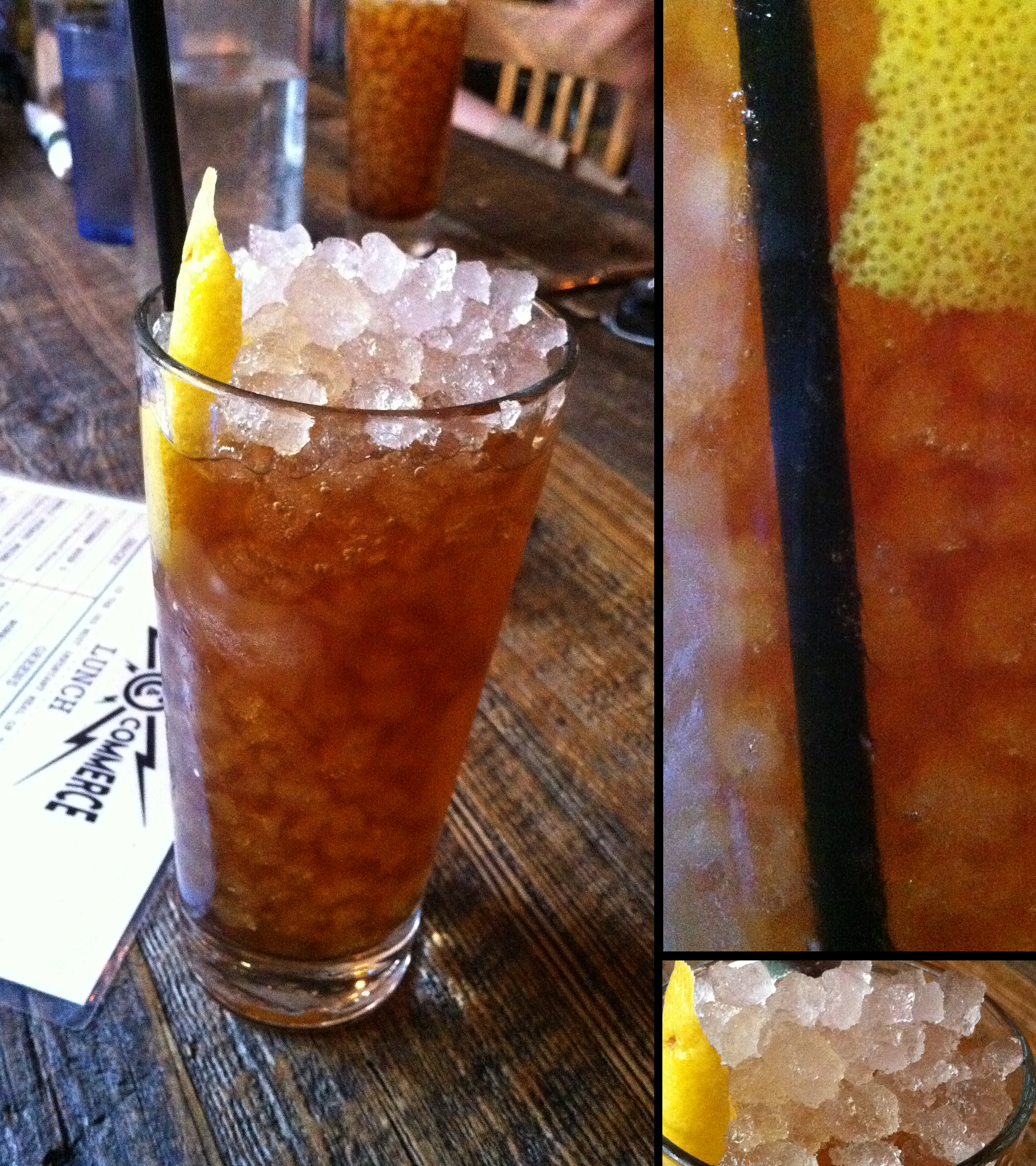
It was gorgeous outside – we’ve had more summer this winter than we had all of last summer – so I plucked the Milano Swizzle off the menu for something bitter and refreshing before my embarrassingly bourgeois meal of bacon-wrapped corn dogs.

Milano Swizzle
0.25oz lemon juice
1oz Cynar
1oz Beefeater London Dry Gin
1oz Carpano Antica
pinch of cracked salt
Fill with crushed ice, swizzle or stir until glass frosts;
garnish with lemon peel.

I’m fairly confident that this is unrelated to Tony Abou Ganim’s Milano, and shares the Italian city only as a source for the lovely potable bitters – in this case, the earth and artichoke of the Cynar. This is essentially a Negroni with a different bitter and a bit of lemon juice. What really excited me about this drink was the salt, still a stone relatively unturned in my cocktail experience and used deliciously here.

The drink started tart and led to a complex orange and earth herbaceous that the salt made almost savory, with the alchemy of the ingredients intensifying the Cynar for a sharply bitter finish. The salt was mostly undetectable but for the savory effect, and definitely makes me want to play with it more.

Our bartender Ryan commented that salt and Cynar enjoy each other’s company. Drinking it, you can clearly see how it can be taken too far, but you can also get a glimpse of its potential.