Fortaleza Tequila

Disclosure: I recently returned from a trip to Tequila, Mexico, hosted by the good people at Fortaleza Tequila. They don’t advertise; instead, they sponsor biannual groups of industry professionals to come down and see how their tequila is made. Their bet is that when we see the quality of the product they’re producing, we’ll feel compelled to proselytize. They’re not wrong.

The Facts:

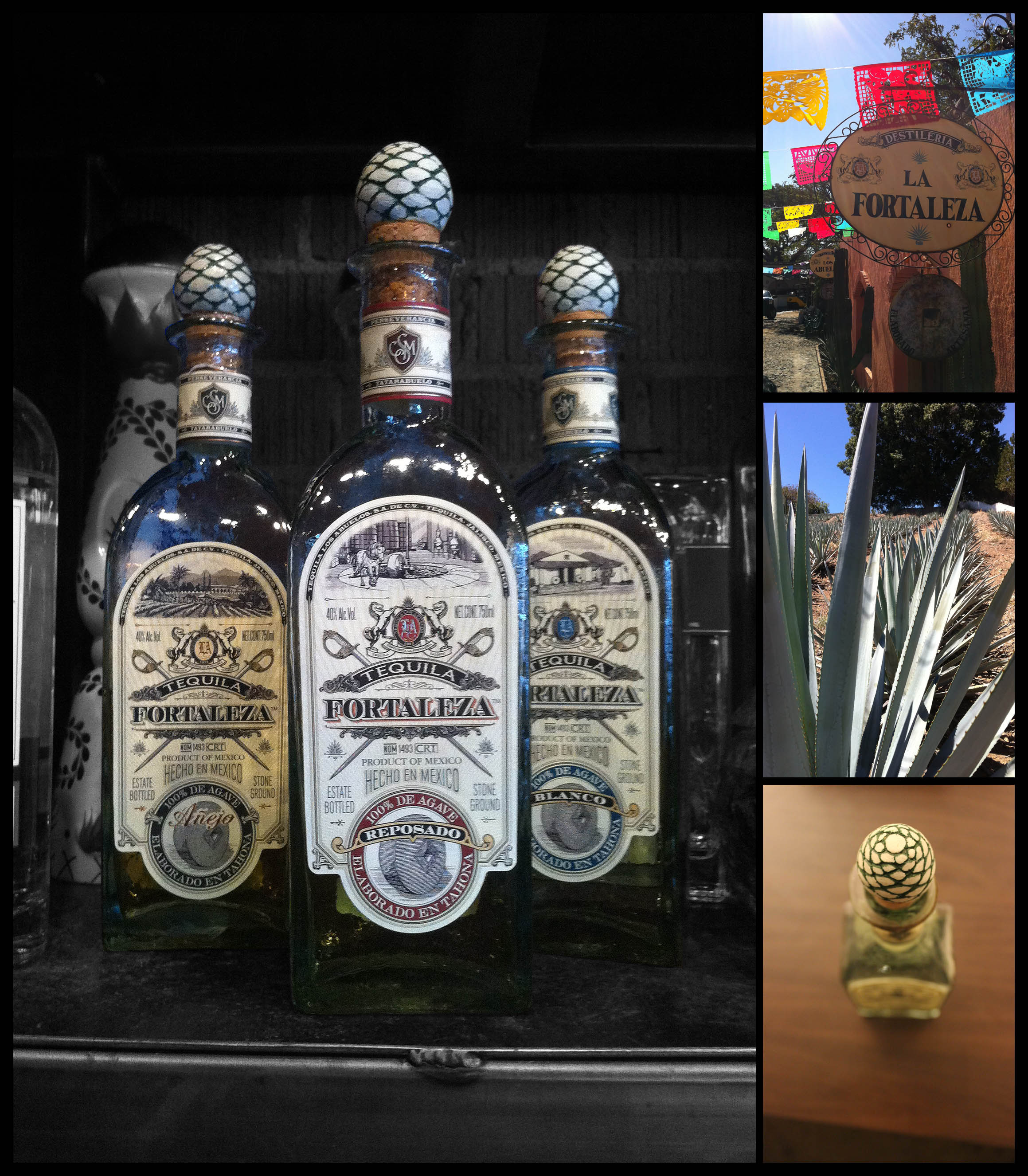
Name: Fortaleza Blanco, —Reposado, and —Añejo
Category: Tequila
Proof: 80 (40% ABV)
Origin: Tequila, Jalisco Mexico, since 2002
Distinguishing characteristics: buttery mouthfeel; vanilla cream, minerality, spice; smoothness; elegance
The Story:

I’m going to do my best to keep this brief:

In the 1860s, a man named Don Cenobio Sauza moved to Tequila, Mexico and started distilling.  While sugars rendered from the agave plant have been getting people drunk since before Cortez and his rats showed up, Don Cenobio was the first to name it after the town of Tequila, and the first to export to the U.S. His son Eladio Sauza joined the family business and expanded, but it was Eladio’s son, Francisco Javier Sauza, that took the brand international. Don Javier was the real businessman in the lineage: he’s the one who got John Wayne drinking tequila, the main force in elevating its international perception to a refined spirit, and the reason anyone outside of Jalisco knows the name Sauza.

Sauza tequila is of course still made today, albeit in wildly different form. In 1976, Don Javier sold his eponymous tequila brand, ultimately ending up in the multinational hands of [Jim] Beam, Inc. Beam continues to run it today with capitalistic efficiency, bulldozing agave hearts into atomizing shredders, powering a diffuser the size of a small church, storing distillate in 500,000 liter drums and pumping out products that range from decent to hideous. This is to say, that is what the Sauza name currently means.

But in 2002, Guillermo Sauza — the fifth generation, whose grandfather Don Javier sold the company when he was 20 — resurrected the family business under the name “Los Abuelos” meaning “The Grandfathers,” in homage to the way his family used to make tequila (“Fortaleza,” meaning “Fortitude” on this side of the border due to a copyright complaint). The family still owned a bunch of dusty distillation equipment from one of Cenobio’s original aquisitions, and Guillermo kicked it back into production. Aside from the fact that they finally retired their donkey in favor of a tractor, Guillermo still makes tequila the way his family did 100 years ago.

Now, it’s important to note that industrialization does not axiomatically produce an inferior product. I have little interest in hand-made paper or an artisan television. But in the world of tequila, yes, industrial processes produce an inferior product. To explain:

The Process:

The Agave: Like all good tequilas, Fortaleza is 100% blue agave. The cheaper brands are allowed to throw 49% corn-syrup or sugar into the fermenting tanks and still call themselves tequila, but cannot claim “100% agave” on the bottle. Always look for this. If it doesn’t say “100% de agave,” I advise against buying it. It’s literally filler.

Because Fortaleza’s processes limit them to a maximum of three tons of agave/day, they can afford to know where all their plants come from. Their agave is a mixture of small local farmers and their own estate.

The Rendering: The agave hearts — called “piñas” (pee-nyas) — are hard as wood, and the sugars need to be rendered. So they are tossed into a brick oven with meter-thick walls, stacked up, and steam cooked for 33 hours.

Then, the soft, sweet hearts are placed in a waist-high circular pit to face-off against several thousand pound stone called a “tahona.”

Sauza, by comparison (and not to jump all over Sauza, who were very gracious and welcoming, but that’s the industrial comparison), pulverizes the raw agave hearts to dust in a shredder before pumping them into a machine called a diffuser that pressure-cooks in 45 minutes what it takes Fortaleza 36 hours to do. The analogous reference is like a crock pot vs. a microwave: different process, different result.

Any time one is attempting to get the juice out of a plant, the less violently it is squeezed, higher quality the juice will be. This is the idea behind extra virgin olive oil and gravity press on wine, and it’s what they try to do with the mash of Fortaleza. In the pit, the piñas are crushed three times with a giant stone before separating the pulp from the juice. This fairly laborious task is accomplished over about 5 hours by four guys with pitchforks.
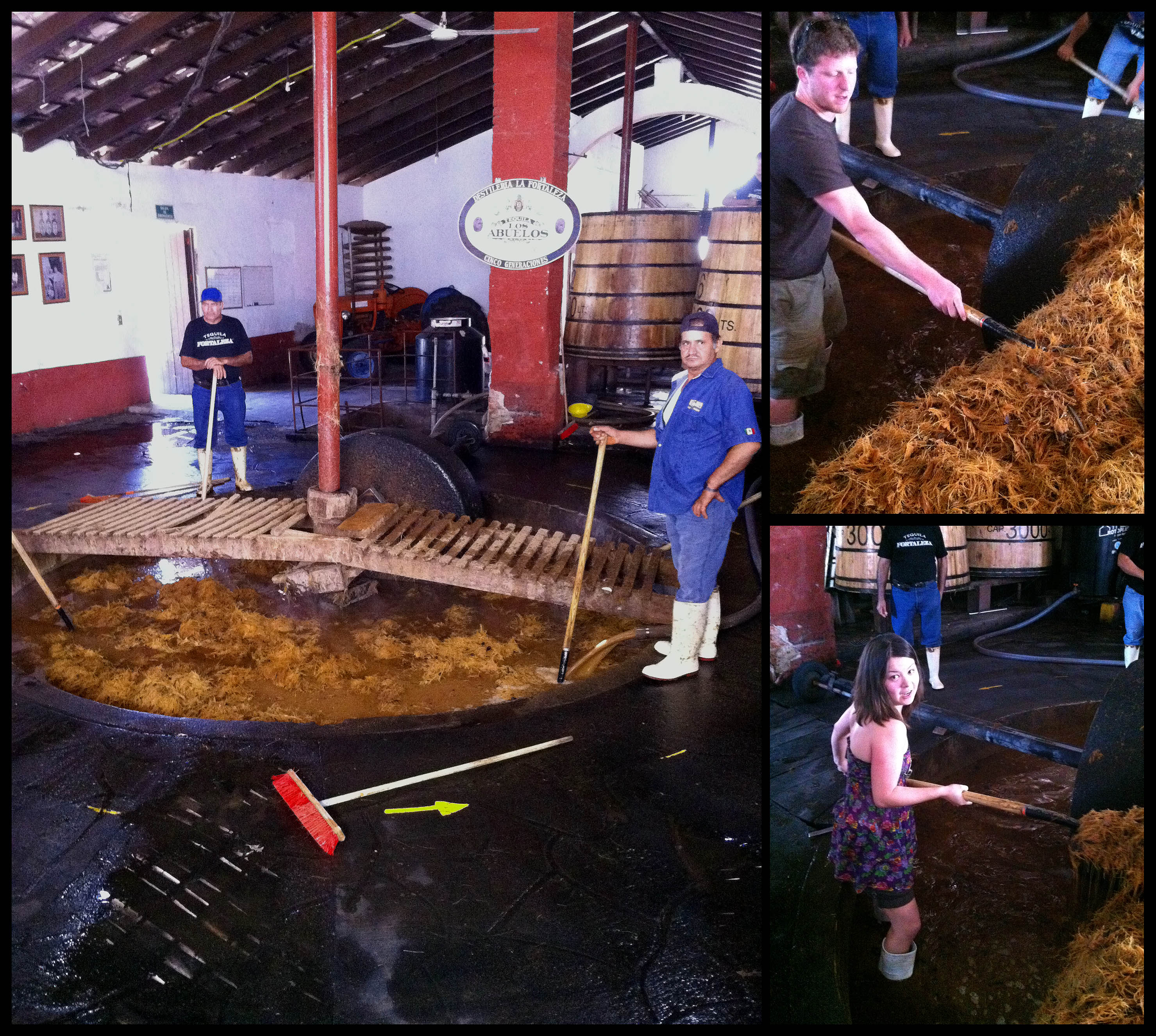
It’s not done this way merely because of tradition, or a punishment of some kind, but rather to not pulverize the tiny fibers of the agave. While the yield could be dramatically increased by machine pressing all the juice out of the pulp, that machine would also crush the smallest veins of the plant, out of which would come bitter & astringent compounds, like methanol, that would remain in the finished product.

Fermentation & Distillation:

From there, the agave juice is pumped into 3000L pinewood tanks, and fermentation is started with a bit of the sour mash from the last run. It takes a couple days for the yeast to work its magic until the brew reaches around 5% ABV, at which point it’s time for distillation.

The tequila is twice distilled in just the cutest little copper pot-stills I’ve ever seen. Because their production methods are so laborious, they have less “heads” (harmful methyl) than most – about a liter, I was told (which is insanely low, and I’m now wondering if I heard it wrong. But it’s unusually small, regardless). The first distillation runs the liquid to about 25%, and the second to about 45%. And here they stop.

45% is an uncommonly low ABV to distil to, but a desirable one. All three incarnations of Fortaleza are bottled at 40%, which means it requires merely 10% water to cut it back to bottle proof. The significance of this fairly obvious. The cutting water has nothing whatsoever to do with agave, mash, fermentation, or distillation, so water is just an inert mixer. The less water is required, the more one tastes the actual heart of the spirit.

One more important note: for some bizarre reason, the Tequila Regulatory Council of Mexico allows that even if the bottle says 100% agave, it only needs to be 99% agave. Yes, really. This leaves each distillery 1% wiggle room to add one or more of the following permitted mixers: oak-essence, caramel, sugar syrup, or glycerin. And if that sounds like a bunch of bullshit to you, well, you’re not alone. It is apparently taboo to mention it, but this is why Clase Azul Reposado tastes like soft caramels and as far as I’m concerned, the entire thing is stupid from top to bottom. Fortaleza, along with Casa Noble, Siete Leguas, and many other high-end brands, participates in no such assholery.

Aging:
The blanco is unaged, straight into the bottle. The reposado (“rested”) is permitted between 2 and 12 months, and Guillermo ages his for at least six (each batch is different). The añejo (“old”) can be aged for 1-3 years. He ages his for 2, all in used whiskey barrels he picks up from Jim Beam and Jack Daniels.

Drinking:

Whenever possible.

The Uses:

I’d be intensely interested to find out just how much each factor effects taste, but it’s unfortunately not possible. All I know is that taken in conjunction, Fortaleza is a remarkable spirit. It’s full bodied and creamy (probably due to the adorableness of the stills — though Adam Stemmler believes it’s from fermenting in pine, a byproduct of how the liquid reacts with the wood), and even the blanco has bright vanilla, almost cream soda notes, complementing pepper, sweet agave, citrus and minerals. The reposado (my favorite of the three) introduces wood and baking spices and is softer, more elegant. In the añejo, the softness of the wood takes over and the creamyness becomes buttery, with cinnamon, oak, and vanilla.

The blanco is the only of the three I’ll mix without reservation. It makes a killer margarita of course, as well as great paloma, but it really shines in stirred, citrus-less drinks. The only time I wouldn’t use it is when I want something a little more powerful, like if I’m setting the tequila up against huge flavors and want the spirit to shine. In cases like that, smoothness works against you.

The reposado and the añejo are good mixers as well. Down at Syrah, Stemmler made a reposado play on an Aviation that I hear is delicious, and they both can make decent stand-ins for whiskey — particularly as the base of a Oaxacan Old Fashioned, which is transcendent with either.

Banks 5-Island Rum

The Facts:

Name: Banks 5-Island Rum
Category: Rum — silver (clear)
Proof: 80 (40% ABV)
Origin: Trinidad, Jamaica, Guyana, Barbados, and Java, with offices out of Singapore, since 2010.
Nose: grassy, vegetal, agricole funkiness
Taste: dry and complex; agricole hits with its green pepper & vegetable notes, but also black pepper, ginger, tropical fruits; long, complex, and re-inviting finish

The Story:

He pours out a bit more than a thimbleful into a glass, and I bring it under my nose. It’s not in the least medicinal, but complex and inviting. I sip. My word. It’s like tasting in Technicolor — it’s full, complex, and not too flowery, but also lacking any trace of unpleasant heaviness. It’s unlike any white rum I’ve tasted.

Remsberg was grinning at my inability to hide my shock. “So you can see why Prohibition-starved Americans flooding El Floridita would have said, “This is good!” There was something about those early Cuban cocktail rums. They were just better rums than the world had seen. Nobody is producing a white rum today as pleasing as this.

Wayne Curtis wrote this in his excellent book And a Bottle of Rum: A History of the New World in Ten Cocktails, describing a sample of Bacardi silver rum from 1925, back when it was made in Cuba. Cuban Bacardi was what reintroduced America to rum in the 20th Century, and apparently it used to be amazing. And Curtis is no debutante… if he says it’s great, it’s great.

This quote also highlights one of the many differences between international beverage entrepreneurs and me. Both John Pellaton and I read this book, and both from this passage realized that we’ve never tasted a truly dynamic clear rum. When I read it, I got a little sad, and then went on with my day. When Pellaton read it, he decided to invent one.

Pellaton is the former president of Hine Cognac, and along with “master blender” Arnaud de Trabuc and mixologist Jim Meehan of Please Dont Tell (PDT) New York, set about to create an excellent white rum. After some 18 months of tinkering, it ended up as a blend of 21 different rums from five countries. The different countries bit is anomalous in the mildly jingoistic rum world, where Jamaican rum and Martinique rhum are barely considered, by Jamaicans and Martinicans anyway, to be the same spirit. But both Trabuc and Pellaton came from Cognac where blending is the norm, so they set out to create an all-star.

Each of the component rums are aged between 3 and 12 years, charcoal filtered to remove the color, and blended. According to Banks’ own promotional materials, it starts with the light black-strap molassas of Trinidad rum (over 50%), then added heavy Jamaican, earthy Guyanese, aged and “flavorful” Barbados, and spicy arrack Java. Some are pot-distilled, some column. There is a wonderful bucking of tradition in the assembly of Banks, and Pellaton & Co. seem to understand that to create something different, you have to do things differently.

Oh yes, the name. The finished product is named after the famed explorer Joseph Banks (pictured, right) for some completely artificial reason I couldn’t care less about. 

The Uses:

Overwrought marketing aside, Banks is a phenomenal rum. It is floral and complex, and has just enough vegetal arrack notes to add flavor without controlling it. The hint of arrack is what sells it for me. Too much (as in actual Batavia Arrack or Rhum Agricole) overpowers everything and is unpleasant, but just a hint adds an entirely new flavor dimension to the spirit. I would feel comfortable using Banks whenever any clear rum is called for. It won mojito awards, it makes the best daiquiri I’ve ever tasted, and won Best New Spirit at Tales of the Cocktail 2011. It is, simply, an incredible product.

At URBN, we make a Beached Bru with it. My only problem is that there are so many things I love about the rum, it’s hard to mix because the mixers divert from the rum’s complexity rather than add to it. Which is, as they say, one of them good problems.

Pellaton told me that he gave a sample to Mr. Remsberg from the above quote who owned the bottle of 1925 Bacardi. Remsberg said that Banks, while not  as good as the ancient Bacardi, was the closest thing he’d had to it in a modern product. Cuban Bacardi bottles run £2000 where you can find them, while Banks is about $28. Which is plenty good enough for me.

Full list of Banks 5-Island Rum cocktails here.

Note: Curtis himself has written about Banks here.

Trivia1!: Guyana, one of the “five islands,” is not an island. It’s a country hanging out on the northern coast of South America. Also, Batavia Arrack is a rice and sugar-cane spirit from Indonesia, and is not rum. But who cares? Banks 4-Island and 1-Country  Mostly-Rum-but-some-Proto-Rum doesn’t really have the same ring to it.

Trivia2!: Joseph Banks, unsurprisingly, has no relation with Joseph A. Banks, the upper-middle-class haberdashery.

Corpse Reviver #2

There aren’t, within any given field, a lot of things that are suitable for both novices and professionals. We generally refer to this gap as experience. Whether it’s tennis rackets or sex toys, kitchen knives or high explosives, the introductory item is something of easy pleasures that will, with time, get outgrown.

Not so with the Corpse Reviver #2. Such is its charm. It’s a fantastic introduction to both gin specifically and mixology in general, but it’s also a favorite of a good many of us who live in this cloistered little cocktail world.

Ted Haigh recounts, in the introduction to his book, how he first encountered the Corpse Reviver #2:

“To my amazement, it was the finest thing to ever pass my palate. I could taste every ingredient. It was subtle, it was fresh, it was complex, and it was delicious. My research and acquisitions continued with renewed vigor.”

Despite the fact that he writes like he’s dispatching from a 19th century ship, Haigh was on to something. This drink is delicious.

It appears originally in the Savoy Cocktail Book, Harry Craddock’s 1930 weighty harem of recipes. The “Corpse Reviver” was a popular style of cocktail from the late 1800s to around 1920, when prohibition knocked it out. It is, as you’d imagine, a morning drink. This particular one is tart, bright, and complex, light and unfilling, yet with enough punch to overpower even the worst hangover.

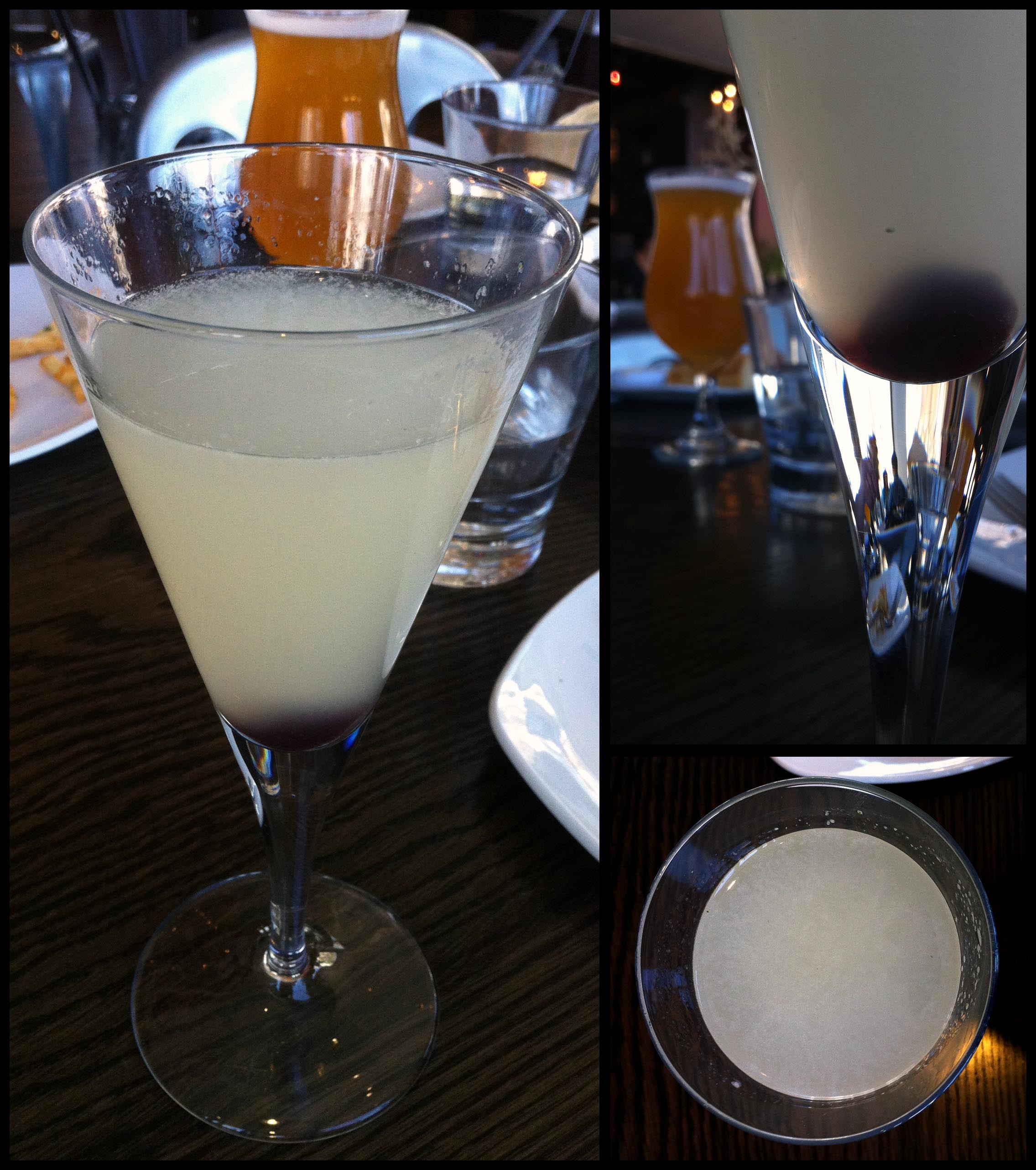
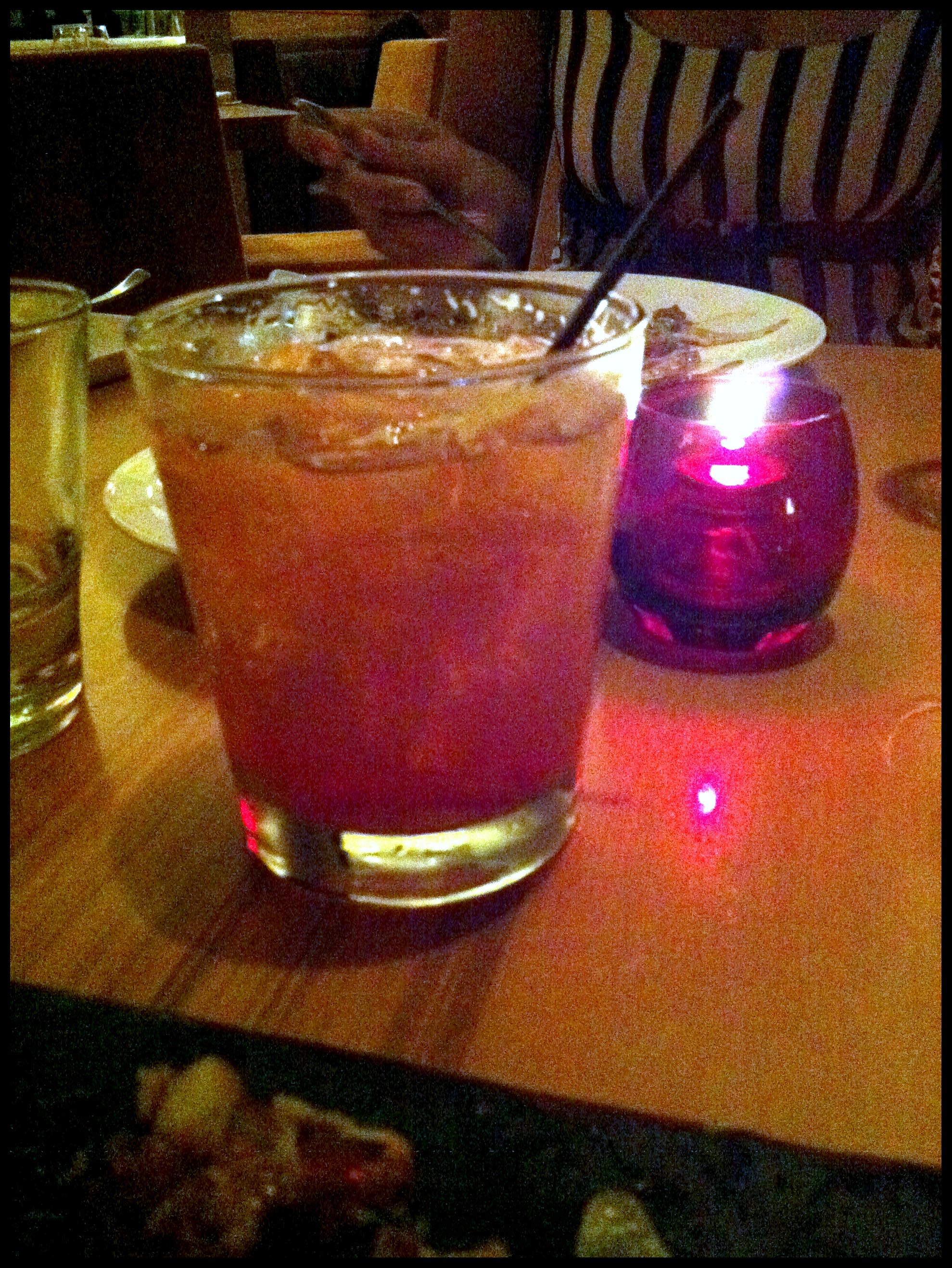
At Little Italy’s newly opened Prep Kitchen, they wisely put it on their brunch cocktail menu. It was Sunday morning, I had fallen asleep at 5:30am the night before, and while I would’ve loved to try something they invented themselves, I saw it on their list and couldn’t help myself.

Corpse Reviver #2
1oz gin
1oz Cointreau
1oz Lillet Blanc
1oz lemon juice
dash absinthe
Shake, strain into martini glass, garnish with a maraschino cherry.

I had two that morning, but because no one in this town measures their goddamn drinks, the first was great and the second was not. For this cocktail, the delicate balance is whole point. The stong lemon and Cointreau mix with the weak Lillet and gin and are all complemented by a shadow of absinthe, and when mixed correctly, it’s like a symphony. The overall impression comes tart at first, then fresh sweet orange and spices from the gin and absinthe with a drying finish of Lillet, but this is one of those drinks that you keep drinking because every sip highlights something new.

The Savoy Cocktail Book didn’t offer a garnish: most people drop in a maraschino cherry just for the pure aesthetic fuck of it, though Jeffrey Morganthaler, who’s almost never wrong, suggests an orange peel. Personally, I agree – the orange helps the Cointreau pop and generally enhances the flavors, while the cherry — pretty as it is —is just pretty.

Harry Craddock didn’t editoralize much; his was more in the vein of the “10,001 Recipes!” that we see so frequently these days. He only added one sentence by way of explaining the Corpse Reviver #2: “Four of these taken in straight succession will unrevive the corpse again.”

Trivia!: Corpse reviver #2, you say? What of the Corpse Reviver #1?

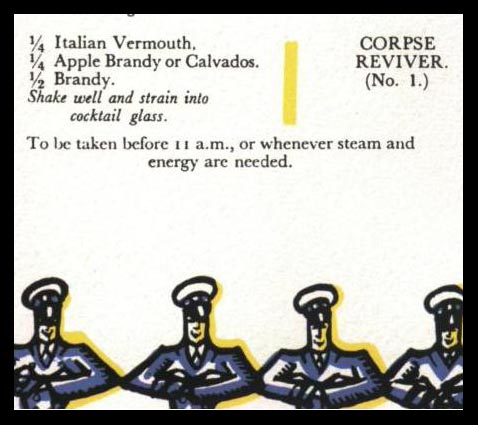
The Corpse Reviver #1 is 2 parts Brandy, 1 part Apple Brandy or Calvados, and 1 part Italian (sweet) Vermouth, also in Craddock’s book. This one is puzzling. First of all, it’s not terribly good. It’s not bad, but there’s a reason we all talk about #2.

My question is why anyone would think this was a good morning drink. Corpse Revivers were supposed to be hair-of-the-dog, and this is a thick, sweet, rich drink that I’d barely want after dinner. Who wants a big cup of brandy in the morning? Bizarre.

Old Fashioned

INTRODUCTION to the OLD FASHIONED WHISKEY COCKTAIL (PART I)

I remember the exact moment when I learned how to drink.

I was a Jack & Coke kid all through college. Tequila shots, Jameson rocks, Vodka Redbull. I’d get the cheapest single malt on the menu for special occasions. I learned to drink straight whiskey, but mostly because I wanted to be the type of guy who could drink straight whiskey. I once spent an entire night drinking Jäger bombs (never again), and was elated when I discovered that the dueling piano bar sold Long Island Ice Teas by the bucket. I looked down on Miller Light in favor of Bud Light. I believed in the idea of “ultra-premium vodka.” In short, I knew nothing.

It wasn’t until I left Los Angeles for Boston that I had a conversion experience. Winter hit quickly for those of us who’d just spent four years in southern California, and it was already brisk in early October when my sister took me out to the neighborhood bar, Green Street Grille, for a drink. Our bartender was Misty Kalkofan – Misty, half-sleeve tattoo, bellowing infectious laugh, with a M.A. from Harvard Divinity School and one of the best bartenders in the city.

I ask for a Jack and coke, but Misty tells me they don’t have Jack. I ask her what she has. She asks me what I like.

“Whiskey.”
“Spirit forward or more drinkable?” she asks. I revert to my college mentality, one of cool and uncool, and order straight whiskey as if the syllables themselves are laced with pheromones.
“Jameson,” I say, “Neat.”

Bartenders deal with this chest-puffing horseshit all day long, and in hindsight, Misty treated me with a truly profound kindness.

“Have you ever had an Old Fashioned?”

This was pre-Mad Men, though I had heard of it but never tried one, and acquiesced. A couple dashes of those weird bitters things, a sugar cube, orange peel and rye whiskey, and that was it for me. I was sold on cocktails forever. I had never tasted anything like it.

I don’t remember the drink I had before that Old Fashioned, but whatever it was, it was the last time I’d take a drink without thinking about it. Without weighing it’s taste, complexity, and balance. I plainly didn’t realize drinks could be that good.

It’s been more than four years since then. It’s what turned drinks from object to subject, and what changed bartending from a job to a career. It is the drink I have the most respect for, one of the pantheon of cocktails on which, when ordered on the 4-deep, cash waving insanity of a busy Saturday night, I will never cut corners. It is what I order to test knowledge or skill of a new bar or bartender. The Old Fashioned – short for Old Fashioned Whiskey Cocktail – was, and remains, the best drink I’ve ever had.

WHAT IS IT, and WHY IS IT SO DAMN GOOD? (PART II)

When Humphery Bogart died and went to Whiskey Heaven, the bartender greeted him warmly, and slipped an Old Fashioned into his hand.

It is not a classic cocktail, it is the classic cocktail. To explain:

While the term “cocktail” might today refer as equally to a Sazerac as an Appletini, in the beginning, everything had an exact definition. There were Slings (spirit, sugar, and cold water), Toddies (spirit, sugar, and warm water), various citrus Punches and such, but no cocktail. It wouldn’t be until 1806 that the “cock-tail” was defined in print*. Then, it was “spirits of any kind, sugar, water, and bitters.” Those four ingredients made a cocktail. Anything else, tasty as it may be, wasn’t a cocktail.

But over the next 75 years, people kept tweaking the cocktail, hanging ornaments on it. There was the “fancy cocktail,” with curacao. Then the “improved cocktail,” with maraschino liqueur and absinthe. Then “what if we throw some Chartreuse in there?” and “here’s a float of red wine,” and people started using pineapple sticks and raspberry syrup and muddling in fruit slices – what would be referred to, later, as “the garbage.” It’s an enormously malleable template, and can be mangled as many different ways as there are bottles on the back bar… and while it was likely all delicious, it was not a cocktail as it was originally defined.

So when a reference to “old-fashioned cocktails” appears in print in The Chicago Tribune in 1880, it’s not that someone invented a drink that felt quaint and homey, and named it an Old Fashioned. It was a curmudgeon with a healthy dose of grump and thirst to go with it, who wanted a cocktail, the kind he used to get. The Old Fashioned kind. The only change he’d accept from the original 1806 cocktail was ice. All else was heresy.

(It’s worth noting that any claim to have “invented” the Old Fashioned is absurd, seeing as it was being made for at least 75 years, as a “cocktail” before it earned its latter name. But extra bullshit points go to the Pendennis Club of Louisville, who maintain their paternity claim even though they opened their doors in 1881, a full year after it first appeared in print.)

As it was, so it is.

The Old Fashioned (Whiskey Cocktail)
2oz. rye whiskey (or bourbon)
2 dashes angostaura bitters,
1 small sugar cube, muddled or ~1/4oz simple syrup (a hair less for the inherently sweeter bourbon)
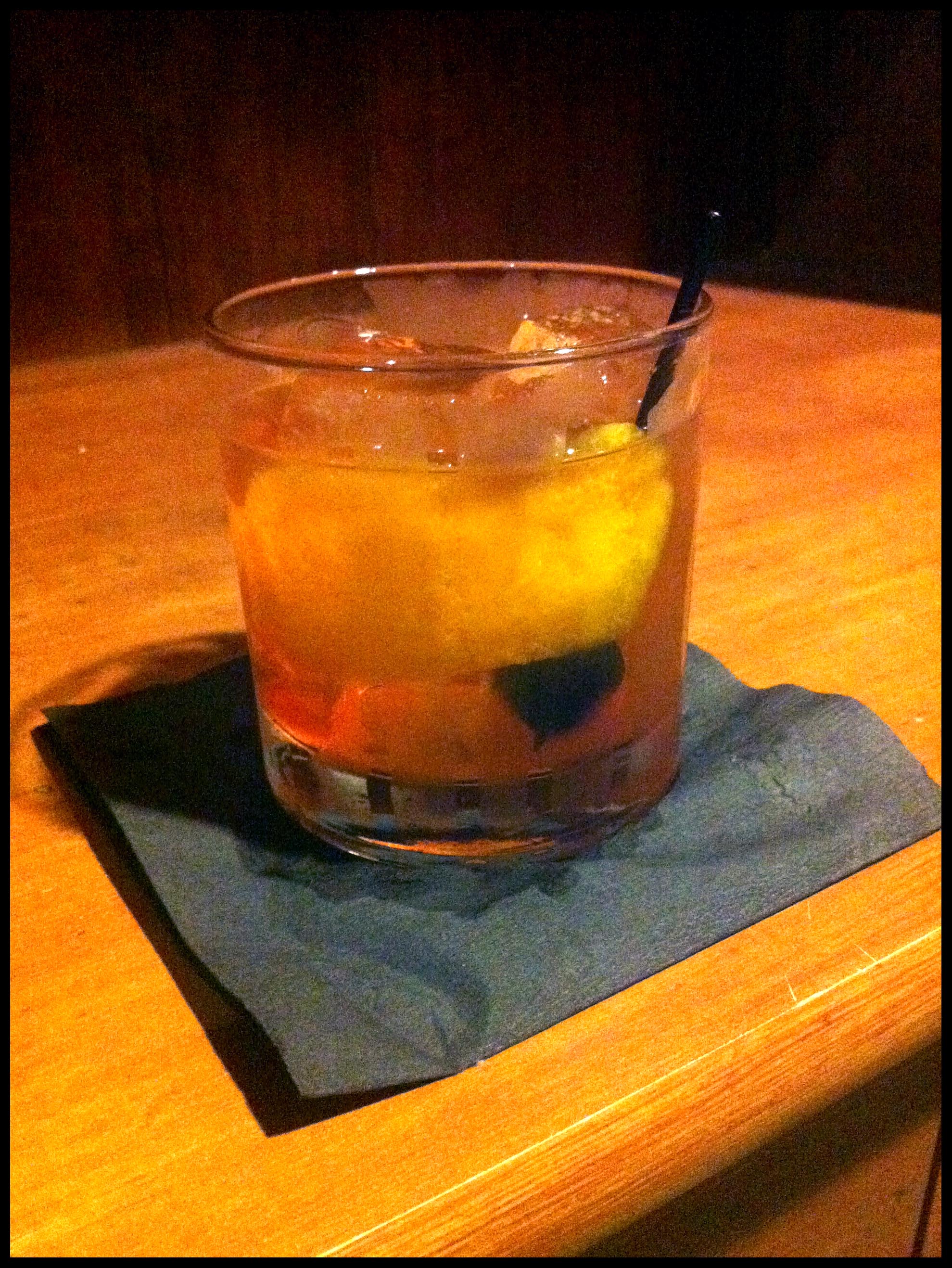
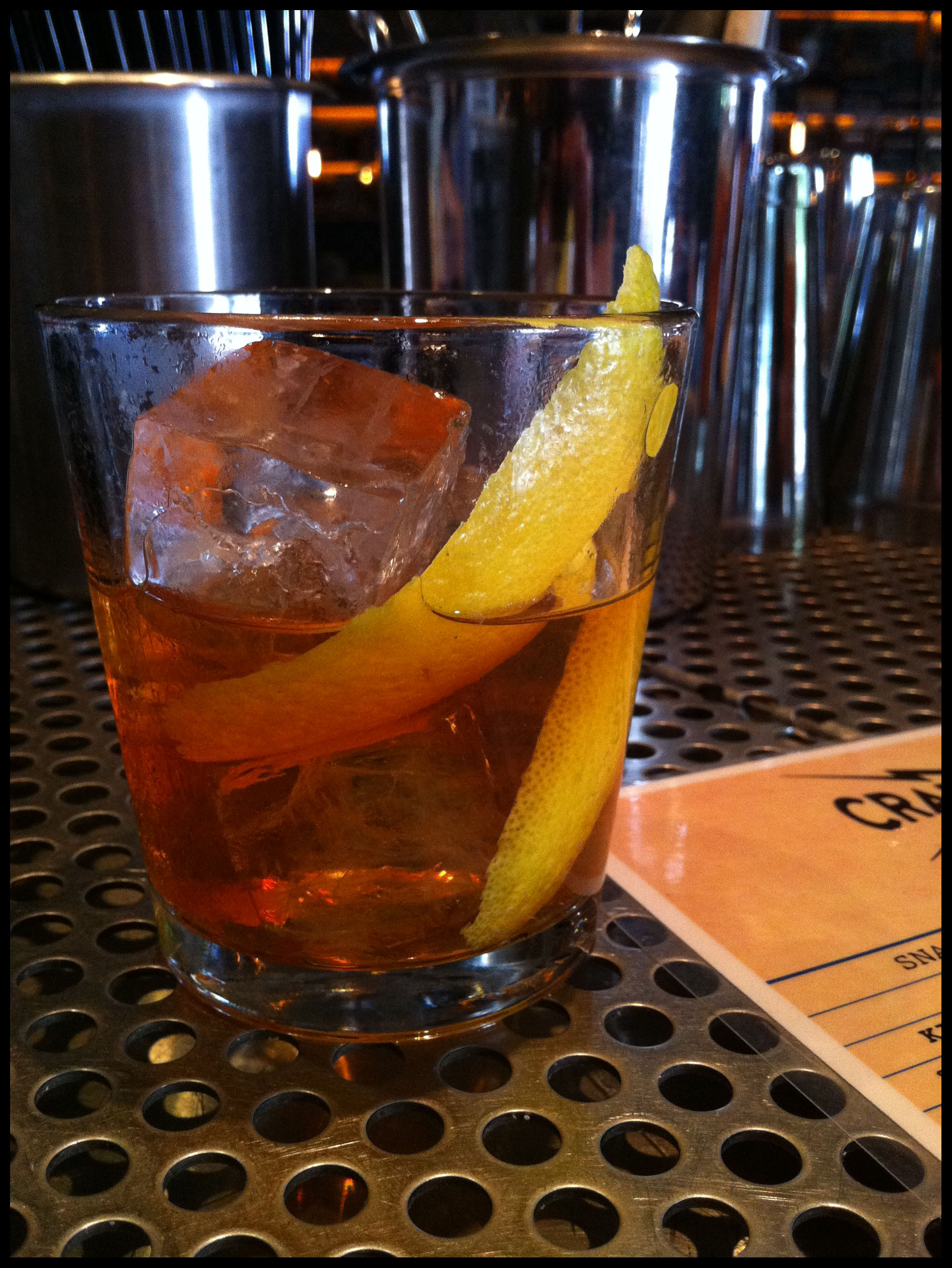
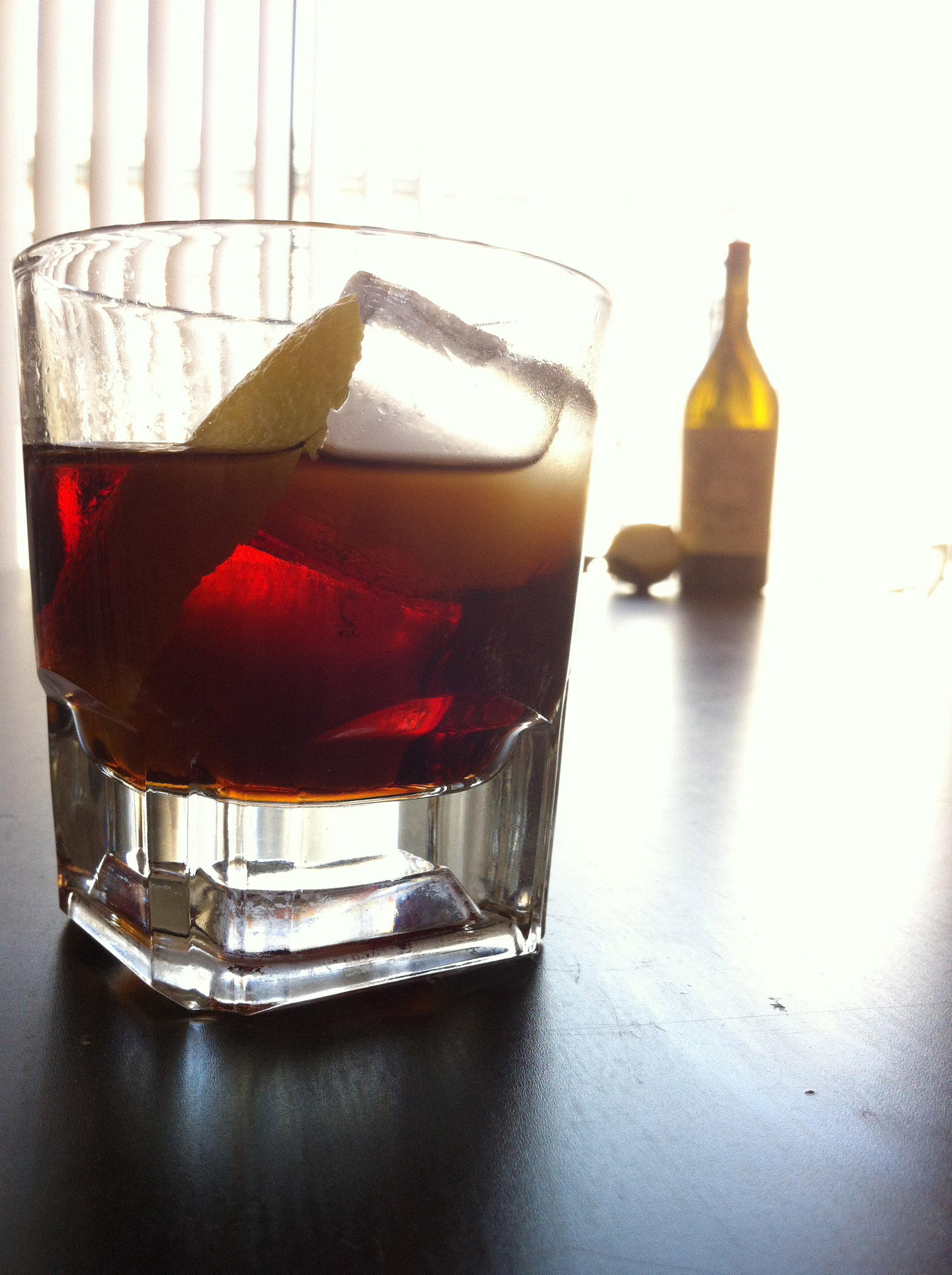
Add ice and stir briskly for 30 seconds or so. Express oils from a long strip of orange peel, drop peel in drink. Garnish with a maraschino cherry. Drink. Melt.

It should look like this: (and I’m sorry for the image quality of these pictures… I took them before this blog existed.)

*Nerd stuff: I have recently seen trustworthy evidence put forth by cocktail historian Jared Brown that “cock-tail” appears in print in 1798, a full eight years earlier than we originally thought. It is, alas, not defined, so the 1806 date remains, at least, not wrong.

OLD FASHIONED in SAN DIEGO (PART III)

There is literally nothing old fashioned about Southern California. In Los Angeles, they throw stones at anything older than 35, and San Diego roughly the same. Things don’t last here. Even Old Town feels new.

So it is with the Old Fashioned. With this drink, there are two rival camps, between whom there can be no peace. To garnish with the fruit, or to muddle it. One of them prefers the nuance and subtlety; orange oils accenting the whiskey, a little sweetness to wake it up, and a little bitterness to add spice and complexity, with minute variations in the choice or quantity of ingredients shifting the focus and balance for myriad incarnations. The other one prefers a swamp of pulpy fruit carcasses that add blunting sweetness, fibrous bits to get caught in your teeth, and a mess of trash in the glass. I won’t say which I am.

The good folks at Craft and Commerce know how to do it. Most of their bartenders, when asked for their favorite version, will use the drier, spicier, slightly more challenging rye whiskey, but the house Old Fashioned is with Bourbon. Buffalo Trace, a little bit of cane sugar syrup, angostaura bitters, stirred with both an orange and lemon peel.

At URBN, where I work, we do the same… it was with a single barrel Elmer T. Lee, until we went through about 100 bottles of it and all but ran out. So we, too use Buffalo Trace. Even though we took it off the menu, we still sell dozens of these things a week, and to all kinds of people. It’s something that gives me faith.

Sadly, some of the even very nice bars are muddling fruit. Kitchen 1540, in Del Mar, is one of the nicest restaurants in the area. They serve “craft cocktails” and yet an order for an Old Fashioned returns a very nice bourbon (he used the Van Winkle 12 year, definitely not their standard) and angostura orange bitters (not my taste, but a respectable choice), but sullied with a mashed cherry and dulled with a two-inch-tall hat of soda water.

And I don’t know where this morbid little voice came from, but drinking Haufbrau lager at the splendidly tacky Keiserhoff, in Ocean Beach, a place without computers where they make everyone dress like beer wenches from the German hinterland, something whispered to me that our 60 year old bartender, a consummate professional with more years of experience than I have years of life, that he might, just might, make a mean old fashioned.

I was wrong.

You have to go to a devoted craft cocktail bar to get it the right way. C’est la vie. Always a good excuse to go, I suppose.

Carpano Antica

The Facts:

Name: Carpano Antica Formula
Category: Vermouth — red (sweet); apertif
Proof: 33 (16.5% ABV)
Origin: Turin, Italy, since 1786
Nose: pungent sweetness; vanilla, caramel and citrus peel
Taste: vanilla, caramel, licorice, cinnamon, red fruit, figs, wood, orange peel, bitterness on the end, dry and lingering finish

Vermouth:

First, a quick word on vermouth: vermouth is not gross. If you think vermouth is gross, you don’t know what it tastes like, because it’s been shit on for so long by the extra dry vodka martini. The vodka martini is like that vindictive guy in The Last of the Mohicans, trying to not only kill vermouth, but make sure its seed dies with it.

This is because while vermouth is glorious in a gin martini, it does not belong anywhere near a vodka martini. Vodka needs a strong man on her arm or nothing at all, and vermouth is too weak, too delicate, and ends up making a vodka martini taste like overproof diluted vermouth. Which, even I will admit, is gross. So, people ordered less and less vermouth, making the open bottles sit behind the bar for longer and longer. And as it’s wine-based, it will go bad over time. So a self-perpetuating cycle began where the only vermouth anyone is exposed to is so old to be worthless, which makes people order it even less, and so on.

Vermouth is what happens when you add sugar, a little alcohol, and aromatic plants, spices, and herbs to wine. The latter’s called aromatizing and they’ve been doing it at least since ancient Greece. The word “vermouth” comes from the High German “wermut” meaning wormwood, one of the plants added to help fight intestinal parasites, and wormwood wine was popular in Germany and England as “vermouth” as early as the 1600s. But a modern drinker (such as myself) wouldn’t have recognized any of these.

The Story:

Vermouth in its current form joins us in 1786, when the experiments of a 22-year old liquor shop assistant named Antonio Benedetto Carpano culminated in what would become Carpano Antica, at once inventing the categories of both modern-day vermouth and the apertif. He infused a white wine base with “over 30” different herbs, roots and spices, livened it up with some sugar and (almost certainly) grappa, and as his cordial contained wormwood in a wine base, he, too, called it “vermouth.”

Carpano’s elixir was nothing dramatically new but for its quality, and that he had the good sense to send a sample to Victor Amadeus III, the ruler of that little corner of what would become Italy who reportedly found it exquisite and helped along its popularity. Not that the Carpano vermouth needed it — it was so good, and in such demand, the store reportedly had to stay open 24-hours a day(!)… which sounds to me like one of those bullshit liquor stories that everyone repeats because no one can say it isn’t so. Why the hell would people need to buy vermouth at 4am? Are we really to believe that they couldn’t service all their customers in the allotted nine hours a day, in a 250,000 person city-state in 18th-century proto-Italy? Far more likely is that production had to be extended late into the night, possibly even 24-hours a day.

It doesn’t matter. Either way, it was an unprecedented success and is now made and distributed worldwide by Fernet Branca, still according to the original recipe and even with the original label.

The Uses:

I used to think Carpano Antica was hands down the best commercially-produced sweet vermouth in the world. Most new cocktail bartenders do. As my familiarity with vermouth grew, I began to see it in a much broader context: it is powerful, it is vanilla forward, it is complex, and it is phenomenal. It’s great alone, it’s great on the rocks on a summer day. Of it’s contemporaries, it packs the most complexity and flavor, sweet without cloying, bitter without real challenge. Yes, sweet vermouth on the rocks with a twist can be completely delicious. Andie Macdowell had a little taste after all. Who knew?

But is it the indisputable best? No. There is no indisputable best. From each according to his ability, to each according to his need. So where does Carpano sit? It’s heavy, very vanilla forward, with broad shoulders and a ton of flavor. “Carpano is a linebacker and Cinzano is a soccer player,” says Jamie Boudreau, and he’s right. As I recently discovered in the Negroni trails, while I love Carpano Antica Negronis, while they’re many people’s favorite Negroni, they’re not my mine.

Personally,  I love Carpano in a Manhattan and Vieux Carre. It’s wonderful in the Don’t Give Up the Ship. And a Bitter Giuseppe and Growing Old and Dying Happy… etc. It’s never bad, just sometimes too much. Use it when you need a big vanilla flavor, to stand up to whiskey in particular.

See the full list of Carpano Antica cocktails here.