Fortaleza Tequila

Disclosure: I recently returned from a trip to Tequila, Mexico, hosted by the good people at Fortaleza Tequila. They don’t advertise; instead, they sponsor biannual groups of industry professionals to come down and see how their tequila is made. Their bet is that when we see the quality of the product they’re producing, we’ll feel compelled to proselytize. They’re not wrong.

The Facts:

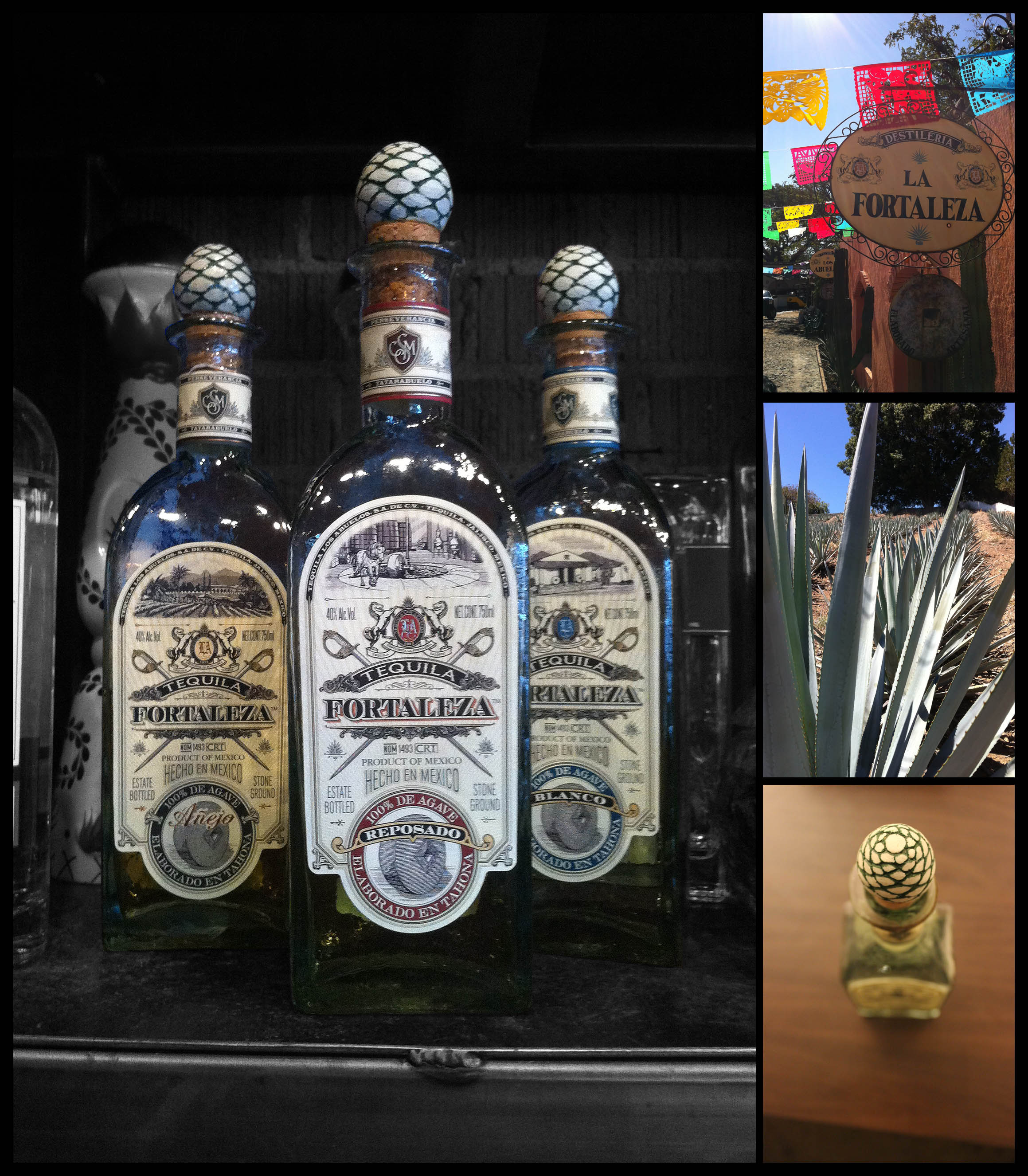
Name: Fortaleza Blanco, —Reposado, and —Añejo
Category: Tequila
Proof: 80 (40% ABV)
Origin: Tequila, Jalisco Mexico, since 2002
Distinguishing characteristics: buttery mouthfeel; vanilla cream, minerality, spice; smoothness; elegance
The Story:

I’m going to do my best to keep this brief:

In the 1860s, a man named Don Cenobio Sauza moved to Tequila, Mexico and started distilling.  While sugars rendered from the agave plant have been getting people drunk since before Cortez and his rats showed up, Don Cenobio was the first to name it after the town of Tequila, and the first to export to the U.S. His son Eladio Sauza joined the family business and expanded, but it was Eladio’s son, Francisco Javier Sauza, that took the brand international. Don Javier was the real businessman in the lineage: he’s the one who got John Wayne drinking tequila, the main force in elevating its international perception to a refined spirit, and the reason anyone outside of Jalisco knows the name Sauza.

Sauza tequila is of course still made today, albeit in wildly different form. In 1976, Don Javier sold his eponymous tequila brand, ultimately ending up in the multinational hands of [Jim] Beam, Inc. Beam continues to run it today with capitalistic efficiency, bulldozing agave hearts into atomizing shredders, powering a diffuser the size of a small church, storing distillate in 500,000 liter drums and pumping out products that range from decent to hideous. This is to say, that is what the Sauza name currently means.

But in 2002, Guillermo Sauza — the fifth generation, whose grandfather Don Javier sold the company when he was 20 — resurrected the family business under the name “Los Abuelos” meaning “The Grandfathers,” in homage to the way his family used to make tequila (“Fortaleza,” meaning “Fortitude” on this side of the border due to a copyright complaint). The family still owned a bunch of dusty distillation equipment from one of Cenobio’s original aquisitions, and Guillermo kicked it back into production. Aside from the fact that they finally retired their donkey in favor of a tractor, Guillermo still makes tequila the way his family did 100 years ago.

Now, it’s important to note that industrialization does not axiomatically produce an inferior product. I have little interest in hand-made paper or an artisan television. But in the world of tequila, yes, industrial processes produce an inferior product. To explain:

The Process:

The Agave: Like all good tequilas, Fortaleza is 100% blue agave. The cheaper brands are allowed to throw 49% corn-syrup or sugar into the fermenting tanks and still call themselves tequila, but cannot claim “100% agave” on the bottle. Always look for this. If it doesn’t say “100% de agave,” I advise against buying it. It’s literally filler.

Because Fortaleza’s processes limit them to a maximum of three tons of agave/day, they can afford to know where all their plants come from. Their agave is a mixture of small local farmers and their own estate.

The Rendering: The agave hearts — called “piñas” (pee-nyas) — are hard as wood, and the sugars need to be rendered. So they are tossed into a brick oven with meter-thick walls, stacked up, and steam cooked for 33 hours.

Then, the soft, sweet hearts are placed in a waist-high circular pit to face-off against several thousand pound stone called a “tahona.”

Sauza, by comparison (and not to jump all over Sauza, who were very gracious and welcoming, but that’s the industrial comparison), pulverizes the raw agave hearts to dust in a shredder before pumping them into a machine called a diffuser that pressure-cooks in 45 minutes what it takes Fortaleza 36 hours to do. The analogous reference is like a crock pot vs. a microwave: different process, different result.

Any time one is attempting to get the juice out of a plant, the less violently it is squeezed, higher quality the juice will be. This is the idea behind extra virgin olive oil and gravity press on wine, and it’s what they try to do with the mash of Fortaleza. In the pit, the piñas are crushed three times with a giant stone before separating the pulp from the juice. This fairly laborious task is accomplished over about 5 hours by four guys with pitchforks.
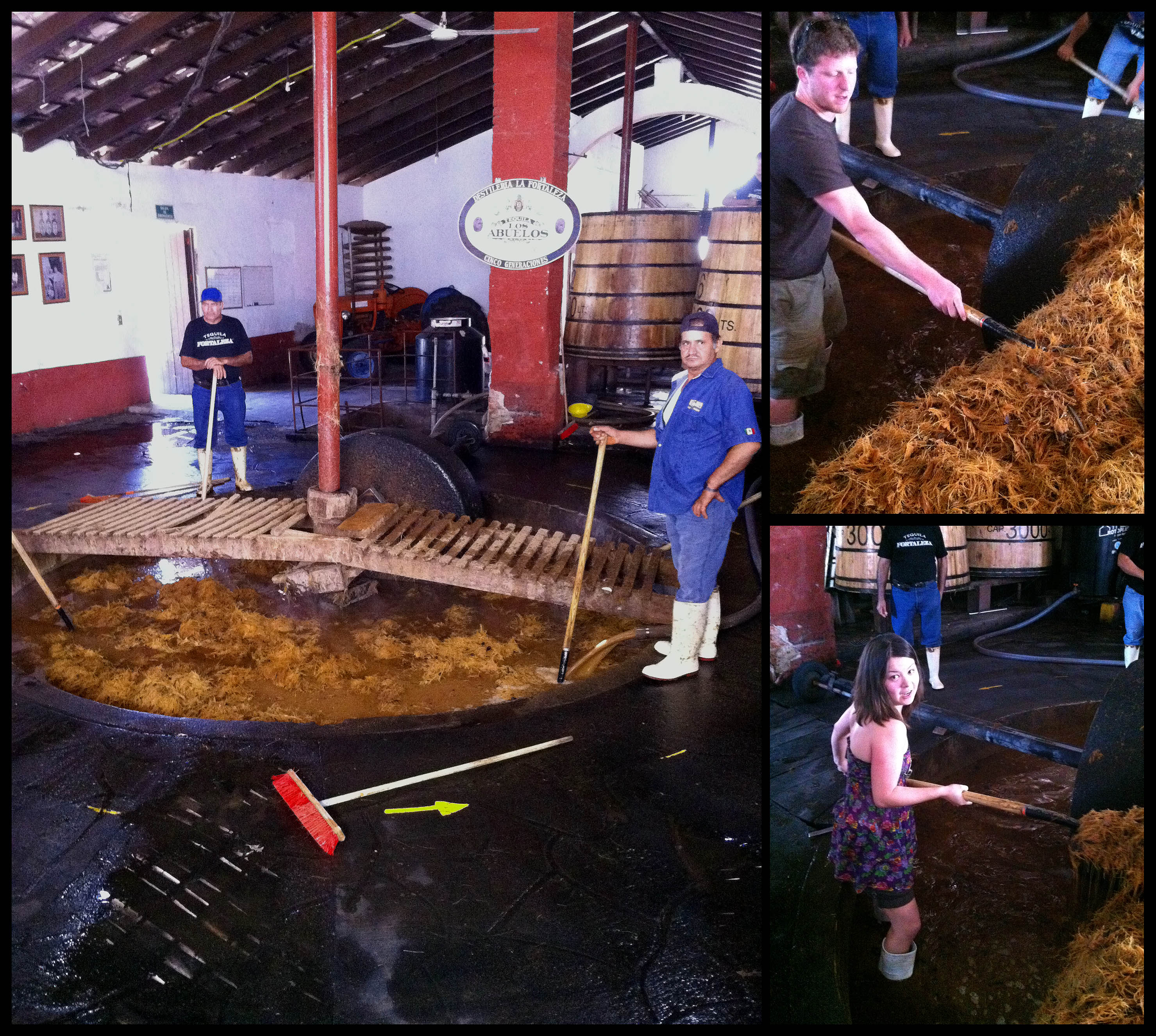
It’s not done this way merely because of tradition, or a punishment of some kind, but rather to not pulverize the tiny fibers of the agave. While the yield could be dramatically increased by machine pressing all the juice out of the pulp, that machine would also crush the smallest veins of the plant, out of which would come bitter & astringent compounds, like methanol, that would remain in the finished product.

Fermentation & Distillation:

From there, the agave juice is pumped into 3000L pinewood tanks, and fermentation is started with a bit of the sour mash from the last run. It takes a couple days for the yeast to work its magic until the brew reaches around 5% ABV, at which point it’s time for distillation.

The tequila is twice distilled in just the cutest little copper pot-stills I’ve ever seen. Because their production methods are so laborious, they have less “heads” (harmful methyl) than most – about a liter, I was told (which is insanely low, and I’m now wondering if I heard it wrong. But it’s unusually small, regardless). The first distillation runs the liquid to about 25%, and the second to about 45%. And here they stop.

45% is an uncommonly low ABV to distil to, but a desirable one. All three incarnations of Fortaleza are bottled at 40%, which means it requires merely 10% water to cut it back to bottle proof. The significance of this fairly obvious. The cutting water has nothing whatsoever to do with agave, mash, fermentation, or distillation, so water is just an inert mixer. The less water is required, the more one tastes the actual heart of the spirit.

One more important note: for some bizarre reason, the Tequila Regulatory Council of Mexico allows that even if the bottle says 100% agave, it only needs to be 99% agave. Yes, really. This leaves each distillery 1% wiggle room to add one or more of the following permitted mixers: oak-essence, caramel, sugar syrup, or glycerin. And if that sounds like a bunch of bullshit to you, well, you’re not alone. It is apparently taboo to mention it, but this is why Clase Azul Reposado tastes like soft caramels and as far as I’m concerned, the entire thing is stupid from top to bottom. Fortaleza, along with Casa Noble, Siete Leguas, and many other high-end brands, participates in no such assholery.

Aging:
The blanco is unaged, straight into the bottle. The reposado (“rested”) is permitted between 2 and 12 months, and Guillermo ages his for at least six (each batch is different). The añejo (“old”) can be aged for 1-3 years. He ages his for 2, all in used whiskey barrels he picks up from Jim Beam and Jack Daniels.

Drinking:

Whenever possible.

The Uses:

I’d be intensely interested to find out just how much each factor effects taste, but it’s unfortunately not possible. All I know is that taken in conjunction, Fortaleza is a remarkable spirit. It’s full bodied and creamy (probably due to the adorableness of the stills — though Adam Stemmler believes it’s from fermenting in pine, a byproduct of how the liquid reacts with the wood), and even the blanco has bright vanilla, almost cream soda notes, complementing pepper, sweet agave, citrus and minerals. The reposado (my favorite of the three) introduces wood and baking spices and is softer, more elegant. In the añejo, the softness of the wood takes over and the creamyness becomes buttery, with cinnamon, oak, and vanilla.

The blanco is the only of the three I’ll mix without reservation. It makes a killer margarita of course, as well as great paloma, but it really shines in stirred, citrus-less drinks. The only time I wouldn’t use it is when I want something a little more powerful, like if I’m setting the tequila up against huge flavors and want the spirit to shine. In cases like that, smoothness works against you.

The reposado and the añejo are good mixers as well. Down at Syrah, Stemmler made a reposado play on an Aviation that I hear is delicious, and they both can make decent stand-ins for whiskey — particularly as the base of a Oaxacan Old Fashioned, which is transcendent with either.

Banks 5-Island Rum

The Facts:

Name: Banks 5-Island Rum
Category: Rum — silver (clear)
Proof: 80 (40% ABV)
Origin: Trinidad, Jamaica, Guyana, Barbados, and Java, with offices out of Singapore, since 2010.
Nose: grassy, vegetal, agricole funkiness
Taste: dry and complex; agricole hits with its green pepper & vegetable notes, but also black pepper, ginger, tropical fruits; long, complex, and re-inviting finish

The Story:

He pours out a bit more than a thimbleful into a glass, and I bring it under my nose. It’s not in the least medicinal, but complex and inviting. I sip. My word. It’s like tasting in Technicolor — it’s full, complex, and not too flowery, but also lacking any trace of unpleasant heaviness. It’s unlike any white rum I’ve tasted.

Remsberg was grinning at my inability to hide my shock. “So you can see why Prohibition-starved Americans flooding El Floridita would have said, “This is good!” There was something about those early Cuban cocktail rums. They were just better rums than the world had seen. Nobody is producing a white rum today as pleasing as this.

Wayne Curtis wrote this in his excellent book And a Bottle of Rum: A History of the New World in Ten Cocktails, describing a sample of Bacardi silver rum from 1925, back when it was made in Cuba. Cuban Bacardi was what reintroduced America to rum in the 20th Century, and apparently it used to be amazing. And Curtis is no debutante… if he says it’s great, it’s great.

This quote also highlights one of the many differences between international beverage entrepreneurs and me. Both John Pellaton and I read this book, and both from this passage realized that we’ve never tasted a truly dynamic clear rum. When I read it, I got a little sad, and then went on with my day. When Pellaton read it, he decided to invent one.

Pellaton is the former president of Hine Cognac, and along with “master blender” Arnaud de Trabuc and mixologist Jim Meehan of Please Dont Tell (PDT) New York, set about to create an excellent white rum. After some 18 months of tinkering, it ended up as a blend of 21 different rums from five countries. The different countries bit is anomalous in the mildly jingoistic rum world, where Jamaican rum and Martinique rhum are barely considered, by Jamaicans and Martinicans anyway, to be the same spirit. But both Trabuc and Pellaton came from Cognac where blending is the norm, so they set out to create an all-star.

Each of the component rums are aged between 3 and 12 years, charcoal filtered to remove the color, and blended. According to Banks’ own promotional materials, it starts with the light black-strap molassas of Trinidad rum (over 50%), then added heavy Jamaican, earthy Guyanese, aged and “flavorful” Barbados, and spicy arrack Java. Some are pot-distilled, some column. There is a wonderful bucking of tradition in the assembly of Banks, and Pellaton & Co. seem to understand that to create something different, you have to do things differently.

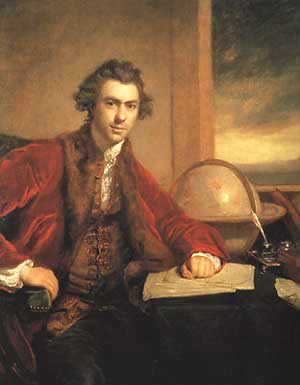
Oh yes, the name. The finished product is named after the famed explorer Joseph Banks (pictured, right) for some completely artificial reason I couldn’t care less about. 

The Uses:

Overwrought marketing aside, Banks is a phenomenal rum. It is floral and complex, and has just enough vegetal arrack notes to add flavor without controlling it. The hint of arrack is what sells it for me. Too much (as in actual Batavia Arrack or Rhum Agricole) overpowers everything and is unpleasant, but just a hint adds an entirely new flavor dimension to the spirit. I would feel comfortable using Banks whenever any clear rum is called for. It won mojito awards, it makes the best daiquiri I’ve ever tasted, and won Best New Spirit at Tales of the Cocktail 2011. It is, simply, an incredible product.

At URBN, we make a Beached Bru with it. My only problem is that there are so many things I love about the rum, it’s hard to mix because the mixers divert from the rum’s complexity rather than add to it. Which is, as they say, one of them good problems.

Pellaton told me that he gave a sample to Mr. Remsberg from the above quote who owned the bottle of 1925 Bacardi. Remsberg said that Banks, while not  as good as the ancient Bacardi, was the closest thing he’d had to it in a modern product. Cuban Bacardi bottles run £2000 where you can find them, while Banks is about $28. Which is plenty good enough for me.

Full list of Banks 5-Island Rum cocktails here.

Note: Curtis himself has written about Banks here.

Trivia1!: Guyana, one of the “five islands,” is not an island. It’s a country hanging out on the northern coast of South America. Also, Batavia Arrack is a rice and sugar-cane spirit from Indonesia, and is not rum. But who cares? Banks 4-Island and 1-Country  Mostly-Rum-but-some-Proto-Rum doesn’t really have the same ring to it.

Trivia2!: Joseph Banks, unsurprisingly, has no relation with Joseph A. Banks, the upper-middle-class haberdashery.

Carpano Antica

The Facts:

Name: Carpano Antica Formula
Category: Vermouth — red (sweet); apertif
Proof: 33 (16.5% ABV)
Origin: Turin, Italy, since 1786
Nose: pungent sweetness; vanilla, caramel and citrus peel
Taste: vanilla, caramel, licorice, cinnamon, red fruit, figs, wood, orange peel, bitterness on the end, dry and lingering finish

Vermouth:

First, a quick word on vermouth: vermouth is not gross. If you think vermouth is gross, you don’t know what it tastes like, because it’s been shit on for so long by the extra dry vodka martini. The vodka martini is like that vindictive guy in The Last of the Mohicans, trying to not only kill vermouth, but make sure its seed dies with it.

This is because while vermouth is glorious in a gin martini, it does not belong anywhere near a vodka martini. Vodka needs a strong man on her arm or nothing at all, and vermouth is too weak, too delicate, and ends up making a vodka martini taste like overproof diluted vermouth. Which, even I will admit, is gross. So, people ordered less and less vermouth, making the open bottles sit behind the bar for longer and longer. And as it’s wine-based, it will go bad over time. So a self-perpetuating cycle began where the only vermouth anyone is exposed to is so old to be worthless, which makes people order it even less, and so on.

Vermouth is what happens when you add sugar, a little alcohol, and aromatic plants, spices, and herbs to wine. The latter’s called aromatizing and they’ve been doing it at least since ancient Greece. The word “vermouth” comes from the High German “wermut” meaning wormwood, one of the plants added to help fight intestinal parasites, and wormwood wine was popular in Germany and England as “vermouth” as early as the 1600s. But a modern drinker (such as myself) wouldn’t have recognized any of these.

The Story:

Vermouth in its current form joins us in 1786, when the experiments of a 22-year old liquor shop assistant named Antonio Benedetto Carpano culminated in what would become Carpano Antica, at once inventing the categories of both modern-day vermouth and the apertif. He infused a white wine base with “over 30” different herbs, roots and spices, livened it up with some sugar and (almost certainly) grappa, and as his cordial contained wormwood in a wine base, he, too, called it “vermouth.”

Carpano’s elixir was nothing dramatically new but for its quality, and that he had the good sense to send a sample to Victor Amadeus III, the ruler of that little corner of what would become Italy who reportedly found it exquisite and helped along its popularity. Not that the Carpano vermouth needed it — it was so good, and in such demand, the store reportedly had to stay open 24-hours a day(!)… which sounds to me like one of those bullshit liquor stories that everyone repeats because no one can say it isn’t so. Why the hell would people need to buy vermouth at 4am? Are we really to believe that they couldn’t service all their customers in the allotted nine hours a day, in a 250,000 person city-state in 18th-century proto-Italy? Far more likely is that production had to be extended late into the night, possibly even 24-hours a day.

It doesn’t matter. Either way, it was an unprecedented success and is now made and distributed worldwide by Fernet Branca, still according to the original recipe and even with the original label.

The Uses:

I used to think Carpano Antica was hands down the best commercially-produced sweet vermouth in the world. Most new cocktail bartenders do. As my familiarity with vermouth grew, I began to see it in a much broader context: it is powerful, it is vanilla forward, it is complex, and it is phenomenal. It’s great alone, it’s great on the rocks on a summer day. Of it’s contemporaries, it packs the most complexity and flavor, sweet without cloying, bitter without real challenge. Yes, sweet vermouth on the rocks with a twist can be completely delicious. Andie Macdowell had a little taste after all. Who knew?

But is it the indisputable best? No. There is no indisputable best. From each according to his ability, to each according to his need. So where does Carpano sit? It’s heavy, very vanilla forward, with broad shoulders and a ton of flavor. “Carpano is a linebacker and Cinzano is a soccer player,” says Jamie Boudreau, and he’s right. As I recently discovered in the Negroni trails, while I love Carpano Antica Negronis, while they’re many people’s favorite Negroni, they’re not my mine.

Personally,  I love Carpano in a Manhattan and Vieux Carre. It’s wonderful in the Don’t Give Up the Ship. And a Bitter Giuseppe and Growing Old and Dying Happy… etc. It’s never bad, just sometimes too much. Use it when you need a big vanilla flavor, to stand up to whiskey in particular.

See the full list of Carpano Antica cocktails here.


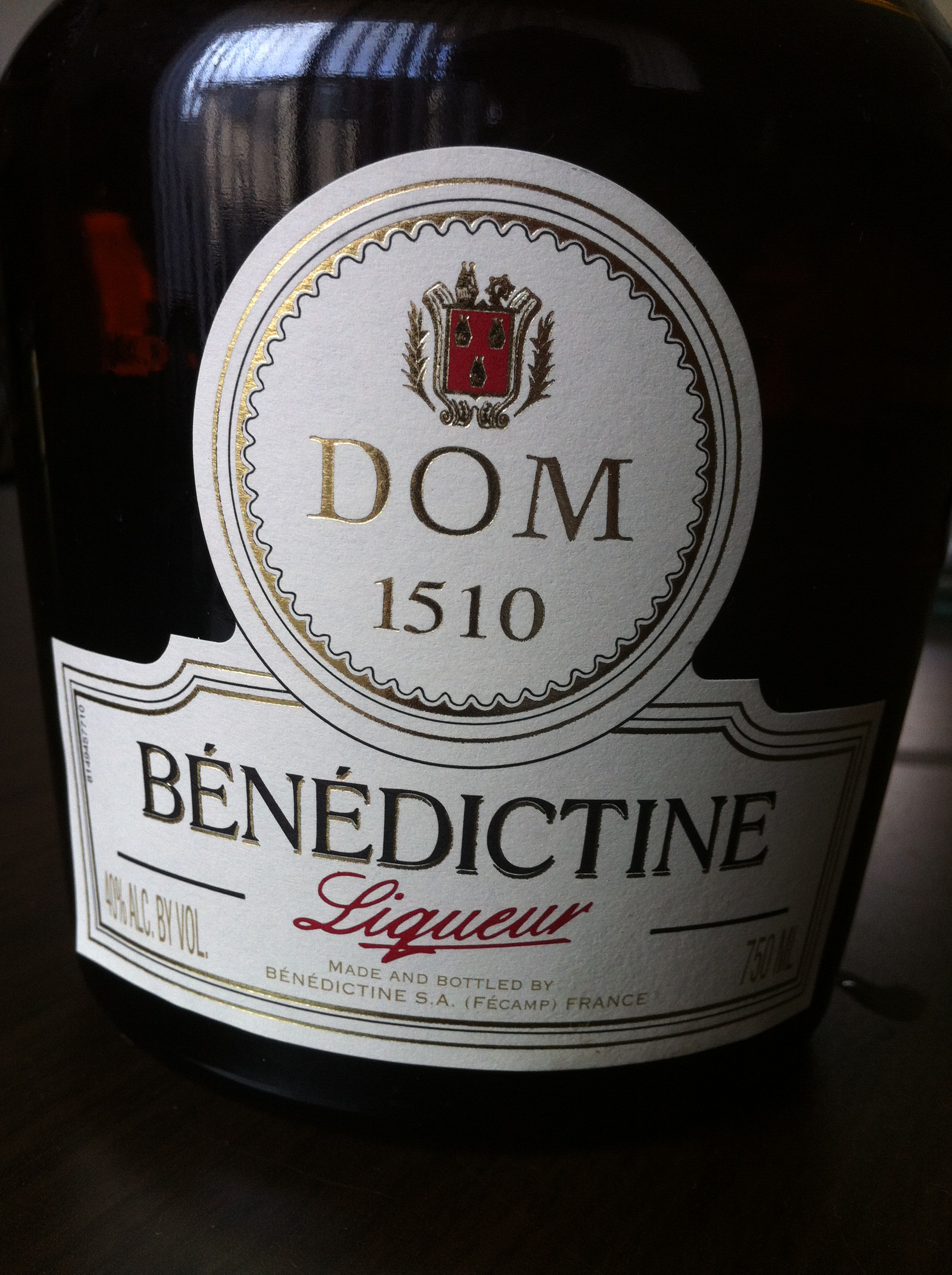
Bénédictine

The Facts:

Name: Bénédictine
Category: Liqueur — Herbal
Proof: 80 (40% ABV)
Origin: France, at least since 1863, allegedly since 1510.
Nose: Honey and saffron; low spice notes of nutmeg & mace
Taste: Thick and sweet; cinnamon, honey and saffron instantly; vanilla on the midpalate with cardamom, with slight alcohol burn; faint cooking spices; long, lingering finish

The Story:

Here is what is indisputably true:

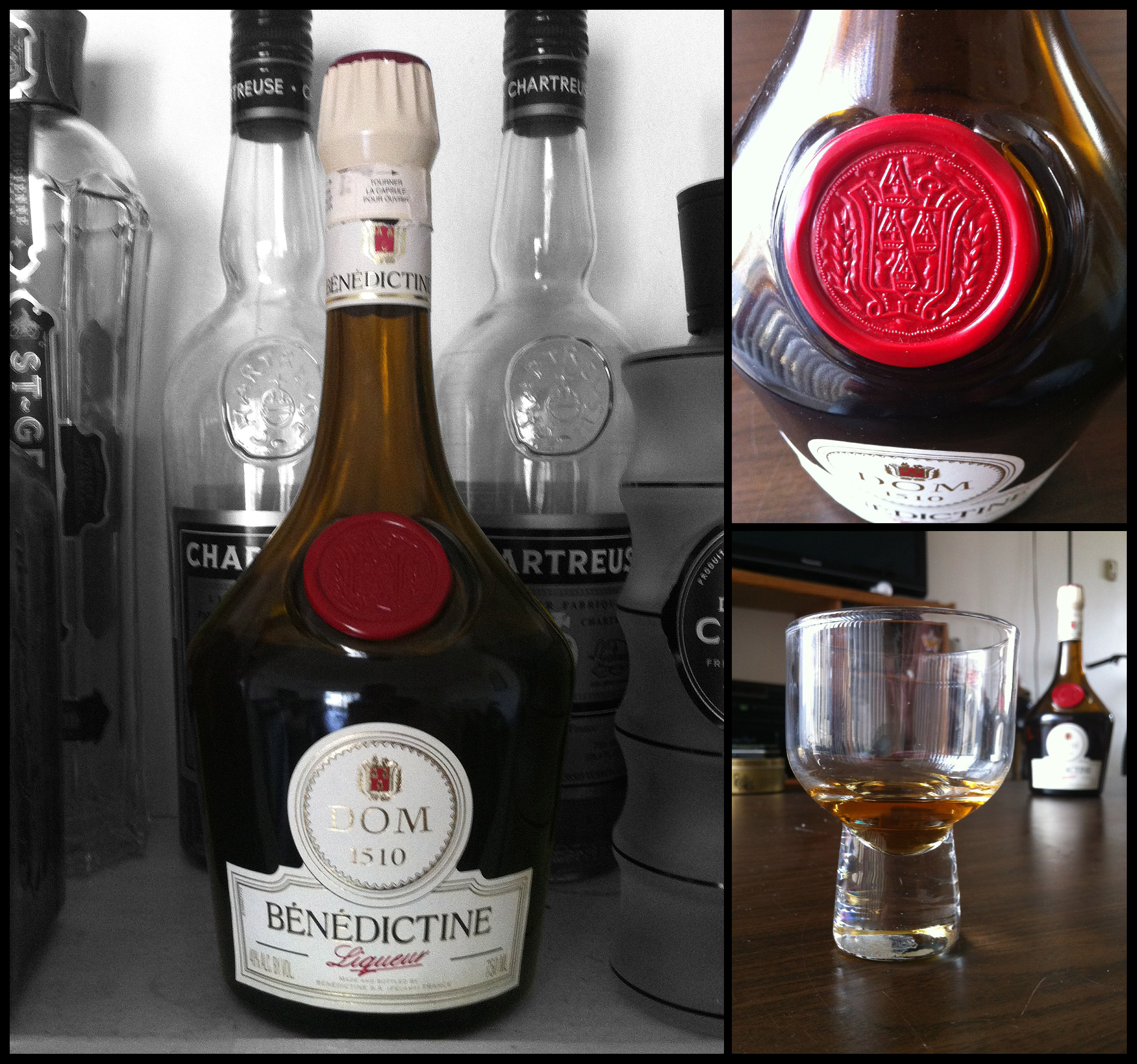
Bénédictine is a liqueur built on a neutral grain spirit base made from distilled beetroot (and not brandy or cognac, which is what practically everyone thinks). It is a combination of 27 different plants and spices, the exact composition of which is a fiercely guarded secret, but are known to include angelica, hyssop, aloe, arnica, vanilla, myrrh, nutmeg, mace, cloves, cinnamom, cardamom, citrus peel, saffron, and honey. The ingredients are divided in four different batches, or “esprits,” which are individually aged for 3 months, then combined with the saffron and honey and aged for 12 additional months. It is made at the baroque Le Palais Bénédictine, in Fécamp, Normandy, it is currently owned by Bacardi, and it is delicious.

Here is what we’re told is true:

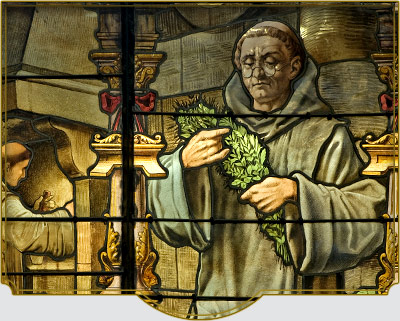
At the dawning of the sixteenth century, a young Venetian monk of the Benedictine order named Dom Bernardo Vincelli was transferred from his comfortable lodgings in Monte Cassino to the abbey at Fécamp, Normandy. The erudite Italian was practiced in the alchemical arts and crafted several recipes, among them an initially medicinal “elixir” based on 27 plants and spices. The elixir of Friar Bernardo swiftly became a local favorite, impressing even King François I who, upon tasting the liquid during a visit to the region, exclaimed, “On my word as a gentleman! I have never tasted better!”*

Bolstered by a royal endorsement, the liqueur thrived on for almost three hundred years, until in 1792 the Abbey was partially destroyed during the tumult of the French revolution by whom the New York Times would later refer to as “the implacable republicans of Normandy.”

The recipe gone, the monks scattered, the abbey burned to the ground, the liqueur all spilled or drank by pyrophilic heathens, it seemed as if Friar Bernardo’s elixir was forever lost to time. Until about 70 years later, in 1863, a lucky wine merchant named Alexandre Le Grand discovered an ancient instructional manuscript at a relative’s house, and began making the liqueur, which he named after the monk who invented it. Being delicious, as it is, is rapidly propagated. He housed his distillery in Fécamp, as Vincelli had done, and began large scale production. The building again burned to the ground in 1893 and was rebuilt as something of a gothic castle in 1900, and Bénédictine has been produced there ever since.

Here is what is almost certainly false:

Pretty much everything you just read except for the last half-paragraph or so.

Wikipedia flat out says the story of the seredipideous manuscript is outright false, and common sense agrees. I don’t know why, but the world of liquor is uncommonly flush with these stories, of the toiling monks of the silent order who make the liqueur and only say one word a year, “…delicious,” and so on and so on. There was indeed a Benedictine abbey at Fécamp, and it was indeed partially destroyed, but there are no monks there anymore and haven’t been in centuries (note: Bénédictine never actually claims that monks currently make the liqueur), and no corroborating evidence I’ve been able to find for it. There is, in fact, no evidence of Dom Bernardo Vincelli’s existence at all.

Far more likely is that Alexandre Le Grand created a remarkably good liqueur, and created an ancient origin story based on the history of the city in which he was based. Bullshit though it likely is, it remains a charming story.

The Uses:

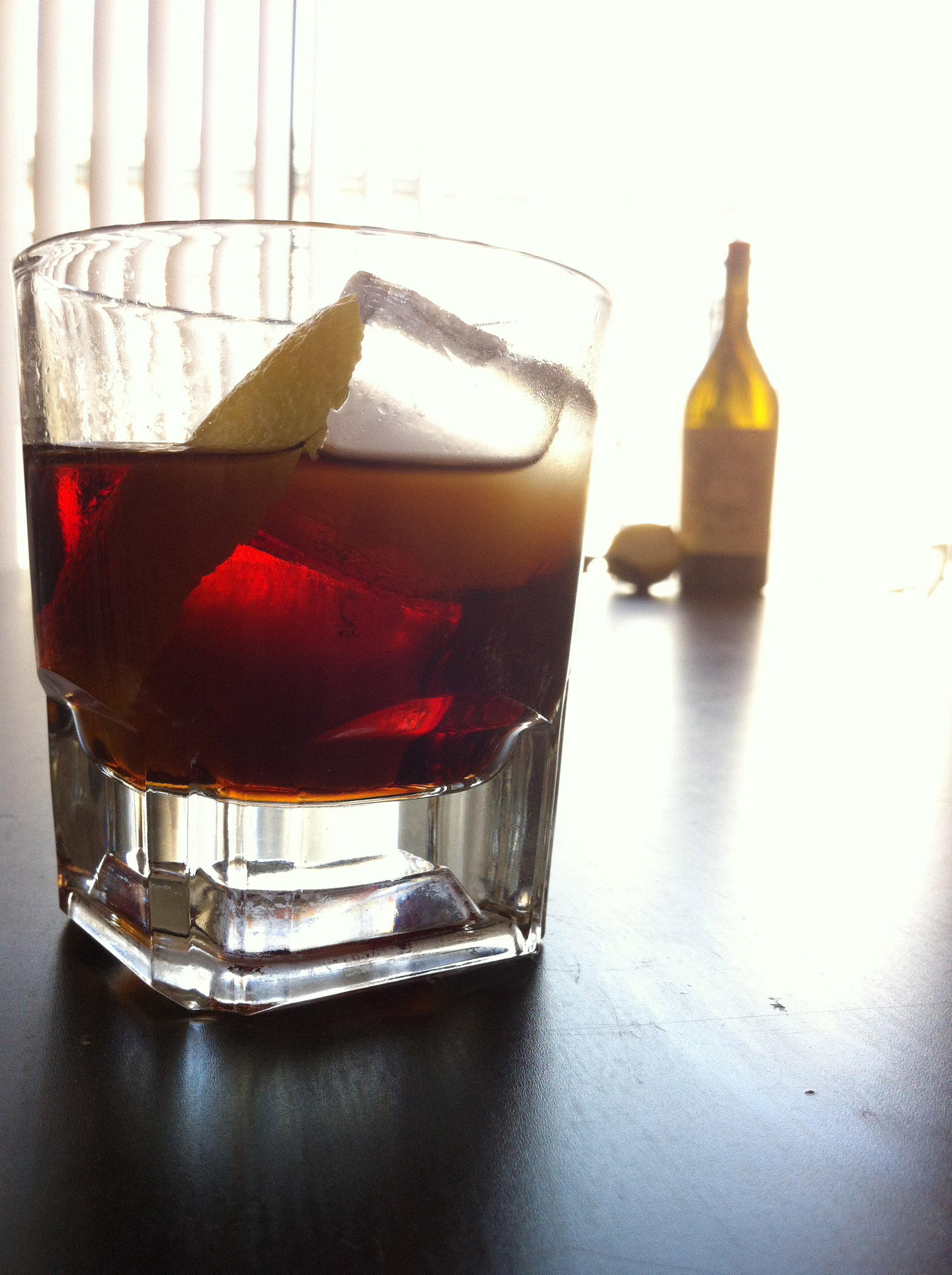
In play, it’s a tremendously versatile liqueur. It’s complex and delicious enough to drink straight after dinner, or mixed to great effect. Equal parts  it and cognac is a B&B (also pre-bottled by Bénédictine themselves, for the lazy) and it pairs tremendously with whiskey for drinks like the Fort Point or Bobby Burns and just a little bit of it shines like a diamond out of the Vieux Carré.

See the complete list of Bénédictine cocktails here.

Trivia!: The promonint “DOM” does not refer to the “Dominican Order of Monks,” a wholly imagined backronym. It is “Deo Optimo Maximo,” the latin motto of the Benedictine order, which they translate to “to God, most good, most great.”

(Trivia about the above trivia!: “Deo Optimo Maximo” was a Latin phrase from way back. All the way back to when the Romans were polytheists, actually, as it directly translates to “to the greatest and best God,” referring to Jupiter. When the Roman empire became Christian, they cleverly took advantage of the arbitrary nature of latin phrasing, so “to the greatest and best God [of all the rest]” became “to God, greatest, best.” Which doesn’t have a thing to do with drinks or drinking, but is interesting nonetheless.)

*He would’ve said this in French.

Cynar

The Facts:

Name: Cynar (Chuh-nar)
Catagory: Potable bitters – the “amari” (plural) or “amaro” (singular) in Italian
Proof: 37 (16.5% ABV)
Origin: Italy, made since 1952.
Nose: Molasses; orange sweetness
Taste: sweet front palate; warm earth and orange; vegetal flavors; firm, robust bitter finish

The Story:

I had Cynar for the first time in 2008 at a place called La Groceria, an Italian restaurant in Cambridge, Massachusetts that had been around for 37 years. The restaurant was closing down and we were taking stock, and from the depths of the lowest shelf was pulled an fading bottle of Cynar, encased in so much dust we could barely tell there was liquid left in it. No one could remember where it came from. Charlie, the owner, swore it had been there since the late 80s. Of course, the inevitable — “What does it taste like?” his son Matt asked — and we were soon betting each other to try.

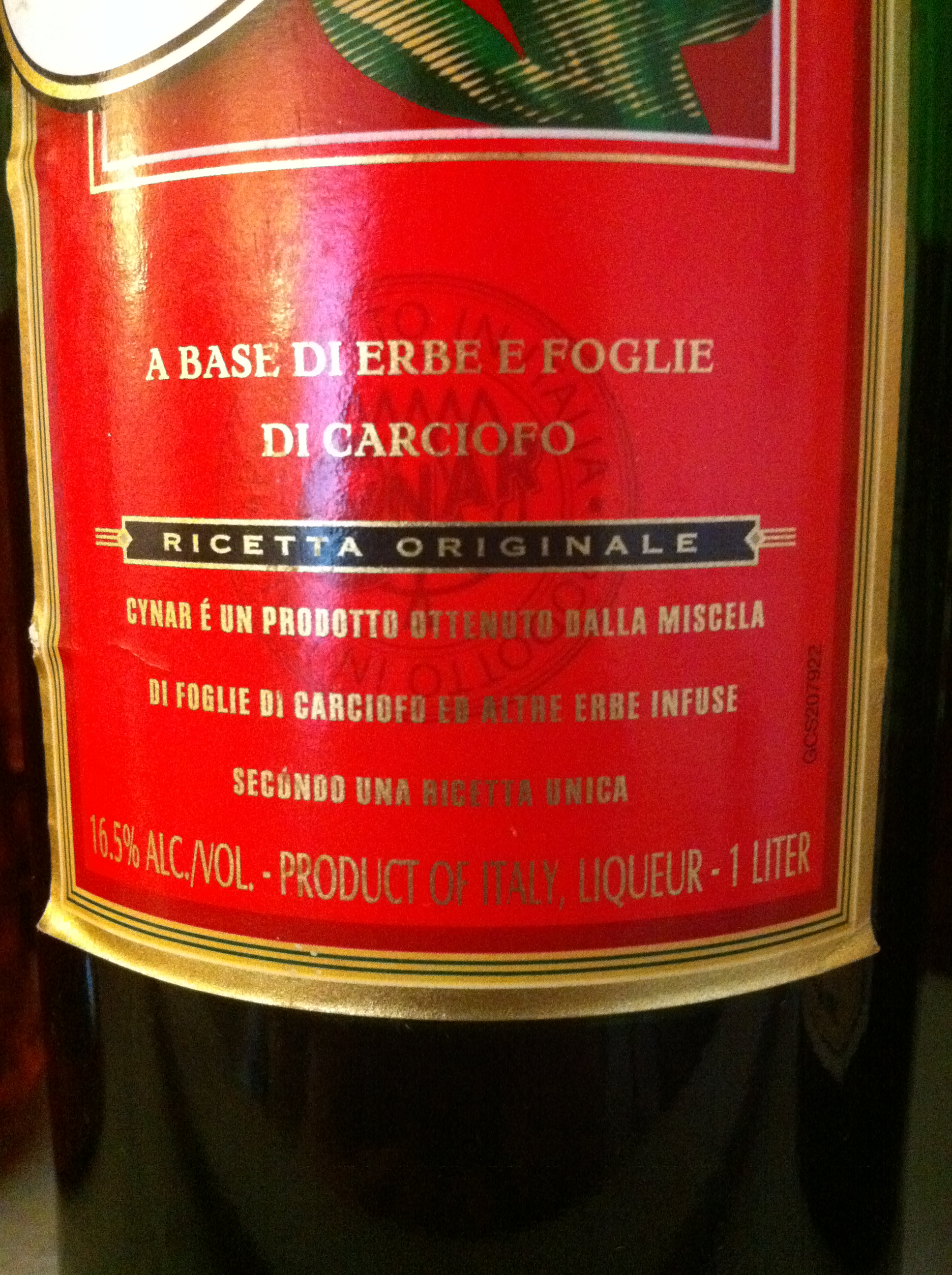
At 16.5% alcohol it wasn’t immune to the ravaging of time, and the decades had left it with the viscosity and color of used motor oil. I knew nothing whatsoever about it, just that the label featured an artichoke busting into the foreground like a cartoon superhero, and everyone seemed to agree that a small sip would be worth five dollars.

It was then, and remains now, the worst thing I’ve ever had.

Fortunately, bottles that haven’t long ago given way to decay are significantly more palatable. Which is not to say that it is not challenging. Those with no exposure to potable bitters will dislike it the first time they have it, and look at you with a face of wounded betrayal, like a dog when you take it to the vet. A face that says, “I thought we were friends… why are you doing this to me?” While it comes sweet at first, the finish is a distinct and robust bitter mixture of earth and copper, like a mouthful of pennies mixed with topsoil. But in a good way.

Cynar is one of the crucibles of the craft cocktail world, one of those things that cocktail people use to tell other cocktail people because of the inherent hurdles involved with (1) finding a bottle behind a bar, (2) finding a bartender who has the slightest inclination to use it, and (3) overcoming the obvious mental difficulties in purposefully ordering a cocktail featuring an artichoke.

But like most all the Amari, once embraced it can be a delightful liqueur, and one that can give incomparable depth of flavor to cocktails. Its bitterness isn’t quite as sharp as Campari’s but is much fuller and rounder and more reminiscent of earth than Campari’s rust. It also features a nice sweetness that leads the palate to the pronounced bitter finish. Like Campari and Aperol, it’s artificially but appropriately colored, with dark orange hues in dark brown base that give a hint of what’s to come.

The Uses:

In my experience, it is most successfully mixed with gin as a base, or with some of its Italian brothers. Its role in cocktails is definitely to deepen or enrich. Things that are too sweet or light could do with a small dose of Cynar, or really anything that wants some robust earthy fullness. Sweet vermouth and Cynar (with a pinch of salt) makes a Bitter Giuseppe, and it can be layered with about 5 other bitters to make an Autumn Negroni.

View the full list of cocktails here.

Trivia!: Unlike what I’ve heard at least one uninformed douche tell someone, “artichoke” in Italian is not Cynar but “carciofo.” The name Cynar comes from the Latin genus of the artichoke, Cynara cardunculus.

The label on the left translates to, “Herbal and artichoke leaves – The Original Recipe – Cynar is a product obtained from the mixture of artichoke leaves and other herbs infused according to a unique recipe.”