The Balvenie

I was recently invited to a four-course Balvenie tasting/dinner at Gabardine, in Point Loma. The big surprise of the night was the food, which, despite my cynical expectations, was completely delicious. I wasn’t as surprised by the scotch. I already knew the scotch was delicious.

Background

It occurs to me that I haven’t written much about scotch on this blog, which is disheartening as it means I haven’t been drinking nearly enough of it. I’d love to do a history and taxonomy of Scotch whiskey, but that’s not for now. For our immediate purposes, there are just a couple basic things you need to know —

While Scotland claims five scotch regions, many people (including me) think that insofar as regional differences are descriptive of flavor, there are really only two: coastal and inland.

Coastal: Islay, Jura, Orkney, Arran, Skye, Mull, and Campbeltown(ish).
Inland: Highland, Speyside, Lowland, and Campbeltown(ish).

If your scotch is coastal, it’s going to have more briny, salty, smoky, and/or peaty notes. If it’s inland, it’s going to be more smooth, rich sweetness.

Now, this is a grotesque oversimplification, but a momentarily useful one. Because what you need to know about The Balvenie is that it’s from Speyside (inland), and as such we know we can expect smooth & sweet, and use it as a launching point.

Also — though I’m sure you don’t give one single fuck about this — I have to make a couple very quick linguistic points:

  1. I’m told the definite article “The” in front of “The Balvenie” is important, but no one ever seems to say why and I feel like an idiot typing it, so I’m going to ignore it from now on. If anyone has an answer for me, I welcome corrections on this point (Lorne & Andrew, I’m looking at you…).
  2. I realize that in Scotland, whiskey is spelled “whisky.” I think this, too, is stupid and will always spell it with the “e,” because “whiskey” is a more attractive word. You’ll notice sometimes spirit writers will hedge their bets with “whisk(e)y,” which evokes Pascal’s wager and is equivocation of the worst sort. You have to stand for something in this world.

Balvenie — Grain to Bottle:

GRAIN:

Like all single malts, Balvenie uses 100% malted barley. Unlike almost any of the single malts anymore, Balvenie grows a healthy portion of their own malt on Balvenie Mains, the 1000 acre farm they’ve owned since the first drop of whiskey came off the stills on May 1, 1893.

MALTING & MASH:

To turn barley into malt (n.), you need to malt (v.) it, which is done by soaking it in water for a couple days and laying it out on the floor to sprout. This process produces the enzymes that converts the starches in the barley to fermentable sugars.

Almost all Scotch whiskey distilleries used to do this themselves, and have since outsourced it to massive commercial malting houses, but Balvenie is one of the very few who still do their own malting by a team of four malt men on a traditional malting floor (sorry). I’m told this DIY business isn’t all too much more expensive, though it is a pain in the ass. The reason they do it is to maintain complete control over their whiskey from grain to bottle, a level of control that one begins to notice they’re a bit anal about.

They want the barley to germinate, they don’t want it to actually turn into a plant. So when the moment’s exactly right, they stop the germination with heat via an enormous kiln, fueled by anthracite and a little bit of peat (if you’re ever wondering where the smoked peat quality of some scotches comes from, it’s this process).

FERMENTATION AND DISTILLATION:

The dried malt is now ground into a fine powder, cooked with spring water to make essentially a sugary barley soup, and then pumped to the fermenters with yeast to turn that soup into beer. Fermentation takes about three days and yields a brew somewhere around 8% ABV.

Like most single malts, Balvenie is twice distilled in copper pot stills. The law says they can distill it all the way up to 94.8% and still call it scotch, which is crazy and practically vodka at that point. Balvenie obviously doesn’t do that and only goes up to 70%, and is diluted to 63.5% before it goes into the barrel.

One thing that doesn’t really matter but is pretty cool is that they keep a dedicated coppersmith on staff to look after the stills. Copper is essential. It actually interacts with the distillate, precipitating some of the uglier compounds so they don’t get into the final product. That reaction, however, takes a tiny (like, molecular tiny) layer of the copper with it every run. A little part of the stills die with every distillation, donating themselves to the greater cause. Thus, coppersmith.

AGING:

Scotch is almost never aged in new casks (compared to bourbon, where all casks legally must be brand new… and yes, avid and curious reader, most bourbon distilleries ship forests of used barrels to Scotland). This means that it gets less oaky tannins from the wood, and more flavors from what the barrel was last used for.

But Balvenie doesn’t just trust anyone to make their barrels, oh no. Remember control? A team of seven coopers make all Balvenie’s barrels, making sure they all are exactly how they want them. Some are then sent to America to age bourbon, some to rum, some to sherry. Then they come back, age scotch, and finish the process.

And now, thank god, we finally get to drink.

Balvenie Single Malt Scotch:

Balvenie Doublewood 12:
Paired with an oyster, with green apple and mint foam.
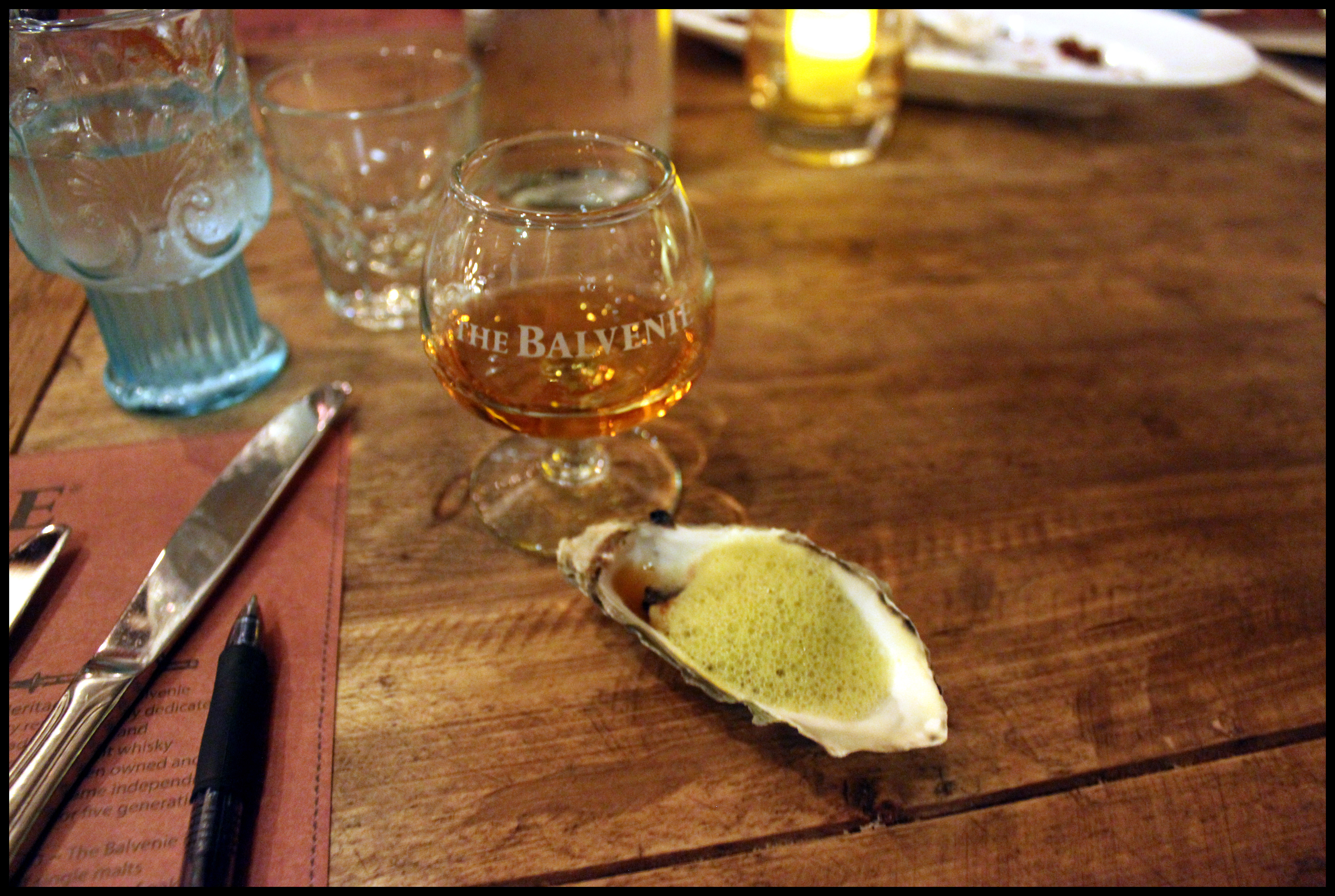
Aged for 12 years in used bourbon casks, then between 3 and 9 months in used Sherry casks, this one is their entry-level whiskey. Some distilleries go the whole way in sherry casks and get a strong fruity, nutty character to them, but here it’s just a whisper. Balvenie is called the most honeyed of malts, and here’s why: strong honey, very light peat and fruit.

The Doublewood is a solid, entry level single malt, perfectly sweet and smooth. Maybe a bit too smooth. This is my only problem with it actually, that it’s well rounded but not stark… it doesn’t stake a claim, it’s just tasty, and as such I’m often surprised to find that I’ve finished my glass. That kind of problem. A great value for the money, good but not attention-drawingly so.

Balvenie Caribbean Cask 14:
Paired with 16-hour sous-vide beets, aerated goat cheese and pumpernickel “dirt” (a.k.a. crumbs).
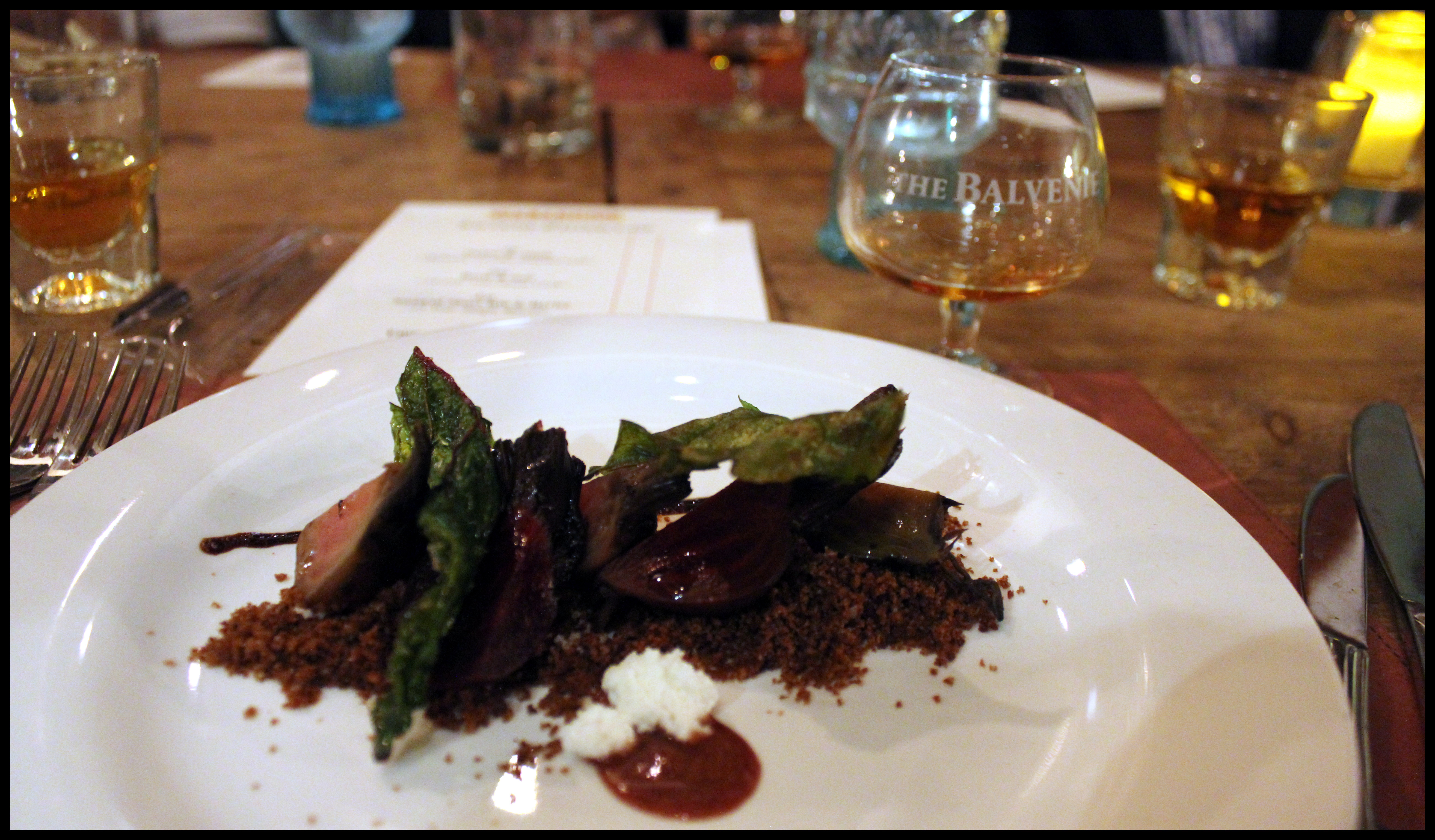
This one is pretty cool, created as a permanent offering after the success of their amazing but limited 17-year rum cask. Unwilling to trust the rum people with their casks, Balvenie buys rum, brings it to Scotland, ages it in their own barrels for 9 months, then sells the rum back and BAM: rum casks.

It’s got rum flavors for sure, full of oak, vanilla, and spice to complement the signature honey sweetness. Caramel notes heavy on a long finish. Smooth as eggs, with a bit more complexity to help solve that hole-in-the-glass problem I had with the 12.

Balvenie Single Barrel 15:
Paired with short rib smoked with scotch-soaked applewood, and barley risotto.

As you may already know, every cask of whiskey is different, even if it’s the identical whiskey that goes into (seemingly) identical casks. It’s Chaos Theory’s contribution to the whiskey game: grains of wood, ambient temperature, air circulation and molecular structure are just a few of the endless amount of variables that simply cannot be controlled. So when you buy a single-barrel whiskey, you’re buying the Malt Master’s sensibilities: this guy literally just goes around tasting a bunch of barrels, and picks the ones he thinks are cool enough to sell as individuals.

The 15 was the stand-out of the night for me. Huge complexity, really fascinating: honey of course, but also heather, brown sugar, wood, leather, peat… great whiskey. At something like $70, it’s a steal.

Balvenie Portwood 21:
Paired with espresso and chocolate layer cake.

Finished in Port barrels, this was an excellent with the chocolate cake, the best pairing of the night. Goes wonderfully with delicate chocolate desserts. It is, in fact, an excellent whiskey, replete with honey, nutty flavors, getting a bit of dried fruit from the port casks. I remember it being silky and pungent, best opened with a couple drops of water.

This bottle retails at $200, and I’ll say these two things about that: (1) the Balvenie Portwood 21 is a profound whiskey, and (2) in my life, I have not yet found a bottle of inland single malt scotch that I’d pay $200 for. Take that for what you will.

BONUS!:

Probably the coolest pronunciation guide you’ll ever find. What would you do if you had a bunch of money, a huge reach, and a readership curious about the finer things?

Esquire, you’re doing it right:
Midnight Stinger

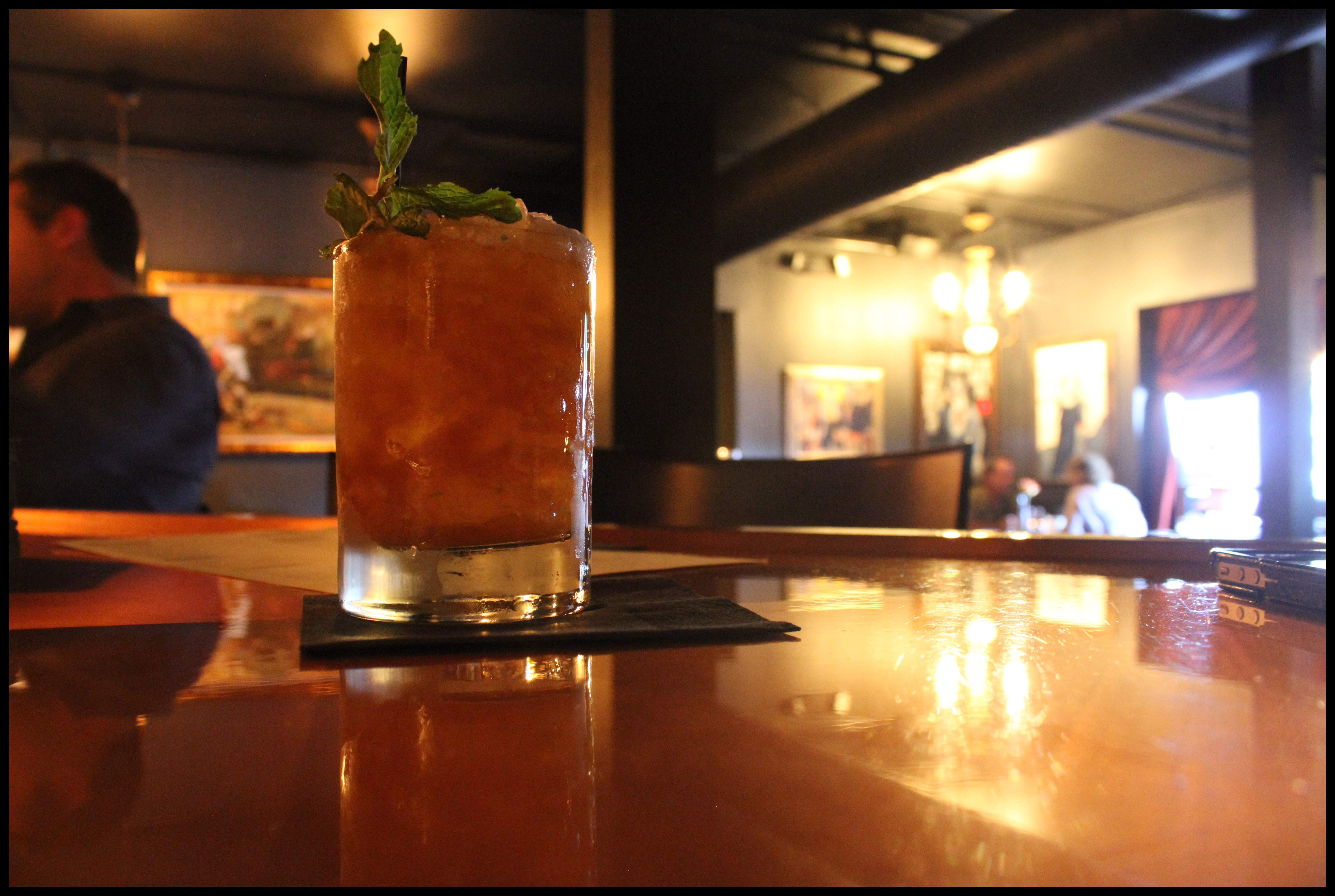
I have long eyed the “Fernet About It” on The Lion’s Share’s menu and was getting excited about it when the gracious & handsome Has suggested another drink he’s been really enjoying lately, the Midnight Stinger, something he picked up on a recent trip to Death & Co. in New York City.

The Stinger is a classic dessert cocktail with brandy and creme de menthe. It is sweet. So sweet in fact, that this is one of the very few all-booze drinks that one should shake (as opposed to stir) in order to mitigate how cloying it can be… and while this “Midnight” version is also suitable for post-meal drinking, that’s more or less where the similarities end:

Midnight Stinger
1oz Elijah Craig 12 year bourbon
1oz Fernet Branca
0.5oz lemon juice
0.5oz simple syrup
Shake, strain over crushed ice in a double rocks glass; garnish with a bright little mint sprig.

\

I’m really starting to like these fractioned sours. This cocktail was damn tasty and, to my great surprise, not difficult to drink. You’d think it would be… an ounce of Fernet? It seems a bit rude for mint to RSVP only to have Fernet Branca show up, but as I’ve learned in my life, showing up with bourbon is a good way to be welcomed in the door.

I think it’s the sour template and the crushed ice, but this was a surprisingly easy, herbal drink. It’s a great option for someone who wants some of that peppermint oil in the back of their throat but not a full blast of the Branca’s devil potion. I’d actually give this as an intro drink to anyone curious about Fernet. Great before or after or even during dinner. Delicious.

I’ve still never had any of their menu drinks. I love that place.

Don’t Give Up The Ship

In the late afternoon of June 1, 1813, as he lay dying, Captain James Lawrence could tell by the shouts on deck that the British had boarded his ship. The USS Chesapeake was battered and outgunned but Lawrence was a military man, and he gave what would be his stoic final order: “Don’t give up the ship. Fight her till she sinks.”
His command was universally seen as an act of valor, despite the obvious fact that he had quite a bit less to lose than his men, considering that he was, at that moment, already bleeding to death. But that’s not the point. The Chesapeake was ultimately given up, within the hour even, but that’s not the point either. The point is that “Don’t Give Up The Ship!” became the rallying cry for the fledgling U.S. Navy, who ultimately overpowered the British and (spoiler alert!) won the war of 1812.

Now. What any of that has to do with gin, Fernet Branca, orange liqueur and Dubonnet is anyone’s guess, but it does. Not everything is explainable; enjoy the mystery. What best I can tell, a cocktail by that name first appeared some 130 years later in Crosby Gaige’s Cocktail Guide and Ladies’ Companion in 1941, but twiddled its thumbs in obscurity until sometime around 2004, when it was unearthed and reanimated, like so many other greats, at Seattle’s Zig Zag Cafe.

It was first made for me by Dave Kinsey at Craft and Commerce, who told me he picked up the recipe from Sam Ross. I immediately fell in love with this drink. Fernet Branca is such a problem child that getting it to play nice is a treasure in itself, and the flavors layer perfectly … it hits clean and bright, with the Fernet sparkling like a firecracker on the finish. It’s beautiful.

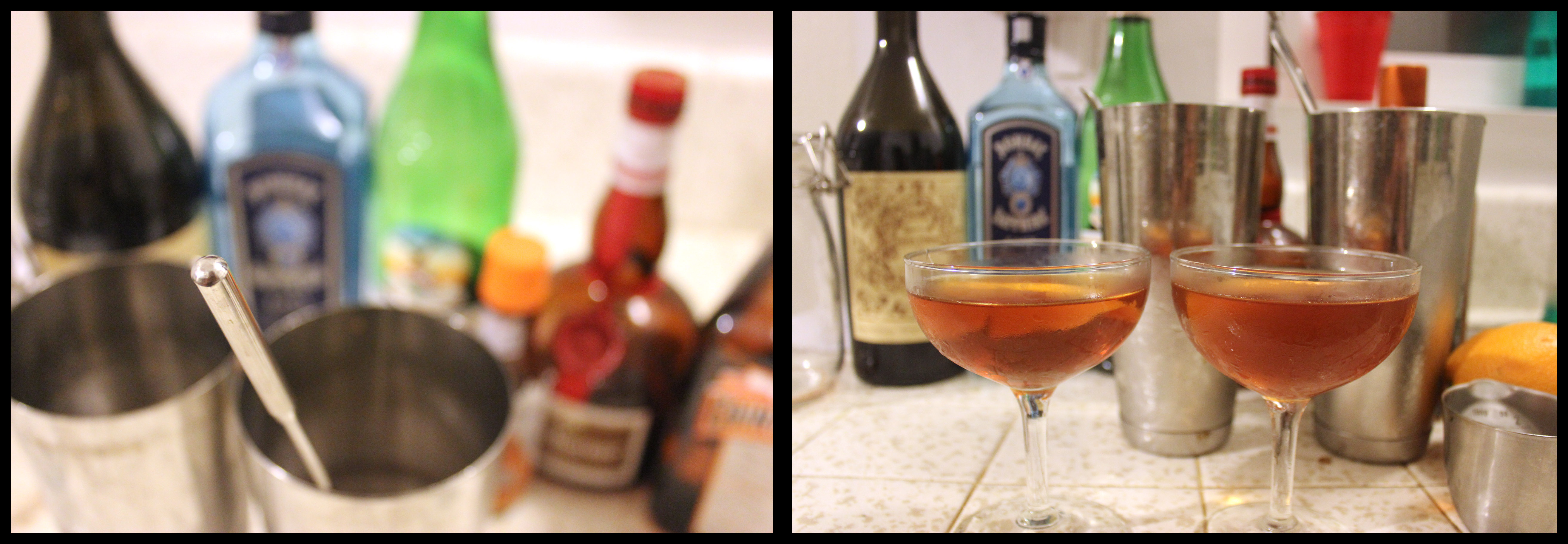
But, when I looked up the recipe online (here or here or pretty much anywhere), it was different than the one I was given. Not entirely different, but different enough that it would change not just the flavors but the character of the final drink. Mine had a half ounce each of Cointreau, Fernet Branca, and Carpano Antica; the original subs Dubonnet Rouge for Carpano, and halves the liqueurs down to 1/4oz each, subbing Grand Marnier for Cointreau.

WTFuck?

Clearly an extensive round of experiments was in order. Which is like my favorite thing. I made 8 incarnations, learned quite a bit about the mechanics of this particular drink (as well as Dubonnet and Grand Marnier), and came up with what I think is the definitive recipe. I’ll give you that first (if that’s what you’re here for), then below I will — as we used to say — show my work.

Don’t Give Up The Ship (The Best Version)
1.5 oz London Dry Gin
0.5oz Cointreau
0.5oz Carpano Antica
0.5oz Fernet Branca
1 dash Angostura Orange bitters
Stir over ice for 30 seconds; strain into chilled cocktail glass; garnish with a orange peel.

Cheers.

But why should we believe you? (a.k.a. Nerding Out w/Cocktails)

Because I got good and drunk over two nights just so I could tell you these things.

Also, please don’t take my gin choice to say that I think it’s the best for this drink. It’s just what I had lying around.

Attempts 1 and 2:

1: Craft and Commerce/Sam Ross/The One I Initially Fell in Love with

1.5oz gin (Sapphire East)
0.5oz Cointreau
0.5oz Carpano Antica
0.5oz Fernet Branca
2 dash orange bitters (Angostura Orange)

…vs…

2. Same ratios, switch out Cointreau for Grand Marnier

1.5oz gin (Sapphire East)
0.5oz Grand Marnier
0.5oz Carpano Antica
0.5oz Fernet Branca
2 dash orange bitters (Angostura Orange)

The only difference is the orange liqueur, and my god is it a difference. The original recipe calls for orange curacao and most people sub in Grand Marnier, which is way, way worse. Maybe changing to Dubonnet as well will somehow change that, but I doubt it. Not only is the entire drink out of balance, no harmonies to speak of… but the finish, where the Fernet should fizzle, instead there’s all these oaky vanilla flavors from GM’s cognac base. The flavors don’t fit at all, and actually makes me wonder it’s possible that Grand Marnier could ever fit in this drink.

Attempts 3 and 4, reducing the liqueurs from 0.5oz to 0.25oz:

3: Original ratio, with Cointreau

1.5oz gin (Sapphire East)
0.5oz Carpano Antica
0.25oz Cointreau
0.25oz Fernet Branca
2 dash orange bitters (Angostura Orange)

…vs…

4. Original ratio, with the (seemingly more traditional) Grand Marnier

1.5oz gin (Sapphire East)
0.5oz Carpano Antica
0.25oz Grand Marnier
0.25oz Fernet Branca
2 dash orange bitters (Angostura Orange)

This is interesting… this echos the original recipe that has only a quarter ounce of orange liqueur and Fernet Branca. Where before (with 0.5oz each) the Cointreau was perfectly balanced, taking away a quarter ounce of Fernet and Cointreau renders the cocktail effete and kind of waifish. … and it should be noted, this is a problem that the weighty force of Grand Marnier solves nicely. #3 is too light, #4 restores balance. I still don’t think the cognac flavors belong there, but let’s see what happens with Dubonnet.

Attempts #5 and #6: Enter Dubonnet

5th Attempt: The Classic Recipe

1.5oz gin (Sapphire East)
0.5oz Dubonnet Rouge
0.25oz Grand Marnier
0.25oz Fernet Branca

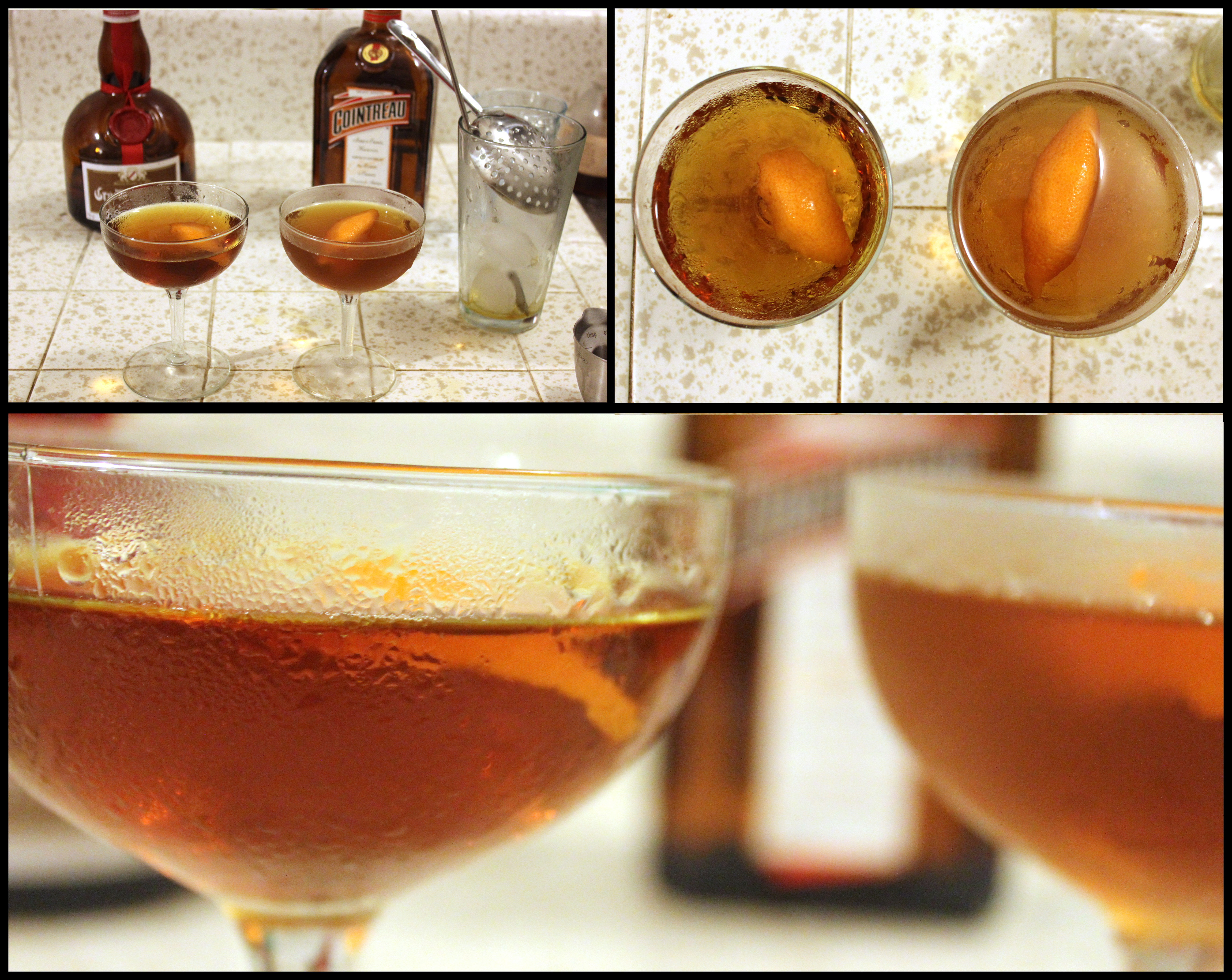
Thinner, a bit oaky, but the near-fruity brightness of the Dubonnet mixes incredibly well with the Grand Marnier. This is totally delicious. The dissonance is fascinating. Definitely a different drink than #1. This may be a Happy Gilmore/Billy Madison situation (you prefer the one you saw first). Perfectly balanced with high complexity. I can’t get over the bright/heavy thing with the Dubonnet/Grand Marnier. Great.

…vs…

6th: Craft and Commerce recipe with Dubonnet instead of Carpano Antica

1.5oz gin (Sapphire East)
0.5oz Dubonnet Rouge
0.5oz Cointreau
0.5oz Fernet Branca
2 dash orange bitters (Angostura Orange)

I feel like in a way this is a drink without a country. Dubonnet has less richness than Carpano, a richness the drink really needs to balance the crisp punch of Cointreau. Very interesting. The lightness makes the Fernet almost toothpaste-y, plus with a mess of jaunty flavor wisps on the back end. It just misses. Flavor waves don’t line up. One of five stars. Would not buy again.

Final Test: #1 against #5

I guess I could’ve just skipped straight to this, but I wanted to understand the mechanics and now I do. The classic with Dubonnet and Grand Marnier is a lower tone, more restrained. Sitting around a fire, maybe. Craving warmth. The vanilla and oak flavors certainly dictate the overall feel. #1, on the other hand, is bright and cheery, cleaner and crisper. It showcases the Fernet. It’s a modern drink – bright, complex, full. I end with what I started with. #1, with a bullet.

Attempts #7 and #8: Postscripts & Curiosities

7th: Can I switch out a citrus-forward new gin for the juniper-forward London Dry?

1.5oz gin (Martin Miller’s Westbourne Strength)
0.5oz Cointreau
0.5oz Carpano Antica
0.5oz Fernet Branca
2 dash orange bitters (Angostura Orange)

Miller’s Gin is on the other side of the spectrum: fuller, and much more citrus/less juniper. The answer is No, no, you can’t mess with the gin. Use London Dry, something crisp and juniper forward. It’s actually pretty amazing how much the cocktail fell apart with the Miller’s. Heavy, unpleasant bitterness. Don’t even bother.

8th: How about the new ratios with the classic liqueurs? 0.5oz of everything but with GM and Dubonnet?

1.5oz gin (Sapphire East)
0.5oz Grand Marnier
0.5oz Dubonnet
0.5oz Fernet Branca
2 dash orange bitters (Angostura Orange)

No way. Way too much. This is a jumbled hodgepodge of messy flavors all trying too hard to get noticed, like the cocktail equivelent of watching The Bachelor. Curiosity satisfied. I don’t need any more. We have our champion.

Bellini

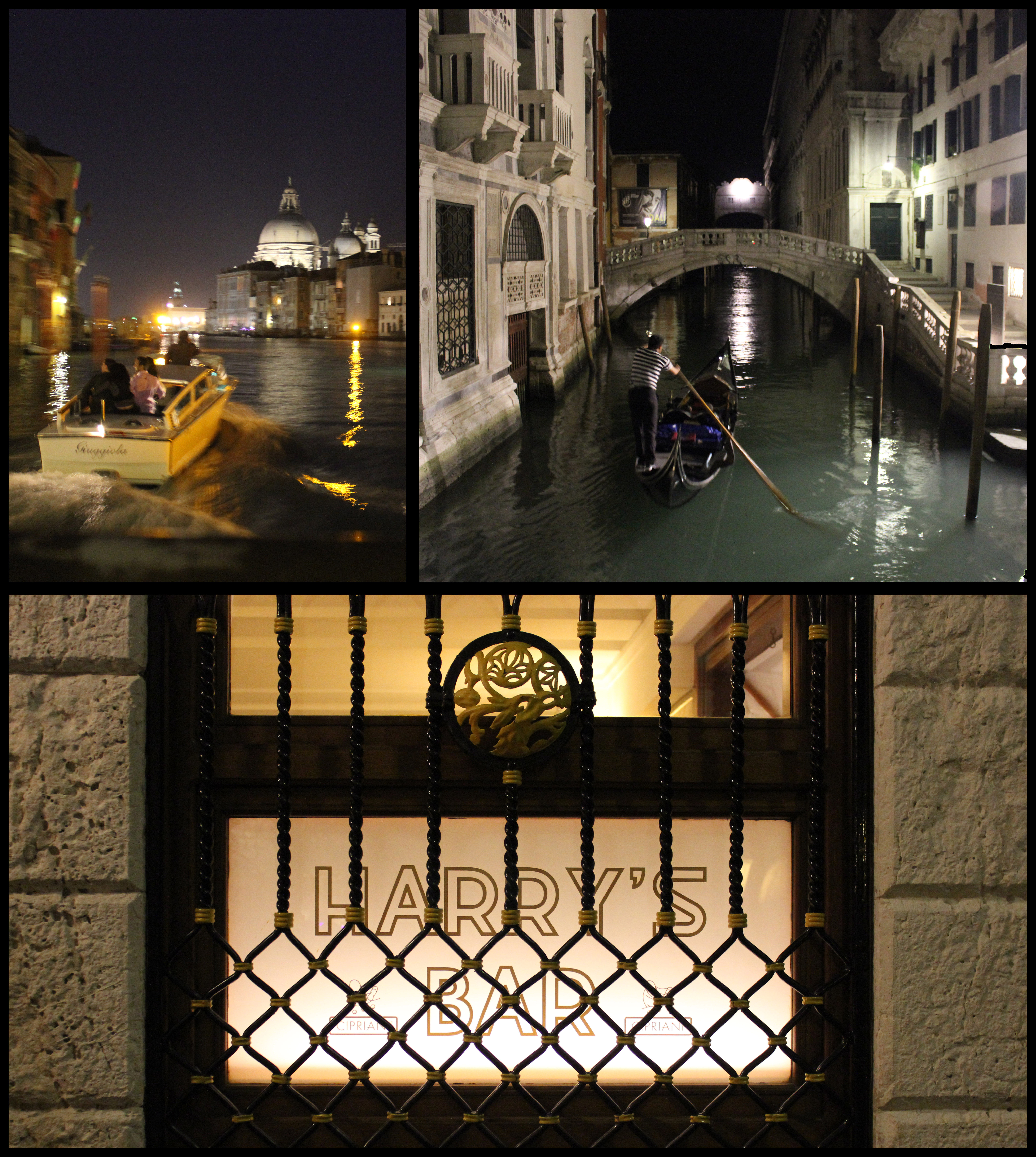
In this business you hear a lot of origin stories about classic cocktails, but rarely get to experience them. That is to say, you rarely get to (1) actually go to the room in which it was invented, and (2) get one that is as good if not better than it is anywhere else. But if you’re ever lucky enough to find yourself in Venice and have that special mixture of historical reverence and financial irreverence, well, then you get to go to Harry’s Bar and drink a Bellini.

HARRY’S BAR

On Calle Vallaresso, a block west of the Piazza San Marco at the mouth of the Grand Canal sits Harry’s Bar, much as it has since the 1931. A small bit has changed since then — they’ve expanded upstairs, and international fame has driven their prices into the ionosphere — but such is, we’re told, the cost of history:

In the 1930s, Venice was a favorite destination of the cream of European society, and Harry’s Bar thrived under the hospitality of owner and barman Giuseppe Cipriani. It also didn’t hurt that its name attracted anglophiles, and was extremely — though coincidentally — similar to another world-famous bar of the time, the unconnected Harry’s New York Bar in Paris. But no matter: it had the staying power of quality, and was a favorite among rich locals and well-to-do tourists, then of visiting movie stars and other such celebrities. Once Hemingway chose it as his favorite spot in 1949, Harry’s officially became legendary. Which I guess is what makes it ok for them to charge €10 for eight ounces of Coca-Cola.

THE BELLINI

Sometime in the late 30s, Cipriani was stuck with a glut of seasonal white peaches and no good way to store them. After what must’ve been a whisper from the muses, he whipped up a puree and added it to some prosecco, and the world’s greatest sparkling wine cocktail was born. His drink, popular though it was, went unnamed for almost a decade. It wasn’t until 1948 when Cipriani christened it the Bellini, after he saw the drink’s pink hue echoed in a painting by the homonymous Renaissance artist.

From Harry’s own website:

When making a Bellini, everything (the glasses, Prosecco and white peach puree) should be as cold as possible. The general rule is to use one part white peach puree to three parts Prosecco. Use fresh frozen white peach puree when you can, but when making your own puree, never use a food processor because it aerates the fruit. (Maurice Graham Henry often uses a cheese shredder, shredding the peaches and using a strainer to collect the maximum amount of juice.) Add a bit of sugar or some simple syrup if the puree is too tart or a tad sour.

Bellini
6oz Prosecco
2oz White peach puree
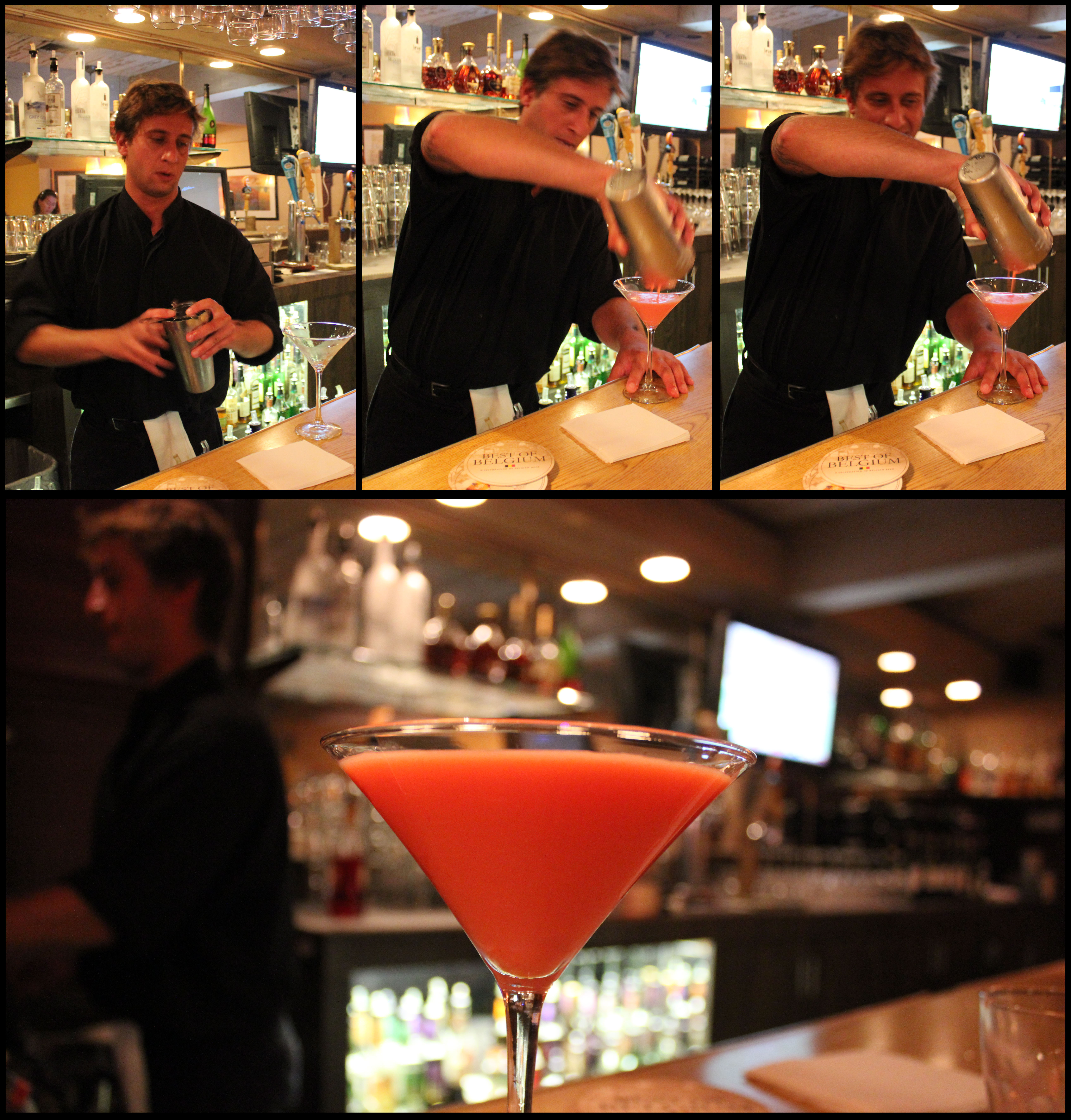
Mix together in separate mixing tin or glass, stir with a spoon; then pour into flute, wine glass, or really whatever you’d like [coffee mug, dog bowl, etc.]. Serve without garnish.

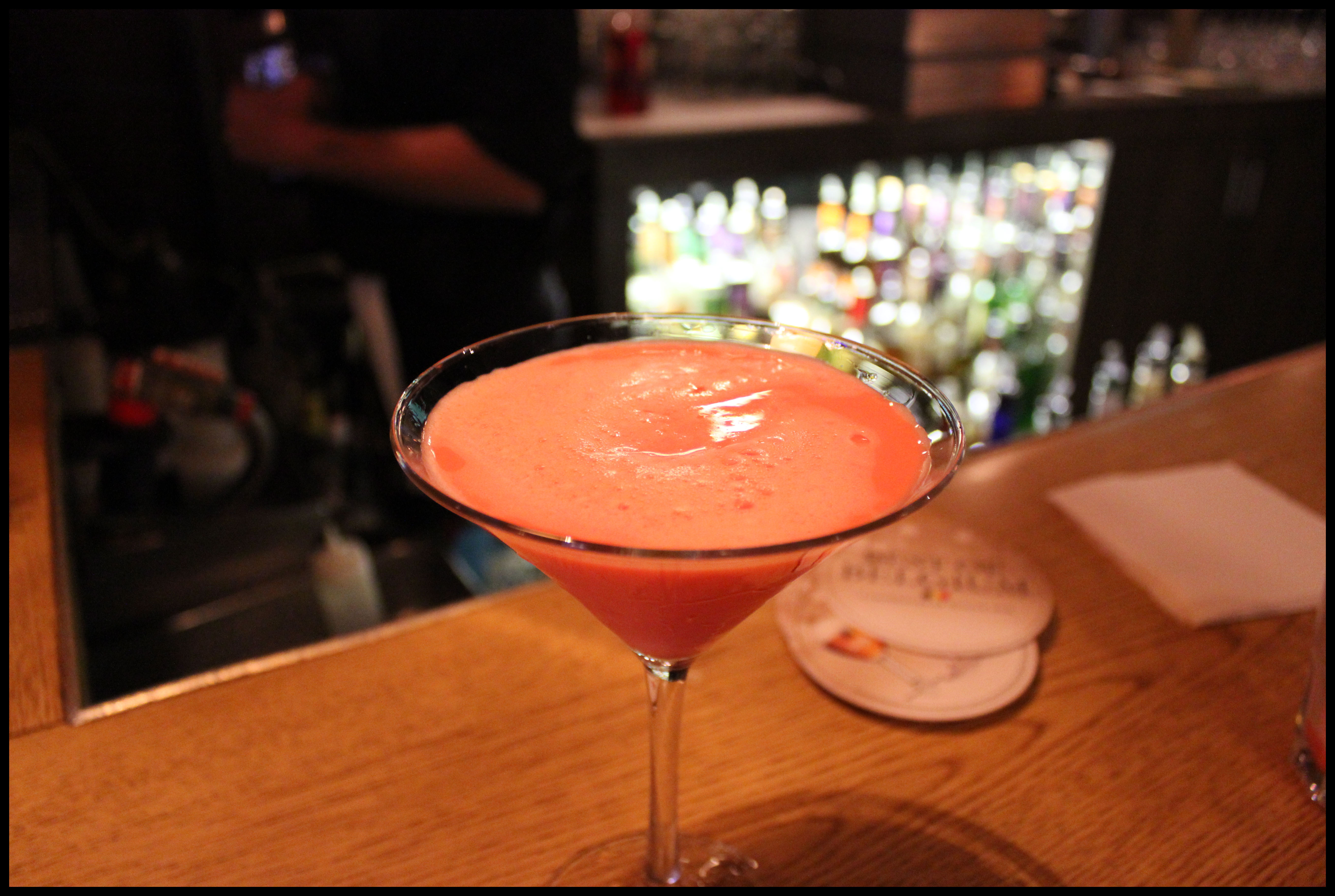
Though each 7oz glass cost $21 (seriously), this is without doubt the best Bellini I’ve ever had. I find Mimosas boring and best prefixed with “endless,” but a Bellini is a elegant, classic drink. Gary Regan calls it “perhaps the most sophisticated Italian drink,” and while I don’t agree at all (against the Negroni? Is he kidding?), it is incredibly good. Bright, full, and harmonious. I sometimes find sparkling wine cocktails to be too thin and effervescent, but the 3:1 prosecco/puree mix hits perfectly.

A note on ingredients: don’t use champagne, get the prosecco. It’s a bit sweeter, which helps, and besides — this is a very Italian drink. If you live in a submarine or something and can’t get prosecco, then use a sweeter champagne than brut, something sec or demi-sec.

Oh, and never use yellow peaches. A pox on you if you use yellow peaches. They’re nowhere near as good.

Pink Squirrel

“Is there any alcohol in that at all?”

— Sam Seaborn

My grandmother’s go-to drink was whiskey & water. It was what she had around the house, and we her family used it sometimes as a weapon, deployed to mollify her late-afternoon grumpiness. I never did glean what her preferred whiskey was; it may have been Seagram’s 7,  but I’m pretty sure she didn’t give a damn one way or the other. It wasn’t special. There was no ceremony. For her, whiskey & water was a kitchen table, Tuesday afternoon drink.

For special occasions, though, when the outfits were removed from their thick reflective plastic, and the nice jewelry retrieved from the ornate chest on her dresser… special occasions called for a Pink Squirrel.

I had always assumed that it was a flapper drink, ordered at speakeasies by women in stringy dresses, and served in gently-sloped martini glasses so to not discompose one’s cloche. But it was not so. Paternity credit goes to Bryant’s Cocktail Lounge in Milwaukee, Wisconsin, who claim the drink was invented there by the owner, Bryant Sharp, in 1941. I’ve not seen any evidence, but in the absence of either competing claims or more information, we’re rolling with it.

It enjoyed some popularity even through the mid 70s, shifting  into obscurity not long after. They (Bryant’s) say it was originally with ice cream, but by the time it first showed up in print, in the 1966 edition of Old Mr. Boston, the dairy had morphed into heavy cream. And this is the recipe you’ll get pretty much anywhere. The original:

Pink Squirrel
1oz creme de noyaux
1oz white creme de cacao
1oz heavy cream
Combine ingredients in mixing tin; shake; strain into martini glass; no garnish.

Special thanks to the excellent bar at Hunter Steakhouse, the only bar I know absolutely for sure keeps a bottle of creme de noyaux.

There are a couple problems with this, the first and most obvious presented as a question: What the hell is creme de noyaux?

Noyaux (noy-yew) is a French word for “stone” or “kernel,” specifically the kernels found inside the pit of stone fruits (peaches, plums, apricots, etc.) Creme de noyaux is a bright red liqueur made from these peach kernels, which taste strongly of marzipan and bitter almonds. So it is, at it’s most basic level, a liqueur that tastes like almonds, even though it has no almonds in it.

It’s all but extinct now, particularly in the U.S., though you can find it here and there. The problem is that these kernels contain a compound which gets converted into hydrogen cyanide upon digestion. Which is bad. In fact, of all the words to follow “hydrogen” in terms of digestibles, “cyanide” is among the worst. So even the bottles you can find are probably flavored artificially, which is way easier than neutralizing cyanic compounds.

Sometimes arcane ingredients get resurrected, like creme de violette and Old Tom Gin, but I wouldn’t bet on a Noyaux revival because the liqueur is the capitalistically grim trifecta of being difficult to make, somewhat expensive, and in incredibly low demand.

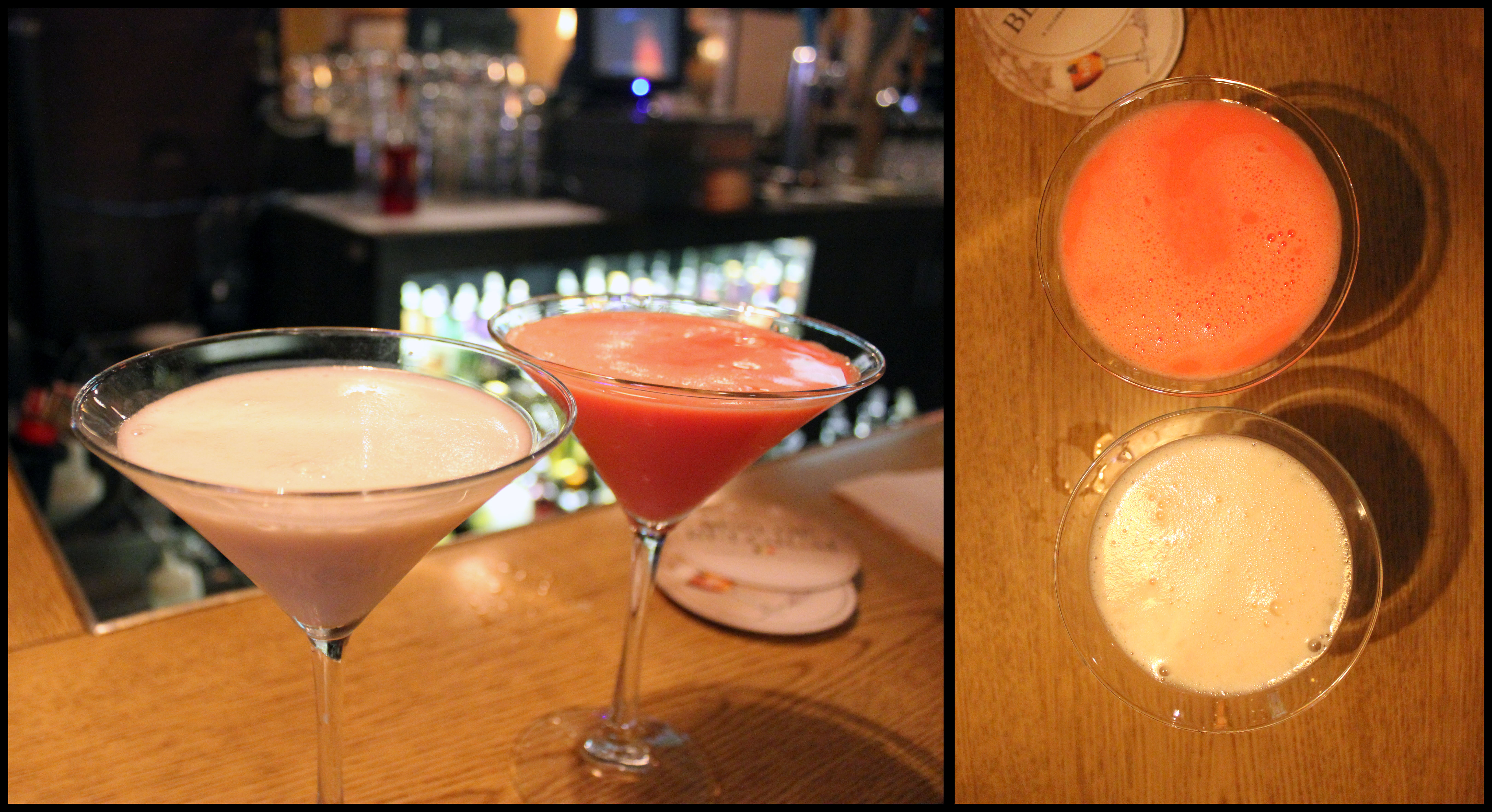
If you have creme de noyaux, artificial or not, go ahead and make that drink. Chocolate, almonds, and creme don’t need a cheerleader in me. For what it’s worth, I’ve never used heavy cream, opting instead for half & half or whole milk, pretty much whatever’s around. I wouldn’t go leaner than whole, but that and creamier will work fine. The faint bitterness of noyaux plays a small diplomatic role in mitigating sweetness, but be assured, this is bright pink dessert. It’s creamy. It’s sweet. It’s delicious.

If no noyaux, there are two alternatives. Well, three, assuming you’ve got a bucket full of peach pits and a heart full of danger.

(1) Make your own. A few intrepid bloggers have tackled the production, most notably Matthew Rowley, hydrogen cyanide be damned. I don’t recommend this, but do as you like.

(2) Use grenadine. Be advised, this makes an entirely different drink (often called Pink Squirrel #2). While it remains bubblegum pink, grenadine is chosen exclusively for its color, as the pomegranite/flower-water flavor has nothing whatsoever to do with bitter almond/marzipan of noyaux.  A chocolate and pomegranate mixture has charms all it’s own, but a Pink Squirrel it ain’t.

(3) Amaretto. Noyaux’s shares the tastes-like-almonds-though-there’s-no-almonds characteristic with (most) amaretto. Though amaretto is an almond liqueur, it usually gets its flavor from apricot pits. Flavor-wise, it’s a good call. But amaretto won’t get you a pink squirrel, rendering instead a light brownish-squirrel.

C’est la vie. We do what we can.

If you (for some reason) want to learn more about creme de noyaux, there is a reasonably complete discussion here.

BONUS PERSONAL FACT:

A short story: at my grandmother’s 70th birthday, in 1996, the whole extended family convened at a bar in Detroit. My aunt managed to source a bottle of creme de noyaux, and the Pink Squirrels were flowing with heady abandon. I was 12 at the time and, mesmerized by the lurid martini glasses abound, demanded a taste of this mysterious candy-colored beverage. It was so much better than the gross wine and barfy beer that I had tasted before that I proclaimed, much to everyones drunken amuseument, that “when I turn 21, my first drink is going to be a Pink Squirrel!”

Eight and a half years and 2500 miles from that point, my mother conspiratorially tells this story to my friends, so it’s decided and enforced that my first legal drink has to be a Pink Squirrel. We first tried the W Hotel in Westwood, who blinked absently at our requests for either the cocktail or the noyaux, so 12:05am on December 6, 2004 found us in the basement bar of the Beverly Hills Hotel, Pink Squirrel in hand. I took a picture and sent it to my Grandmother, who responded with the same kind of overwhelmed happiness that she did every time any of her grandchildren did anything.

12/6/2004 and 9/15/12:

“What did you expect?” Úrsula sighed. “Time passes.”
“That’s how it goes,” Aureliano admitted, “but not so much.”

— One Hundred Years of Solitude

Grapefruit Lime Cordial

First things first, some (I promise) brief history & trivia on the British Royal Navy, scurvy, DrPepper Snapple Group Inc., and what any of that has to do with a grapefruit lime cordial I made in my kitchen the other day:

Scurvy is a degenerative and ultimately fatal disease caused by not enough vitamin C. As we can get like 1,200% of our daily C from one glass of orange juice, we in the 21st century don’t often require bravery in the face of scurvy. But to sailors in the 18th century, it was a essentially a plague. In that century, the 1700s, the Royal Navy lost more sailors to scurvy than they did to actual war.

Not that some didn’t have good ideas. One commander, Admiral Edward Vernon stumbled onto something when in he decreed in 1740 that lime juice be added to his sailors rations, originally to make their gross, algae’d water more palatable. Surprisingly, his men thrived while the others’ teeth fell out. There was only one problem with this: the only way to preserve lime juice for long sea voyages was to add it to their daily rations of rum (a shit hot dirty rum at that, which direly needed lime juice’s charms anyway). With their “grog” (rum, water, lime) taken in the morning as medicine, sailors were falling out of the riggings drunk by mid-afternoon. Again, better to do that with teeth than without, so the lime juice stayed.

It was another 100 years before a young Scot named Lauchlan Rose patented a way to preserve lime juice without alcohol. That was 1867, the same year the Government got wise to the whole citrus business and mandated that all Navy ships give daily rations of lime juice to everyone on board. Rose’s “Lime Juice Cordial” became ubiquitous almost immediately, surviving over 140 years to present day. It pairs with gin to make a gimlet, and you can generally find a crusty old bottle of it behind most bars… But not mine. Rose’s is now owned by DrPepper Snapple Group Inc., and as such is made like a soft drink with the following ingredients: water, high fructose corn syrup, lime juice concentrate, sodium metabisulfite (preservative), natural flavors, and Blue #1. It is, with it’s lurid chemical florescence, precisely the type of saccharine bullshit that the cocktail resurgence defines itself against.

This puts us cocktail people in a uncomfortable dilemma, a kind of paradox of snobbery: you must use a lime cordial (not lime juice) to make a proper gimlet, but you also must use fresh ingredients. So what do you do? Enter: homemade cordial (I added grapefruits for a specific drink I was making; obviously this is not necessary). And what do you know, not only is it cheap and easy, it’s unbelievably good.

Grapefruit Lime Cordial

Step 1: Aquire a bunch of grapefruits and limes, an equal amount of each. I did 8 each, which ended up making roughly 45 ounces of cordial. Which is a lot if you’re using it 0.75oz at a time.

Step 2: Wash that shit. With a vegetable brush. Even organic citrus usually has food-grade wax on it to preserve freshness, and the peel is especially important here.

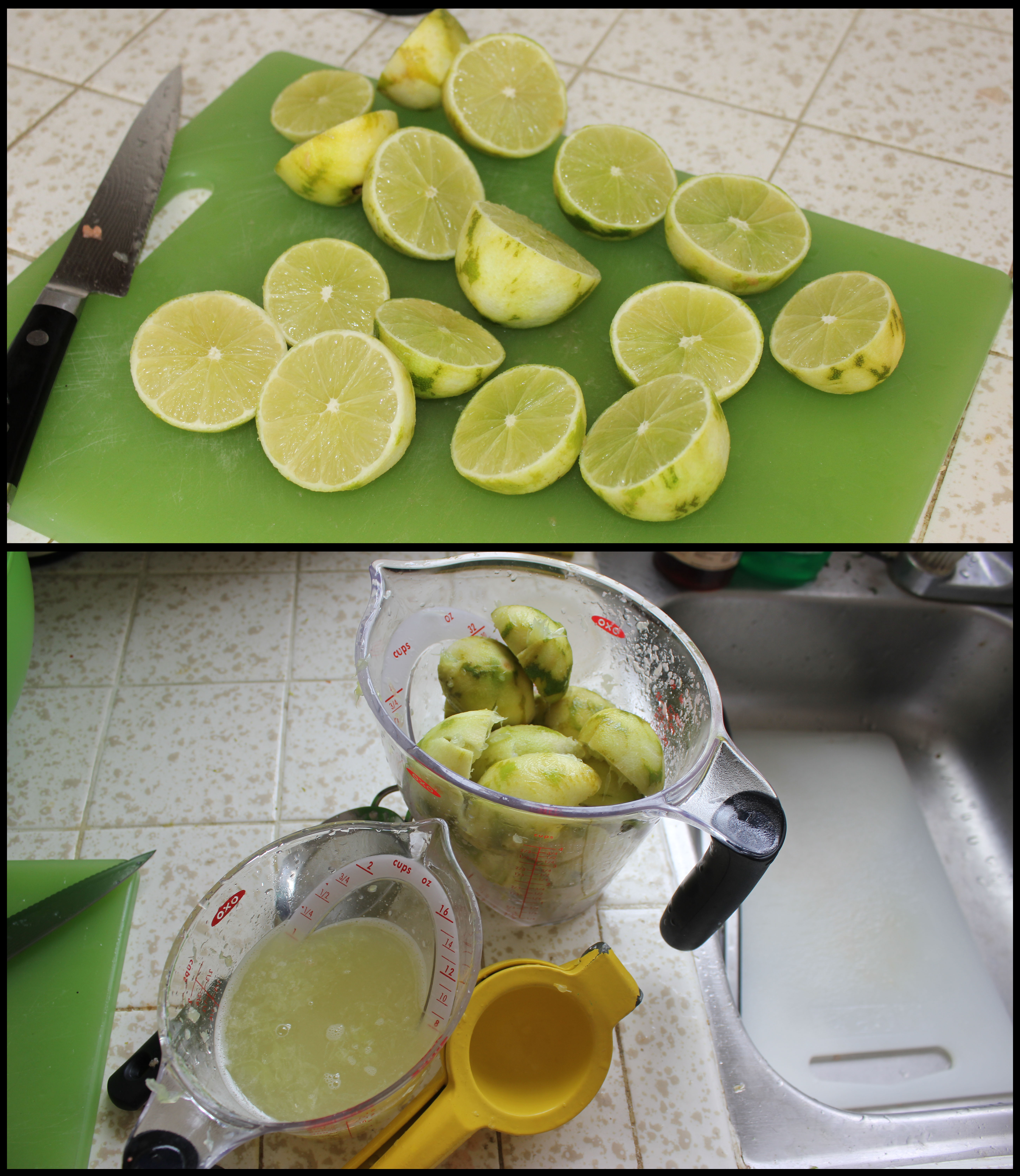
Step 3: Peel grapefruits and limes with a vegetable peeler, removing all the skin but as little as the pith as possible. Pile the skins into a large-ish bowl. This peeling business is difficult with the limes because of their thin skin, so this first time I ended up zesting them. I’ve since made a ginger/lime cordial where I said to hell with it and just peeled them, and it worked fine. This is good, because I absolutely despise zesting limes, and exponentially so in large amounts.

Step 4: Measure out 3oz of ultra-fine sugar per grapefruit, and dump it into the bowl. I used 8 grapefruits, so I covered them in 24oz (by volume) of sugar. Using a muddler, or potato crusher, or really any hard flat object, muddle (press firmly) the peels into the sugar, over and over. Your goal is to bruise most of the surface area of the peels, then surround them with the sugar. Cover and let sit on the countertop between 1-3 hours, stirring once or twice (if you want).

One of the charming characteristics of sugar is that it is oleophilic, which means that it likes to bond with oil. So for that hour, the sugar is drawing the naturally occurring citrus oils out of the bruised peels. When you come back, you find some thick, brightly citrus flavored syrup. If you were to stop now, it would be called oleo saccharum (literally “oily sugar”) a totally delicious sweetener used in punches and the like. But we’re not stopping now. Oh no. Strap in, friends, and put your juicing pants on.

Step 5: Juice the now-naked grapefruits and limes, and add that juice to the oleo saccharum. Because the size of the fruits will govern both how much peel and how much juice they give, this ratio pretty much works itself out.

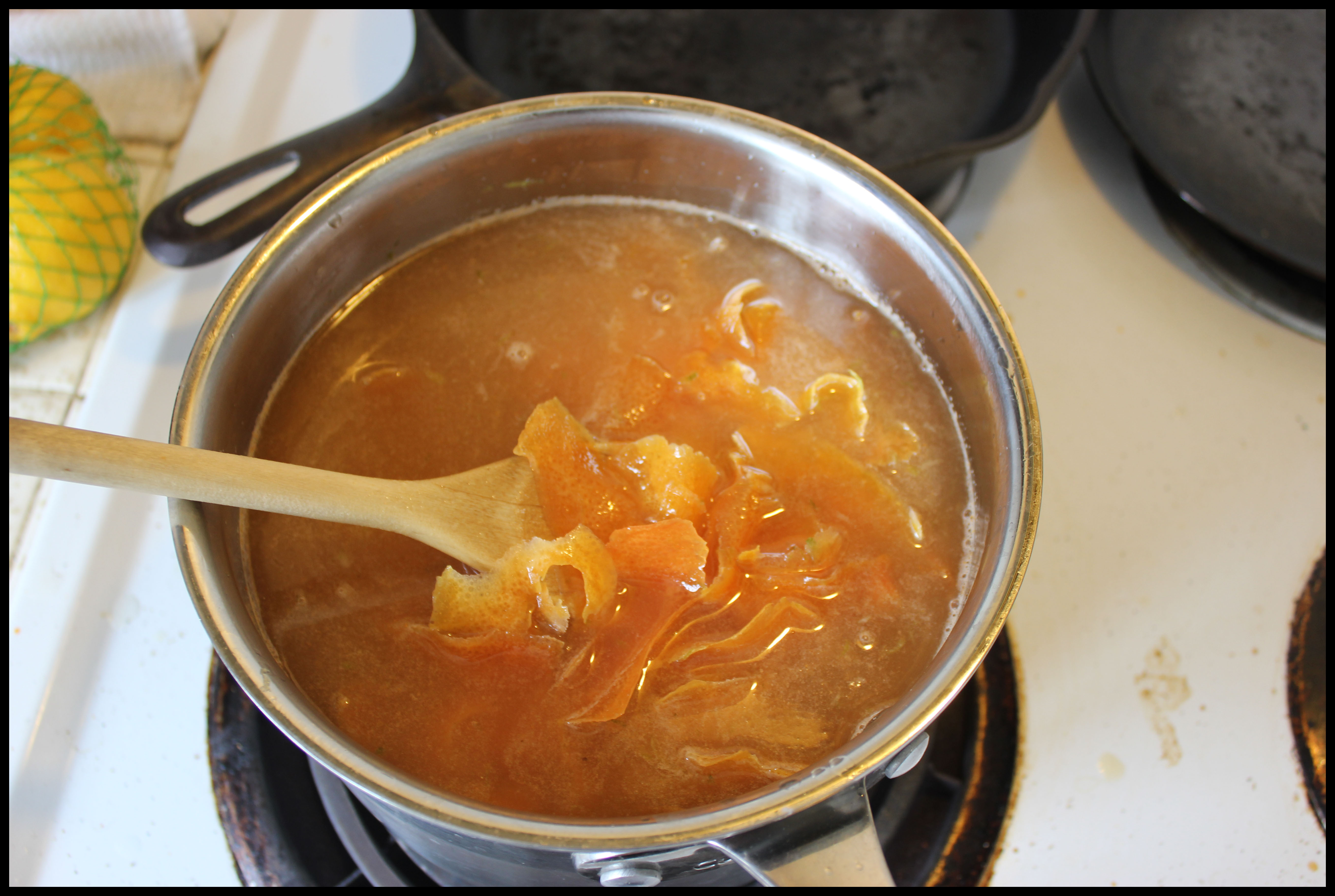
Step 6: Add the mixture to a heat. Just a little, well before boil, just enough so gentle stirring dissolves the sugar. As soon as the sugar has been completely dissolved, remove.

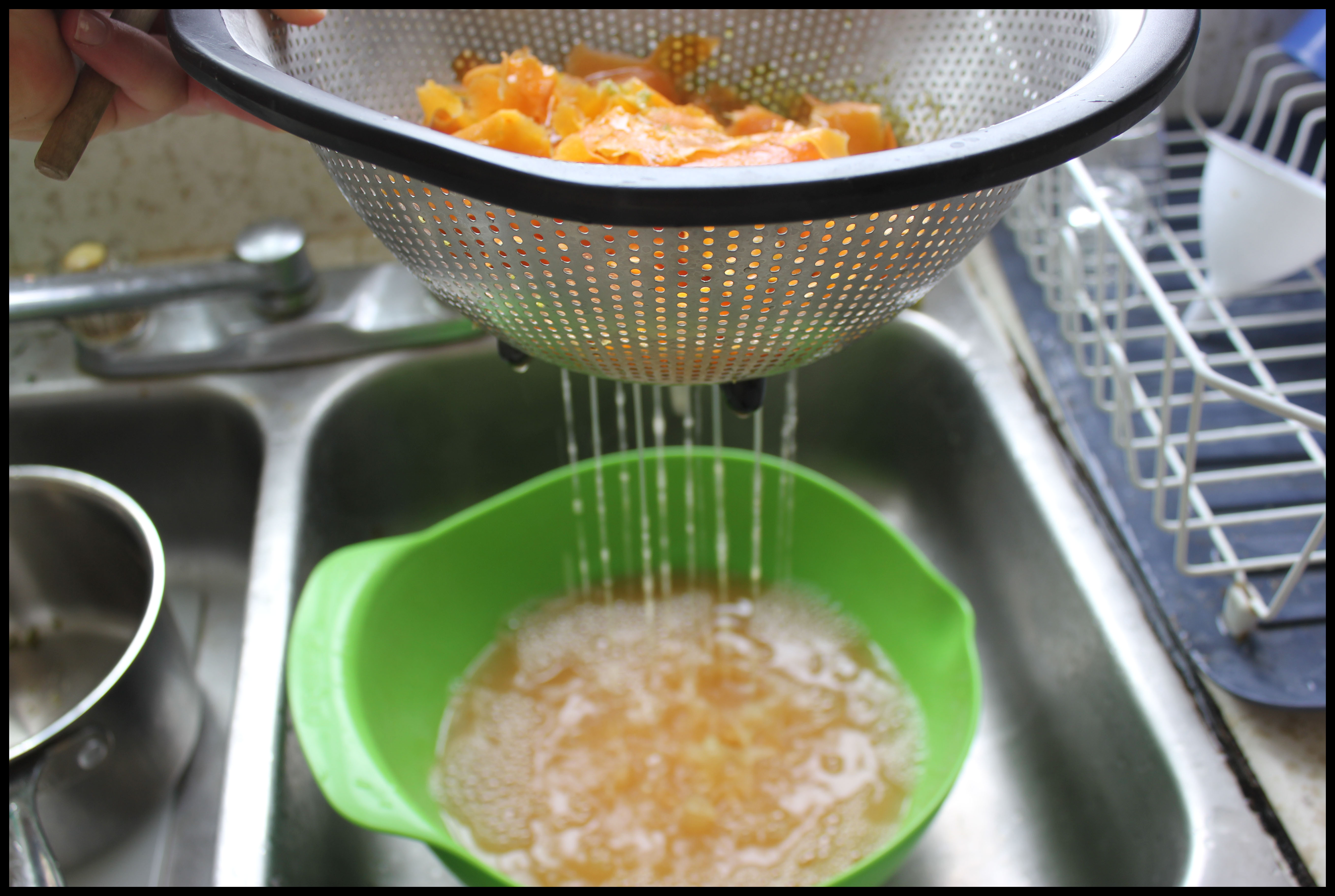
Step 7: Strain out all the solids. The sugar makes it thick, so this is easiest done when it’s still warm. My method is to use a pasta strainer to get the big peels, then a tea strainer for the smaller pulpy business, but you do whatever you want. This is America, after all.

The pulp won’t ruin anything, but it’s better without. Step 8: Bottle, and refrigerate. Once it cools down, it’s ready to go.

Step 9:  Enjoy.

It’s sweet and tart, with an unbelievable brightness from the citrus oil. The sugar more or less neutralizes the bitterness from the grapefruit, giving it a candied feel. Add carbonated water for an amazing soda, or mix with pretty much whatever you like.

BONUS COCKTAIL: I made this for the GQ Bombay Sapphire “Most Imaginative Bartender” competition. I would’ve ordinarily stopped at the basic drink, but that “imaginative” part demanded more. Thus the weirdness. It didn’t win or anything but I was still very pleased with it, and it’s been enjoying orders for 2nds and even 3rds at the bar.

Sailor’s Gimlet
2oz Gin
0.75oz grapefruit lime cordial
0.5oz fresh lime juice

You could stop now, but what makes it way better is:

Rinse the glass with Batavia Arrack if possible; if not, an agricole rum or cachaca. If not, a funky rum. If you have nothing, or nothing but Bacardi, go buy better rum.

You could definitely stop now, but what makes it (whoooaaa!) “imaginitive” is:

Also rinse glass with Green Chartreuse; but first, rim cocktail glass with cinnamon, a pinch of sugar, and shaved macadamia nuts.

It works equally well with rum or tequila. Tweak the recipe or your expectations and you don’t need the lime juice. I find the acidity is nice for balance, but do what you like. And if you find something cool, tell me about it. Cheers.

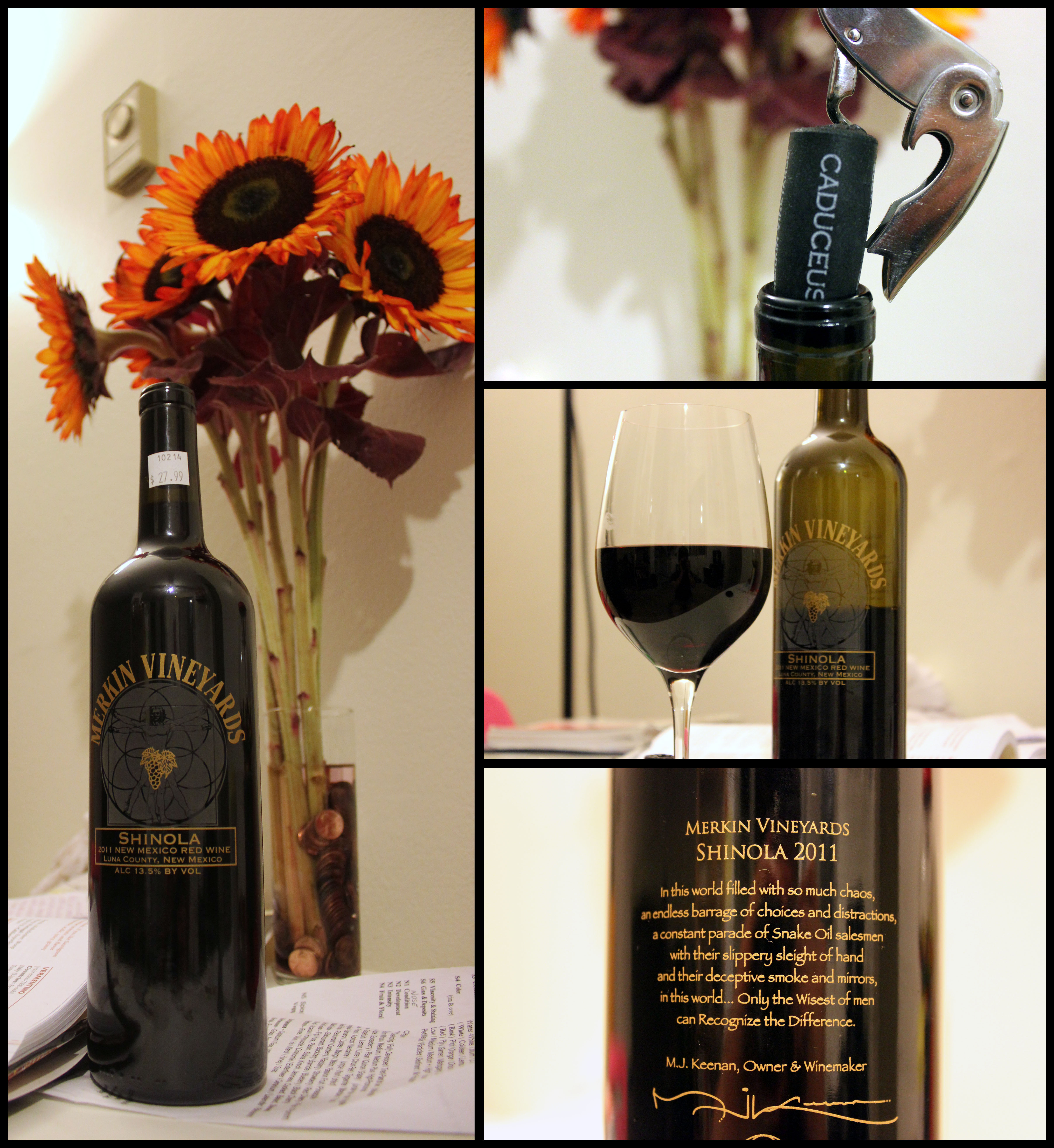
Merkin Vineyards – Shinola 2011

I don’t normally write about wine, mostly because it’s a little out of my range of expertise. I’m not totally unschooled, but all that means is that I know just enough to have caught a glimpse of the staggering, Himalayan breadth of my own ignorance.

But this is a Maynard wine. For those who don’t know, in addition to being the lead singer of Tool, A Perfect Circle, and Puscifer, Maynard James Keenan is a fledgling winemaker. His stuff is very small production and somewhat bizarre in that he owns vineyards in Arizona and New Mexico as well as California. He likes strange varietals from uncommon places, which, if you too are gushingly familiar with his work, you’ll agree fits.

We picked up a bottle the other night, and as a once rabid Tool fan and pan-Maynard appreciator, as well as a professional drinker of drinks, I thought I would say a small something about it. Also, there’s really no other information about it online, and I’ve always thought of myself as the Julian Assange of the San Diego alcohol-based blogosphere.

Merkin vineyards are one of Keenan’s labels which sources grapes from California, Arizona, and New Mexico. Apparently the Shinola used to be a Merlot/Cab wine from California, but it’s migrated southeast, and the 2011 Shinola is entirely a New Mexico wine. It’s an Italian blend, equal parts Sangiovese, Dolcetto, Refosco, and Primativo, spent 10-12 months in new and neutral French oak, and retailed at the 3rd Corner for about $28.

Nose: not too stong. Dark fruits, cedar. Vikki picked up a little steminess.

Taste: Initially tart and withheld. Waiting for an explosion that’s not there. Very tannic, tight. Plums, dark cherry. Slightly flabby. A few hours to open up, and the fruit is much more expressive and the tannins loosen up. Still could use more acid, but not as bad as it was initially.

Finish: Initially dominated by tight, clammy tannins. Once it opens up, finish becomes longer and more balanced. Medium length.

Overall: I really wanted to love this, and initially we were both terribly disappointed. It was a tannic monster, maybe too young. For all Italian grapes I was expecting more acidity to balance, but perhaps that reflects the difficulty in growing grapes in New Mexico. The fruits were clammy and lingered with sweetness in the corners of your mouth. After a few hours, however, we revisited it and found that most of the problems I had with it were at least mostly gone. The fruits were more expressive and the tannins more balanced. Still not without flaws, but at least the winemaker’s vision was coming though a bit clearer. If you get a bottle, be sure that you decant it.

Bottom Line: There are way better bottles of Italian reds for $28, but none that come from New Mexico or are made by rockstars, and that’s essentially what you’re buying. It was more than enough to satisfy my curiosity, but I can’t say that I’d buy it again. What I do like about this and the rest of the Merkin/Caduceus/AZ Stronghold wines is that Maynard likes making unconventional things, and as I’ve said before, it’s always fun to try something new.

Up in Smoke

I was recently asked to make a beer cocktail (read: a cocktail featuring beer in some way) for a mini-competition at Sessions Public. The peremeters were broad and the rules few, and yet I’ve never had a more difficult time inventing a drink. It felt like coaxing blood from a fucking stone, I think mostly because I don’t have a huge amount of respect for the category. Beer cocktails always feel forced to me, more interesting than they are delicious — I’ll have one and find it intellectually satisfying, and not need another. I think that was true of the one I ended up making, and that’s in fact been true of every beer cocktail I’ve ever had, except for one:*

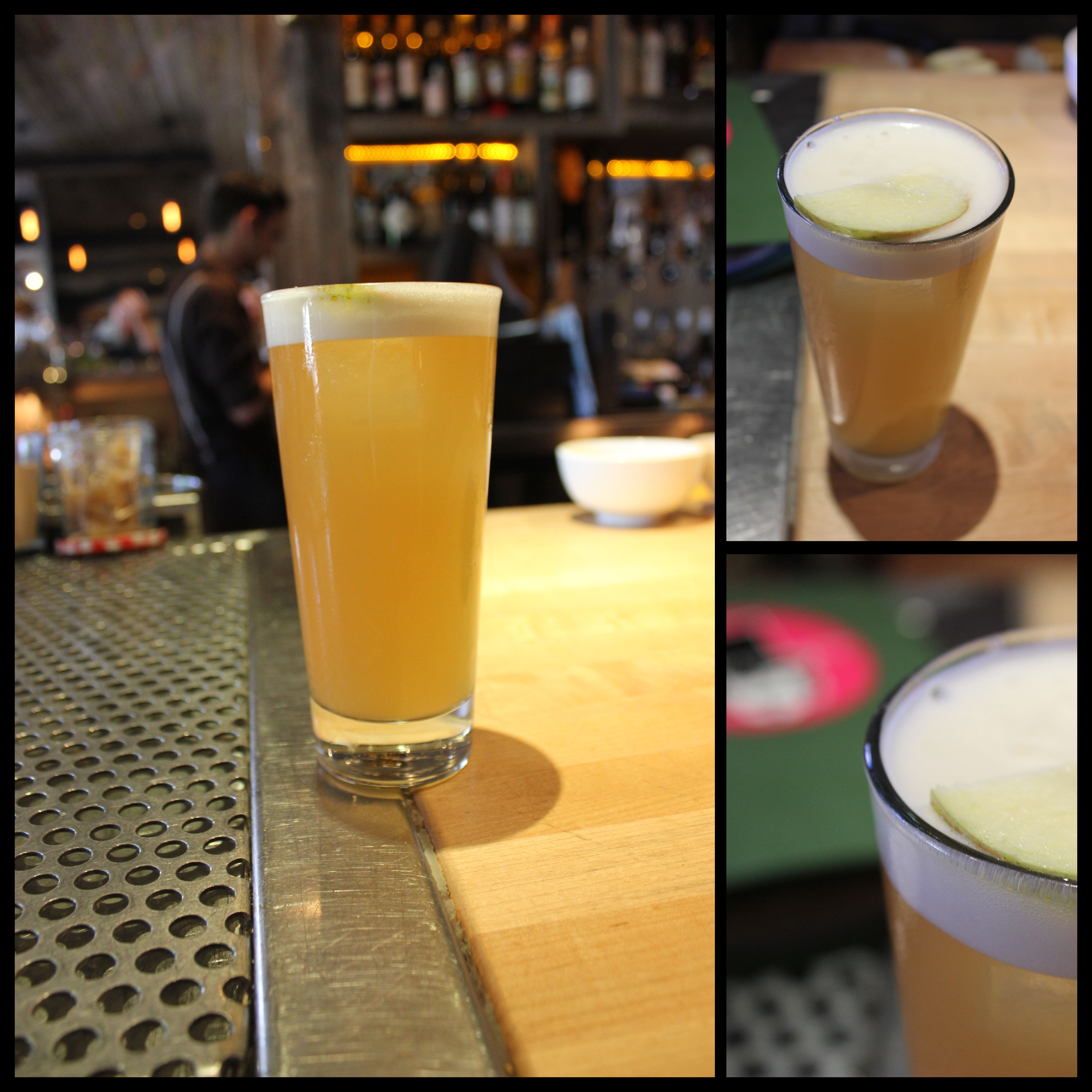
Up In Smoke
1oz Laphroig Islay Scotch
1oz Fuji Apple simple syrup
0.25oz lime juice
3-4oz Allagash Curieux

Shake the scotch, syrup, and lime juice over ice. Strain into collins glass half-full with ice. Top with beer. Garnish with apple slice, and serve.

The Up in Smoke has been on Craft and Commerce’s list since they opened, I believe a Phil Ward original (but I welcome corrections on that point). While it wouldn’t take much mental horsepower to pair, say, a dark rum (caramel and vanilla flavors) with a stout or porter (vanilla and coffee flavors), this drink is the exact opposite. This pulls flavors from all over the place.

The Curieux is a Belgian-style tripel aged in bourbon barrels for 8 weeks. The beer is full of malty sweetness and almost affects a fruity character, which is here compounded by the apple syrup and given a backbone of briny, smokey scotch, a choice as strange as it is successful. Belgian beers can sometimes be too rich for beer cocktails, but the acidity of the lime juice and tart echo of the apple bat it back down.

This is a marvelously creative drink. It’s both fascinating and completely delicious, a 7-10 split in the culinary world. In 100 years, I would never have thought to invent this. Though I’ve thought of drinking it twice this week, and it’s only Thursday.

*MITIGATING DETAIL: A very talented bartender named Adam at Sessions did come up with one that I thought was superb, a rum/ginger concoction with muddled strawberries and topped with Liefmans Fruitesse, a bright, sweet fruit beer from Belgium. This echos the best drink Nick Budrow has ever made me, which was muddled strawberries with Buffalo Trace, lemon juice, simple syrup and again the Liefmans. The sweet/tart, vaguely balsamic quality of sours and lambics lends themselves to mixing with cocktails, particularly when actual berries are involved. Not that it’s necessarily better than not, but they sit more comfortably within the spectrum of deliciousness.

Hudson Whiskey

Recently, Gable Erenzo of Hudson Whiskey came to San Diego to offer tasting and education on his products. He was master distiller for a while, and as such was in a position to answer all of my minute and annoying questions, which was great. I got a bunch of nice photographs of this event, which I accidentally deleted because I’m stupid.

The Facts:

Distillery: Tuthilltown Distillery
Location: Gardiner, New York
Owned By: Privately owned
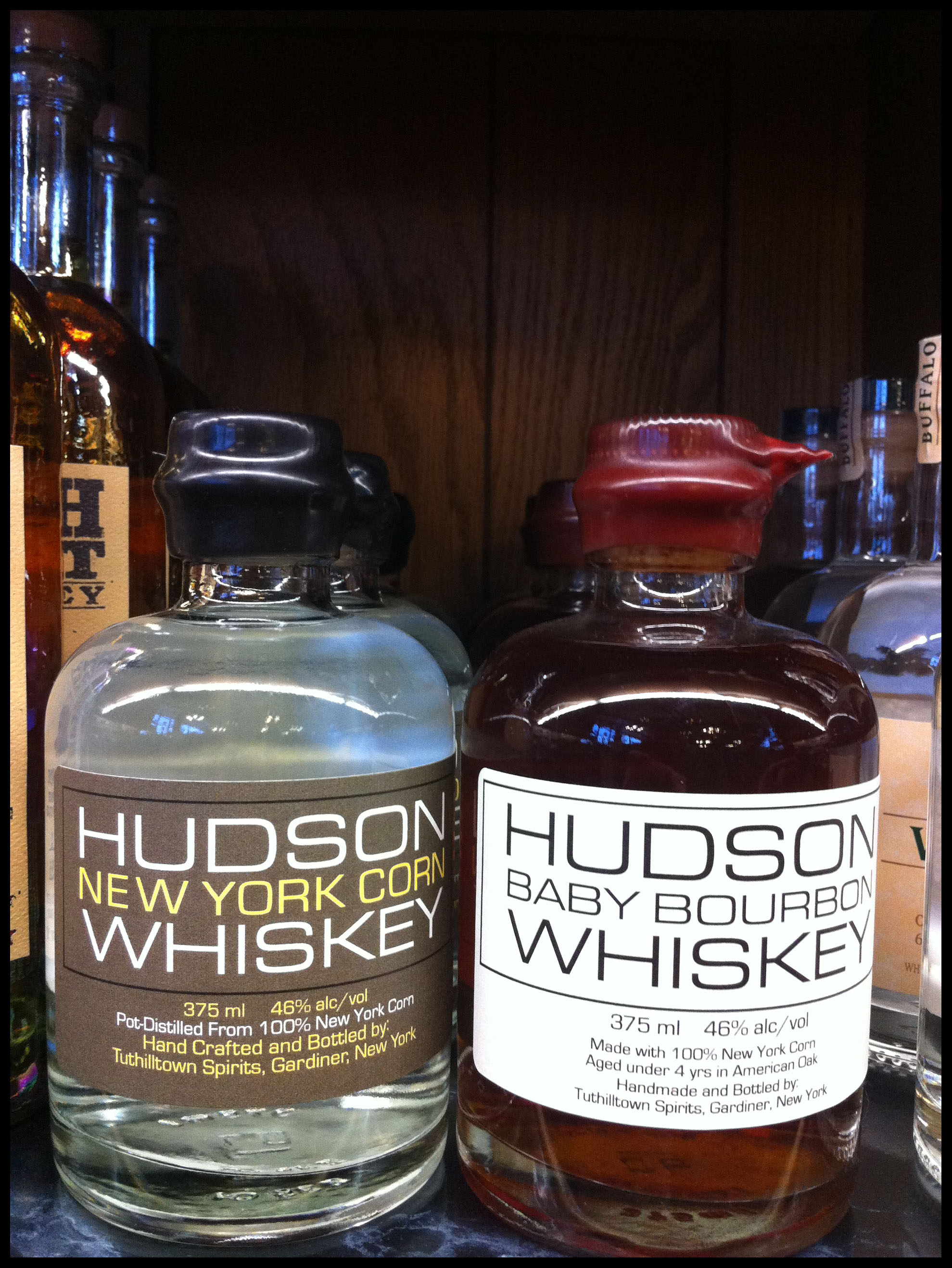
Major Products produced: Spirit of the Hudson Vodka; Hudson Whiskies — Manhattan Rye, Baby Bourbon, Four-Grain Bourbon, Single Malt, New York Corn
Origin: Since 2005

Prelude:

There are, as I see it, two big challenges facing anyone who wants to start making whiskey. And I’m not even talking about start-up capital or navigating permits or how to source malted barley, all of which I’m sure are very difficult. I’m talking fundamentals — the two obstacles that stop, say, me, from seriously thinking about starting a whiskey distillery at this point in my life are (1) time and (2) purpose:

  1. Time: any idiot can, and many idiots do, make vodka. Good vodka is another story, but vodka itself is not hard — it’s what happens when you distill something a bunch of times and then add water and bottle it. It’s what ramen noodles are to cooking. Whiskey, on the other hand, requires finesse, and more importantly, time. In a 53 gallon barrel (standard size), it takes a between 3 and 6 years to even start getting good. You can cheat with smaller barrels, but even in a tiny 3 gallon, you’re still looking at a few months before you can even consider starting to sell it as whiskey. But what if it’s not as tasty as you’d like?  Tweak the recipe, another few months. Maybe it needs a bigger barrel, another 2 years. It’ll drive you mad, or broke, or both.
  2. Purpose: aside from it being super cool, why make whiskey? Even if cost isn’t an issue, which it totally is, there is already a kaleidoscopic array of transcendentally good whiskeys sold for not very much money at pretty much every liquor store. So what do you have to add? What’s so screaming fucking special about your idea that so necessitates its existence?

They’re worthy considerations, and Tuthilltown Spritis and their whiskey label Hudson, since 2005, has tackled these two obstacles better than any new whiskey I can think of.

The Story:

In 2001, Ralph Erenzo bought some land and an 18th-century gristmill in the Hudson Valley, just outside Poughkeepsie some 80 miles north of Manhattan. He had run a successful rock-climbing business in the city for years, and had finally started actualizing a longtime dream, to create a rock climbing ranch/retreat up north. Fortunately for us, it was not to be: his neighbors, as it turns out, were a stodgy group of litigiously-inclined letter-writers who hated the idea of a commercial business in their little bucolic hinterland, and fought with everything they had. The fight nearly bankrupted him, and in the end he had was forced to admit that his rock-climbing ranch would never be built on that property.

One of the pillars on which the neighbor’s case was built was that the land wasn’t zoned commercially, but agriculturally. So he looked for new ideas, at first considering a brewery, but the gristmill’s history — combined with the prospect of being the first bourbon made in New York since prohibition — led him to a distillery.

He found a partner in the mechanically-inclined Brian Lee, and recruited his son Gable. Among them, they had as much experience with distillation as they did with space travel, but forged ahead anyway. After two years of permits, research, navigating archaic statutes and in some cases altering them, getting a still, sourcing grain, and learning what the hell they were doing, they founded Tuthilltown Spirits, released a vodka made from local apples in 2005, and their first effort, a “baby” bourbon in 2006.

The Spirits:

Five different whiskeys carry the Hudson name, and they are indeed different, with four distinct grain recipes. But there are a couple of commonalities that they all share, unusual (and in some cases unique) distillation principles that help Hudson answer those questions in the above obstacle #2.

  • Grains: They use largely heirloom varieties of of their grains, and are all locally grown. So the corn, for example, that goes into their corn whiskey is 40% normal “field” corn, and 60% heirloom, those maize-like multicolored varieties that are always bursting out of cornucopias around November.
  • Fermentation: They use two different types of yeast, one brewers and one distillers.
  • Distillation: There is, to all of their whiskeys, a curious and alluring cereal quality, a sensation of an actual dusty grain mill. Tasting them immediately evokes the actual grains — you can tell where these come from. I had always assumed that they distilled to a very low proof (à la Fortaleza) because you taste so much of the ingredients, but Gable told us that they distill as high as anyone else, that the graininess you taste is because they do a “whole mash” distillation: they keep the grain solids in the liquid all the way through the process. It’s a “fractioning” still (hybrid pot/column), and everything gets two runs, the first to about 40% and the second somewhere just shy of 80%.
  • Small Barrels: Hudson’s answer to the aforementioned obstacle#1: they use tiny little barrels. Between 3 and 14 gallon. Whiskey will get overaged (too woody = pretty gross, believe me) in a 3 gallon barrel by 6 months, and a 14 gallon by 2.5 years. So smaller barrels means that they can make, age, and sell whiskey at a pace untouched by the Kentucky giants.
  • Sonic Maturation: As Gable tells it, someone told them they should rotate their barrels once a month to hasten the aging process. Unthrilled at the idea of physically rolling every single barrel in their inventory, Lee showed up one morning with a trunk full of bass speakers, to agitate the barrels using sound waves. For a time, the whiskey would rattle away to dubstep and Tribe Called Quest, until one day a tour-goer volunteered his skills as a professional audio engineer. After a weekend of measurements and calculations, he returned with a CD, which cycles through different resonant frequencies to shake the different sized barrels. Which, I think you’ll agree, is pretty goddamn cool.

The Products:

NEW YORK CORN WHISKEY

This is their white whiskey, an unaged 100% corn spirit. Untempered by oak, the dry grain hits right away. Very agricultural. Deep, rich corn, like buttered popcorn. No sweetness from the oak means the dry graininess is extremely dry. The best white whiskey I’ve ever tasted, but that’s not saying much. Still, surprisingly drinkable. I’d recommend it for mixing, or just to satisfy curiosity.

BABY BOURBON

It used to be that bourbon could be a maximum of 80% corn, but that apparently ended in the 80s. Hudson’s Baby Bourbon is 100% corn, just an aged version of the New York Corn Whiskey. The oak adds sweetness but the size of the barrel also intensifies the bitterness. The corn is blunted by the wood, but still prominent. I found this hot, dry, and astringent, and was my least favorite of the five (though plenty of people around me disagreed).

SINGLE MALT

If bourbon and scotch had a child, it would be this. Like all the best scotch, it’s 100% malted barley. But scotch is usually aged slowly in once-used barrels, and as such takes on much less wood flavor. The Hudson Single Malt is aged in new, charred oak barrels. All of this combines to another unique offering: still very grainy and this time earthy, the barley picks up more on the sweetness from the oak along with some vanilla notes, with a nice acidity and a finish like caramel and honey. Delicious.

MANHATTAN RYE

One of my two favorites. 100% rye. This, to me, tastes like how rye is supposed to taste. The rye cereal graininess is out front and prominent, balanced with a perfect level of sweetness and spice. Interesting to drink on it’s own, but this makes one of the cooler Old Fashioneds I could imagine.

FOUR GRAIN BOURBON

My other favorite offering of theirs. I don’t know a single other four-grain bourbon on the market right now (“four grain” referring to (1) corn and (2) barley, and then both, where there’s usually only one, of the “flavoring grains,” (3) wheat and (4) rye). I was not expecting this one to be good and it really surprised me. Very complex. Cereal grain, exactly the right amount of sweetness, perfectly balanced. Wonderful.

Overall:

We tasted with about 20 other bartenders, and in a chatty little reception afterward, everyone discussed tastes and favorites. What was bizarre is that everyone had a different favorite. I found the Baby Bourbon too immature, but my friend Travis thought it was the best. Vikki liked the Single Malt best. This is to say that they are all very different, and all made well.

They all retail around $40 but only come in 375ml bottles (1/2 size), so each is really like an $80 bottle of whiskey. Which is a lot. On the other hand, it’s a flavor you can’t get anywhere else.

One last note about this idea of uniqueness, because it’s important: small barrels means that the spirit doesn’t just age quicker, but also ages in a different way. There’s more color and woodiness but it’s still relatively immature. There is no cheating time in the aging game. A 53 gallon barrel is like a crock-pot, and a 3 gallon barrel is like a frying pan: both achieve the same overall principle, but you simply can’t get the same product out of a small barrel. And this is one of the ways in which Hudson excels, and where they rise above most of the other new “craft” whiskeys being made today.

If you’re trying to make the same bourbon everyone else is making but trying to do it cheaper, then you’re going to get a cheaper version of the same bourbon everyone else is making. You can’t make Buffalo Trace better than Buffalo Trace does. Whether by instinct or education, the people at Hudson know this, so they make whiskey completely differently.

It’s formulated for those smaller barrels. Yes, the spirit is left a bit immature from the shorter time in smaller barrels, but there’s also the two types of yeast, and there’s also the heirloom grains, and there’s also the whole mash distillation, and when added together it’s not a cheaper or faster version of something that already exists. All of their products have struck their own unique balance, all the uncommon and/or bizarre decisions rest on each other and meet at a common point. That’s what’s so great about it. It is something completely new.

Barrel Aged Vieux Carré (a.k.a. Ancien Carré) — UPDATE

I promised that I’d update with news of how the barrel-aged Vieux Carré (or “Ancién Carré”) turned out, so here we are.

The significance of barrel-aging comes from the interaction between the liquid and the wood. Which is tediously obvious, except that it has one corollary that is worth noting: a smaller barrel means that there’s a higher ratio of surface area wood to liquid. Which  in turn means that the adorable little barrel I had, 3 liters in volume and roughly the size of an adolescent cocker spaniel, ages things extremely quickly.

I checked it at 5 weeks, and it needed just a little more. Then something more engaging must’ve happened, because I forgot about it for a while, suddenly panicking at 7 weeks that I had forgotten and ruined the whole thing, but to my surprise, it was perfect.

Ancien Carré
2oz 7-week barrel aged Vieux Carré
1 cube of ice
1 lemon peel
Add ice cube; express oils of peel over the top of the drink; serve.

I very nearly over-aged this, which would’ve been tragic, but as it stands, it’s perfect. At first, I tried to properly chill it via stirring on ice, and the flavors completely fell apart. I thought I had ruined it, until I made another one and added just one big cube of ice, unstirred, and let time do it’s work. The result, if I may say, is kind of amazing.

The ingredients are top shelf, with such a long time in a small barrel bringing a new complexity and significant oak sweetness. The smell alone could end a war. It’s vanilla and fruit, the symphonic chord of cognac enhanced and deepened by the barrel with the rye adding just enough stiffness to be noticeable. The basic Vieux Carré is delicate and full as it is, and this takes that, plugs it in, and cranks it to 11. This is a phenomenal drink.

Tragically, I can’t give it to you, because we’ve already sold out. We started with a very small batch – if you remember, it was just going to be for me and my friends until I figured out how good it was – and the bar sold out of them already, so I can’t tell you where to get it. However, we are planning another batch (along with an exciting new barrel, if things work like they’re supposed to…), so either be good enough friends with me to have one of the 5 or so I’ve got left in my apartment, or look to URBN in about 8 or 9 weeks.