Stirred Cucumber Drinks

This week’s Robb Report article was about a cocktail called the Archangel. You can read it here if you like, but briefly summarized: the Archangel is a neo-classic from 2006, essentially the build of a Gin Martini, but with the bold bittersweet liqueur Aperol subbed in for dry vermouth’s herbal whisperings: 3 parts gin, 1 part Aperol.

It also has one additional twist, the curious addition of a lightly muddled (or “bruised”) cucumber, stirred all together and strained up.
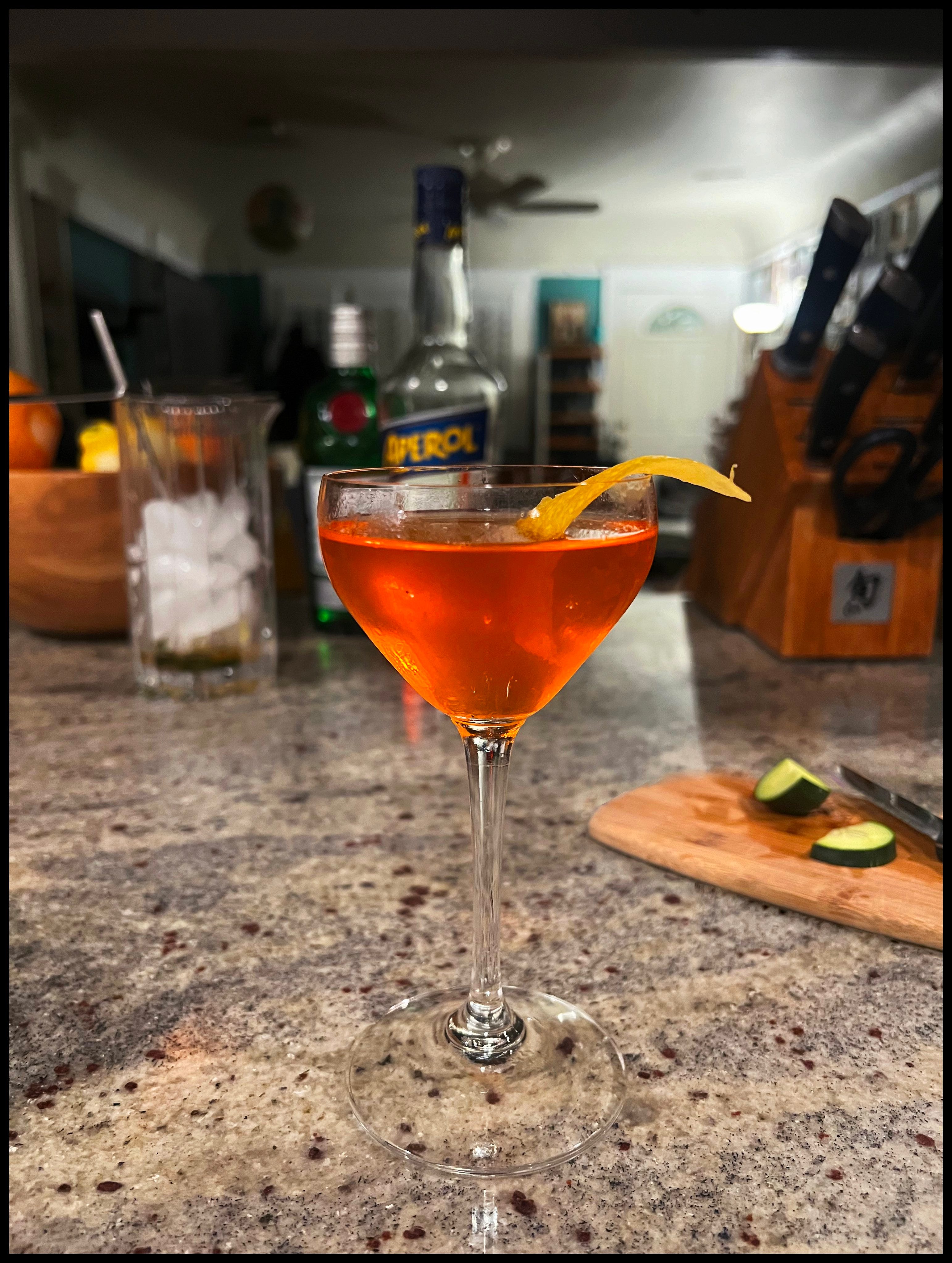
If you don’t live and work in the cocktail world, maybe you don’t know how strange this “bruised” cucumber business is. Cucumbers are for shaken refreshing drinks, not boozy stirred ones. Cucumber Margaritas. Cucumber ‘Tinis. This sort of thing. They bring a cooling herbaceousness to the palate that is broad and almost urgently refreshing, and are what make drinks like the Eastside Rickey (gin, lime, cucumber, mint, soda) so irrepressibly, grab-the-table-with-your-eyes-closed delicious. As far as I knew, the Archangel, invented in 2006, is the first time anyone specifically designed an all-booze, no-juice drink with a muddled cucumber (I wasn’t exactly correct about it being the first, more on that below). 

I’ll do you one more: the Archangel is fucking amazing. The drink is a total banger — the cucumber takes on a floral resonance, a green ribbon of flavor that weaves throughout the entire tasting experience, like a smell in a cartoon that lifts you off your feet and tractor-beams you toward a pie. It’s great both on the rocks or up, and, in another big surprise to me, it’s great across styles of gin, from Tanqueray to Plymouth to Hendrick’s to even something wild like Aviation.
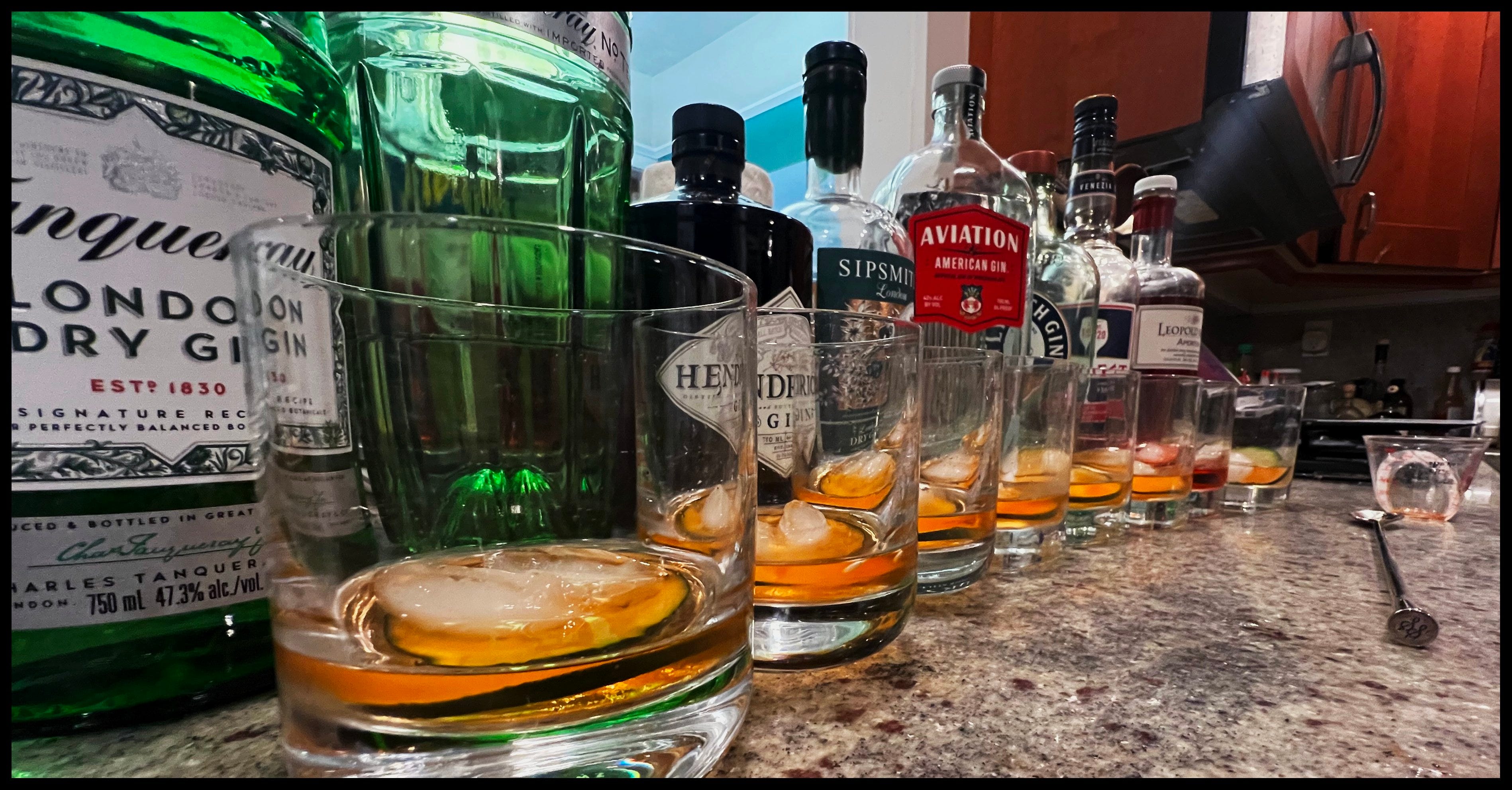
It’s just great. It’s a great drink. Full stop.

So what, we’re stirring our cucumbers now?

Every idea has to start somewhere, so I understand that maybe no one had done that exact thing before Michael McIlroy and Richard Boccatto came up with it at Milk & Honey, but that was 18 years ago. What about since? Where are the cucumbers in stirred drinks now? Surely the Archangel isn’t the only possible way to use this technique?

This is not rhetorical, it was an honest question. When Jeffrey Morgenthaler came up with barrel aging cocktails in 2010, they were doing it at Ruth’s Chris Steakhouses by like 2012. A technique breakthrough, especially one with such a delicious proof of concept, should be everywhere, but before I started writing this I only knew of one other bruised cucumber stirred drink, and that one sucked.

Incredulous, I scoured a bunch of cocktail books and blogs and gathered as many as I could find, which ended up as the following 10. Of those 10, I made 8 of them, because I would have needed to buy six new bottles to make the final drinks, and that’s too many.
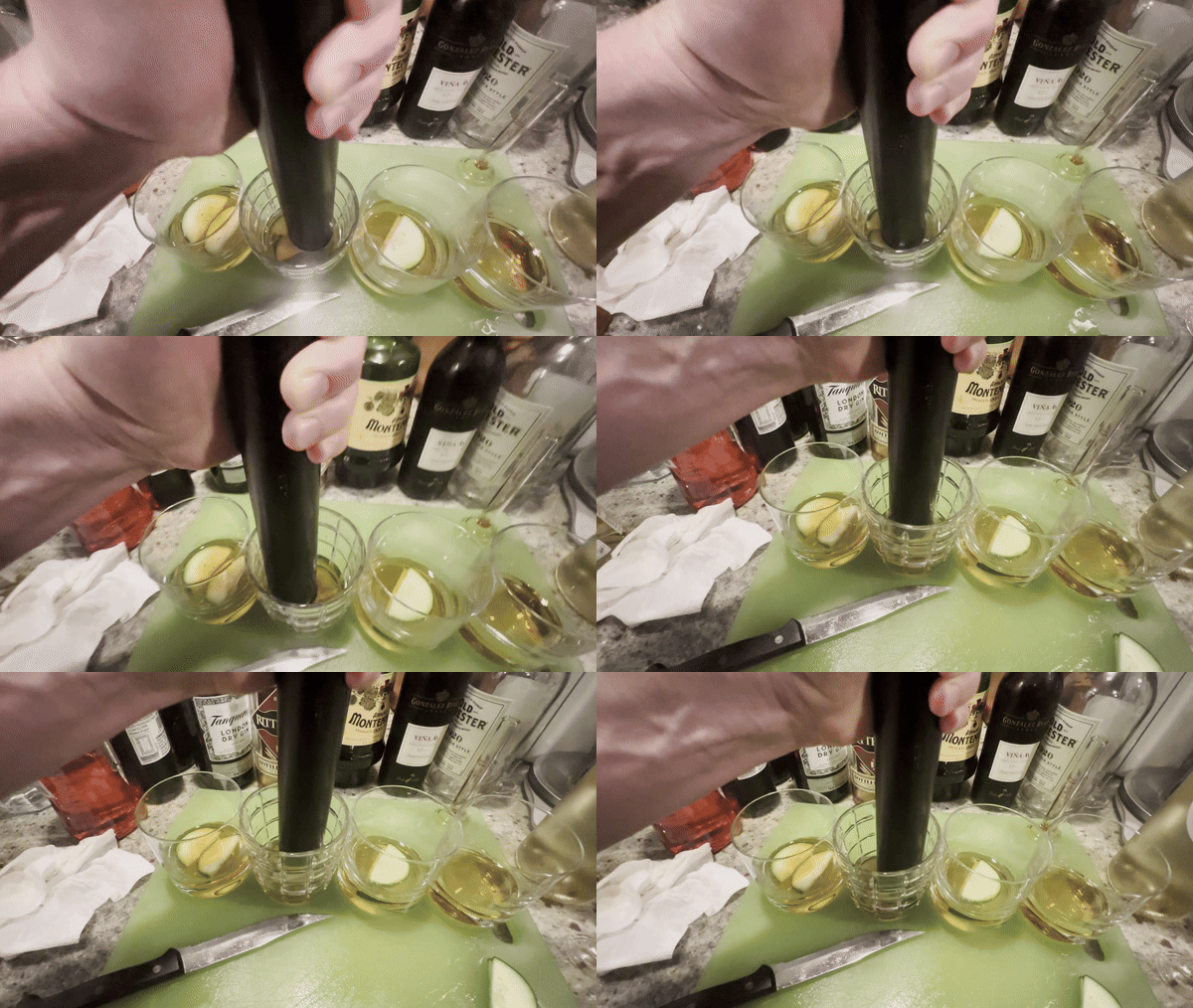
And now, may I present:

WONDERFUL COCKTAILS with STIRRED CUCUMBER

Archangel

  • 2.25oz Gin
  • 0.75oz Aperol
  • 3 cucumber wheels

Muddle cucumbers in a mixing glass. Add liquids and ice and stir for 10-20 seconds. Strain up into a coupe, and garnish with a lemon peel or a cucumber slice.


Green and Red — Thomas Waugh, 2012, as detailed in the Death & Co. Cocktail Book.

  • 1oz Siete Leguas Blanco Tequila
  • 1oz Jalapeno-infused Siembra Azul Blanco Tequila
  • 0.75oz Cocchi Americano
  • 0.75oz Dolin Dry Vermouth
  • 0.25oz Alvear Festival Pale Cream Sherry
  • 3 cucumber wheels

Muddle cucumbers in a mixing glass. Add liquids and ice and stir for 10-20 seconds. Strain up into a coupe, and garnish with a cucumber ribbon, on a pick

My notes:

Oh, that’s wonderful. Tequila and the cucumber goes super well together — the green notes from the tequila melds with cucumber like a dream, and the jalapeno infusion obviously helps. The way the cocchi + sherry interact, especially on the finish, is phenomenal. Goddamnit Cocchi is such a good product. Arcs over the palate, while the cucumber plays it’s floral game. Heat helps with sweetness. Really good.


Mexicano — Jim Meehan, 2010, as detailed in the PDT Cocktail Book

  • 1.5oz Partida Reposado Tequila
  • 0.75z Gran Classico Bitter
  • 3 Cucumber slices
  • 2oz Champagne

Muddle cucumbers in a mixing glass. Add tequila and liqueur and ice and stir for 10-20 seconds. Strain up into a coupe, top Champagne, and a lemon peel.

My notes:

Oh shit this is actually pretty good. Very bitter. Cucumber plays toward the vegetal-ness of the tequila. Cucumber more apparent on the nose than on the palate. Lemon peel helps. Robust vegetal bitterness on the back palate that the cucumber seamlessly transitions to. I hate the name but this is pretty good. Bubbles manage to lift it up. They clash with the gran classico, at least cava does, but that’s all on the finish. From the front to the midpalate it’s like “hi I’m lemon cucumber brightness” and then abruptly the Gran Classico is like “i’ll take it from here, son” and cucumber bitterness takes over.


Wheeler and Wilson — Leo Robitschek, as detailed in the NoMad Cocktail Book

  • 0.5oz Amaro Montenegro
  • 0.5oz Dolin Blanc
  • 0.5oz Lustau Los Arcos Amontillado Sherry
  • 0.75oz Diplomatico Reserva Aged Rum
  • 1oz Old Forrester 100 Bourbon
  • 3 cucumber slices

Stir with cucumber slices, then strain into a coupe, and garnish with 2nd cucumber slice

My Notes:

Woah. So much going on. Great though. Deep complexity. Harnesses the weirdness of the Montenegro well. There’s some noise here, and I strongly suspect it’s because I didn’t use the same brands (I had Dooley’s XO rum and Old Forrester 1920 Bourbon), but that’s not the drink’s fault. Even still, with the proof off and the rum very off, it’s solid — the cucumber gives a broad green base to a ton of complexity. If you’ve got the brands on hand, or even if you don’t, I recommend.

A STIRRED CUCUMBER DRINK that ALMOST BROKE MY BRAIN

Spring Sting — Pietro Collina, as detailed in the NoMad Cocktail Book

  • 1oz Pierre Ferrand 1840 Cognac
  • 0.75oz Cocchi Americano
  • 0.5oz Laphroig 10
  • 0.5oz Chareau
  • 1 tsp Amaro Nardini

Stir all together (no cucumber), then strain into a Nick & Nora, and garnish with a cucumber ball, placed into the drink.

My Notes:

WHAT THE FUCK. This is so fucking cool. Chareau and Laphroig? I’m sorry, what??

The description calls this “a stirred savory grasshopper,” and I see it vividly, but I’m not sure how it’s working. Starts with minty melon from Chareau, and smoke almost immediately makes a presence. Everything fits together amazingly well, and I’m not even using the right amaro [I used Averna]. This starts almost chocolaty, from what, the amaro+cognac? Then Chareau, then Laphroig. Cucumber supports Chareau aromatically and otherwise. Fabulous.

I’m not supposed to muddle cucumber but I did anyway. It’s great. Made it again without muddled cucumber, just placing a freshly cut cucumber into it after it’s made. Also great. Too insane for me to pick a favorite, I’ll have to try it side by side. I will be making this again.
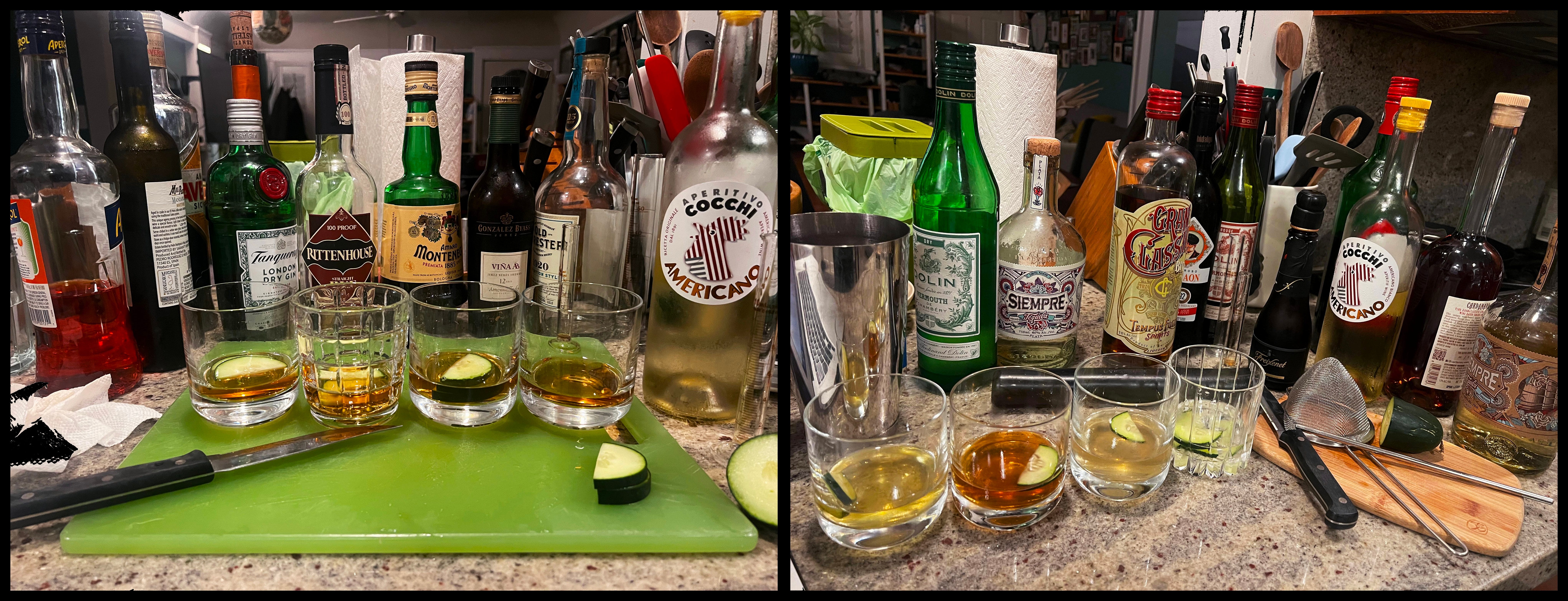
STIRRED CUCUMBER DRINKS that ARE JUST FINE

For the sake of completeness, here’s the others. The next four I made and didn’t think were excellent, and won’t be making again. Listing them for completion, because there is otherwise no catalogue of all these in one place:

Polaris — Brandon Bramhall, Attaboy Nashbille, 2018, as detailed in the Bartender’s Choice App

  • 1.5oz Gin
  • 1oz Manzanilla
  • 0.5oz Aperol
  • Bruised cucumber

Stir. Up. Lemon twist 

My notes:

Good. Just an Archangel plus sherry. Sherry changes it. Completely takes over the finish. Aperol to gin to sherry. Adds complexity. Not sure it’s better, but it is good. Lemon really adds this time, in a way I don’t think it adds in the Archangel itself. Sherry fans might even consider this an improvement, but I mostly just want an Archangel. Shery fits in super well, but totally dominates the finish. It shortens the tasting process of the other, and then sherry’s like HI IT’S ME SHERRY.


Cobble Hill — Sam Ross, Milk & Honey, 2005, as detailed in the Bartender’s Choice App

  • 2oz Rye
  • 0.5oz Dry Vermouth
  • 0.5oz Montenegro
  • Cucumber

Stir. Up. Garnish with a freshly sliced cucumber.

My notes:

I tried this twice, and it is unique for me in that it’s the first Sam Ross cocktail that I haven’t liked even a little. Rye is weird. First impression is that this isn’t special. At least not with Bulleit rye. Doesn’t come together. Cucumber is a presence on the front palate, but the finish is just rye and weird. I see what he’s going for I think, and maybe gets there with a different rye, but not this one.

Trying again with Rittenhouse this time. Rich on the body. Still bad. What the shit. Bad. In that it’s not at all good. Tastes like pickles. Too dry.


Chin Up — Sam Ross, Milk & Honey, 2005, as detailed in the Bartender’s Choice App

  • 2oz gin
  • 0.5oz Cynar
  • 0.5oz Dry Vermouth
  • Salt
  • Cucumber 

Stir. Up. Lemon Twist

My notes, such as they are:

MUCH better than the Cobble Hill. Gin is just a better call. Still, nowhere as good as the Archangel. This sticks out in all the wrong places.


 False Start — Anne Robinson, Westlight, as detailed at Punch

  • 1.25oz Siete Leguas Reposado Tequila
  • 1oz Cardamaro
  • 0.75oz Dolin Rouge Vermouth
  • 0.25oz Cynar

Muddle 2 cucumbers slices, then add all ingredients and ice and stir, then fine strain into a coupe and garnish with a cucumber wheel.

My notes:

Pretty good. I see what it’s going for I think. I certainly don’t hate it, just a little anodyne. I didn’t use Siete Leguas Reposado which might make the difference [I used Siesta Repo], but I don’t think so. If the cocktail is that brand-dependent it’s a little meh. Just meh. Nothing bold, nothing sticks out, just sweetish, kinda boring. No edge. Like bobbing in an above-ground pool.

STIRRED CUCUMBER DRINKS that I HAVEN’T TRIED YET

Stone Crush — Chaim Dauermann, Up & Up Bar, as detailed in Spirited

  • 3-4 cucumber slices
  • 1.5oz Brennivin
  • 0.5oz Blanc Vermouth
  • 0.25oz Rabarbaro Zucca Amaro
  • 1oz Pilsner Beer

Muddle, then shake everything but beer, strain into rocks glass, top with pilsner, and stir to combine. Garnish with a lemon twist and a couple cucumber slices.

Beau Four — Leo Robitschek, as detailed in the NoMad Cocktail Book

“A springtime Manhattan with mentholated complexity and depth”

  • 1.5oz Jim Beam Black bourbon
  • 0.75oz Dolin Dry
  • 0.5oz Amaro Nardini
  • Short 0.5oz Amaro Foro
  • Cucumber slices

Stir on ice with cucumber slices. Strain into the coupe, garnish with a cucumber slice

Thanks for reading! Let me know how these strike you. Especially the Spring Sting. Good god.

FYI: I have an affiliate thing set up through Amazon, so buying the books through the links will give me a very small amount of money. It seems honorable to mention it.


My Favorite Manhattan Recipe

Or: How I think about the differences between a good drink and a great one.

My Definition of a Great Drink:

This seems like an easy question, admittedly — “the one that tastes awesome” — but there’s more to it than that. A great drink:

  1. Has a distinct beginning, middle, and end. Each ingredient plays a role, and you taste everything — not as a shotgun blast of complementary flavors, but as an elegant unfolding on the palate.
  2. Spans the palate across high tones, mid tones, and low tones. If it were all high notes — lemon zest, St. Germain, and fresh raspberries, say — it would be good but not great, because it would just hang out up there, on the tip of your tongue. Similarly vanilla, Cynar, and coffee: delicious but redundant, because they’re all low tones. Great drinks, for me, travel across the tonal flavor spectrum.
  3. The Flavors work. Obviously. No amount of clarity or tonal fascination can save it if the flavors don’t work together.

There are exceptions to this — some great drinks aren’t #2, and some aren’t even #1, though they all are #3 — but for the most part, this is what I’m looking for when I’m making or drinking cocktails. Below, I will explain a little more.

Mercy Rule: If you’re just here for the advertised “favorite Manhattan recipe” and don’t have five minutes for the why of it all, just click here.

Good Drinks vs. Great Drinks

Good drinks are easy. Anyone can make a good drink. Grab the Flavor Bible, pick any two ingredients that go together — blackberries and sage, say, or peaches and thyme — and put them together with a spirit and then sweet/sour balance, and voilà. You did it. Amazing.

Great drinks are a different thing entirely. Great drinks aren’t just about the flavors working, they’re about the unique flavor signature of each particular ingredient. To explain:

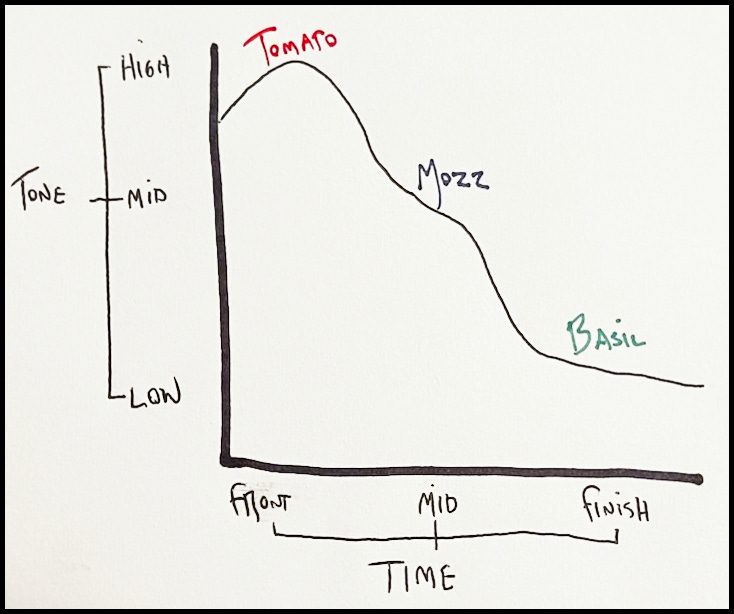
The problem with cocktails is that unlike chefs, we don’t have texture to play with. Take a caprese salad: Basil, tomato, and mozzarella, combined to form one of the best things on earth. The textures mean that even though you get all three on the same bite, they hit your palate at different times — the tomato is up front, sweet and acidic, and you taste its juiciness before you even start chewing. Then comes the creamy mozzarella, rich and resonant, occupying the middle and tempering the sweetness of the tomato. Then finally, after a few chews, basil begins to really express itself, from what was just a fragrance to a musky and robust herbaceousness that lingers on the finish.

High, middle, low. Beginning, middle, end. The Caprese is a great dish.

Now imagine that someone put those three in a blender and invited you to drink it with a straw. Still good? It’s the same flavors, right? Ignoring the fact that you’d be dealing with a psychopath, perhaps you take my point: remove texture from the equation and suddenly everything hits all at once, and while the flavors are still fine, you lose something essential of the dish.

Now consider a cocktail. Cocktails are homogeneous — every sip is exactly the same, and you taste every ingredient all at once. So if you want a drink with a distinct beginning, middle, and end — and what’s more, if you want it to have high notes, mid notes and low notes — you need to do it with the inherent character of the ingredients themselves. This is why great drinks are hard. Liquids react to each other in interesting and sometimes unpredictable ways, so to make something great, you need to either (1) know your ingredients preternaturally well, or (2) do a ton of trial and error.

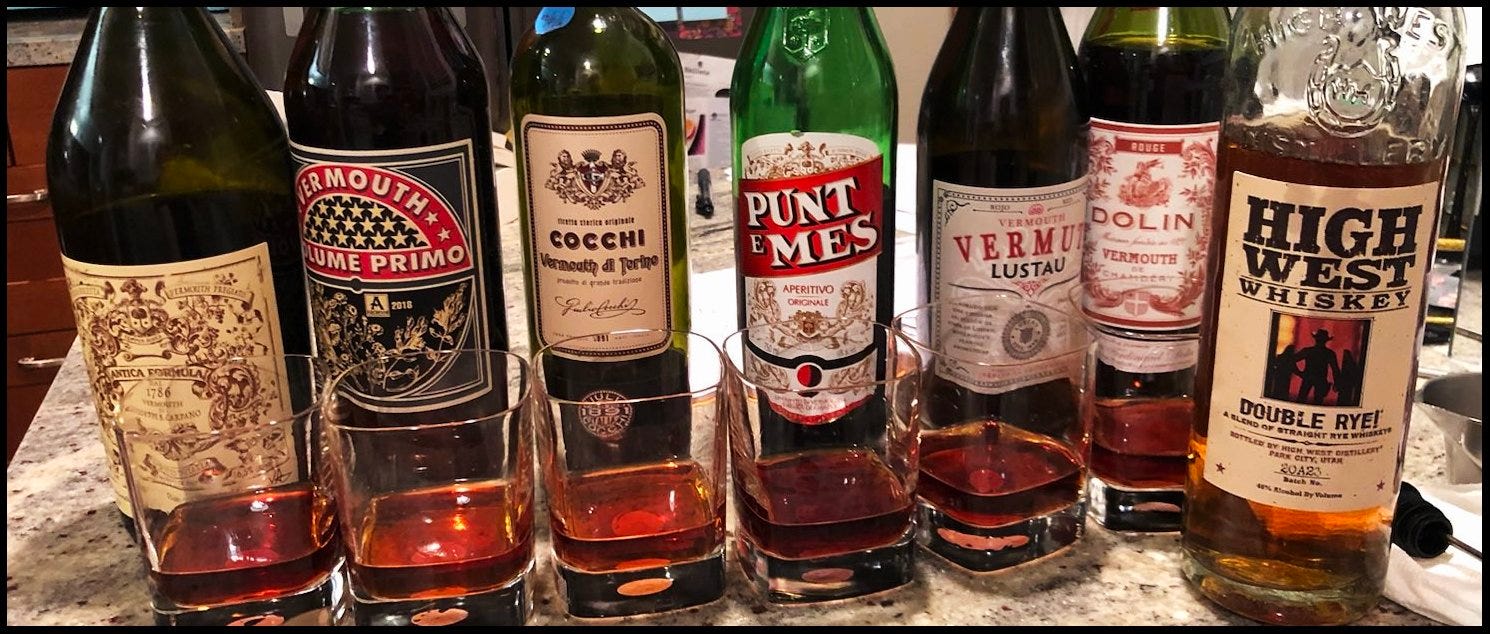
Pictured: a few scant ounces of the metric shit-ton of trial and error I’ve done on Manhattans, and how I spent pretty much all of April 2020.

The Problem with Most Recipes

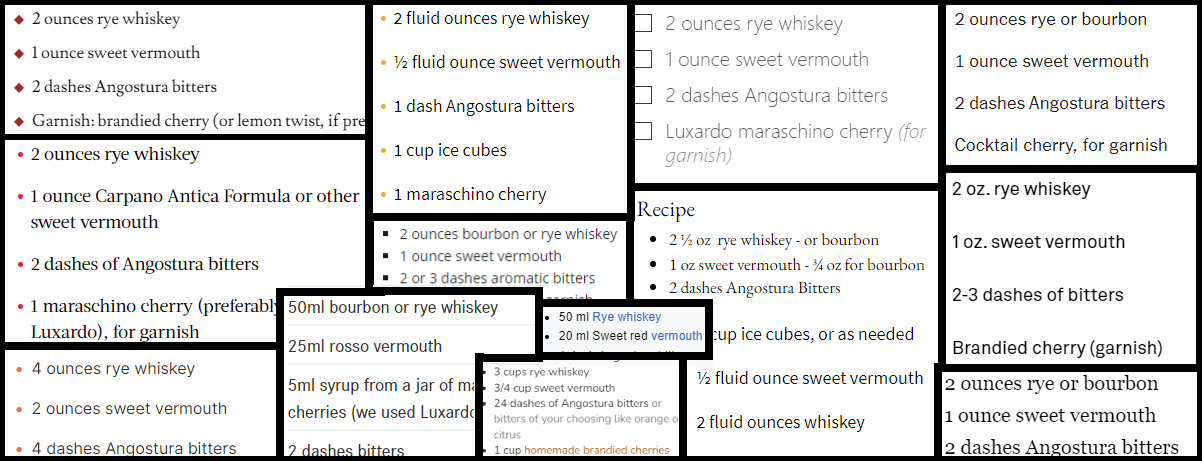
This is why it drives me nuts to see cocktail recipes that don’t mention a style or a producer, and will be like: “use 2oz rye.”

I’m sorry, “RYE?

It’s all at least 51% rye and it’s all aged in oak, but beyond that, there are wild differences between the bottles. By “rye” do you mean punchy and full of corn like Rittenhouse? Or soft and green like Templeton? Or also soft and green but also heavily filtered like Dickel? Or fruity and a bit hollow like Old Overholt? Or chocolaty and deep with 100% malted rye like Old Potrero? Or aggressive and intense like Pikesville? Is the sweet rum barrel finish of Angel’s Envy OK? Any help on any of this? Nope. Just “rye.”

I’m not nitpicking here. This is the first 2 pages of Google.

Some cocktails, like the Whiskey Sour or Old Fashioned, are so basic and protean as to taste good with everything, but they’re the minority. When vermouth and juices and liqueurs start getting involved, just calling for a certain measure of “rye” is like giving up on the idea of greatness before you even start.

This is why I tend to get prescriptive about brands. Not because I take any money from them (I don’t), but because a cocktail recipe is like a biometric safe, and to make a great drink — what I’m always looking for, in accordance to those three goals at top — you need the specific fingerprint of a specific bottle or category to unlock it.

The Manhattan

My go-to Manhattan is for me the most dynamic, the one which takes me on the biggest and most satisfying flavor rollercoaster.

That being said, it’s important to note: I’m not here to say there’s one “best” version of each drink. There are, in fact, a bunch of truly great Manhattans, more than a few tall peaks on that particular flavor landscape. I’ve found three so far, and I know there are many, many more I’ve not yet discovered.

I’m going to show you the one I tend to reach for most often because of my particular tastes, but I’m not saying it’s better than other great Manhattans. What I’m saying is that all the great Manhattans are better than the ones that are merely good.

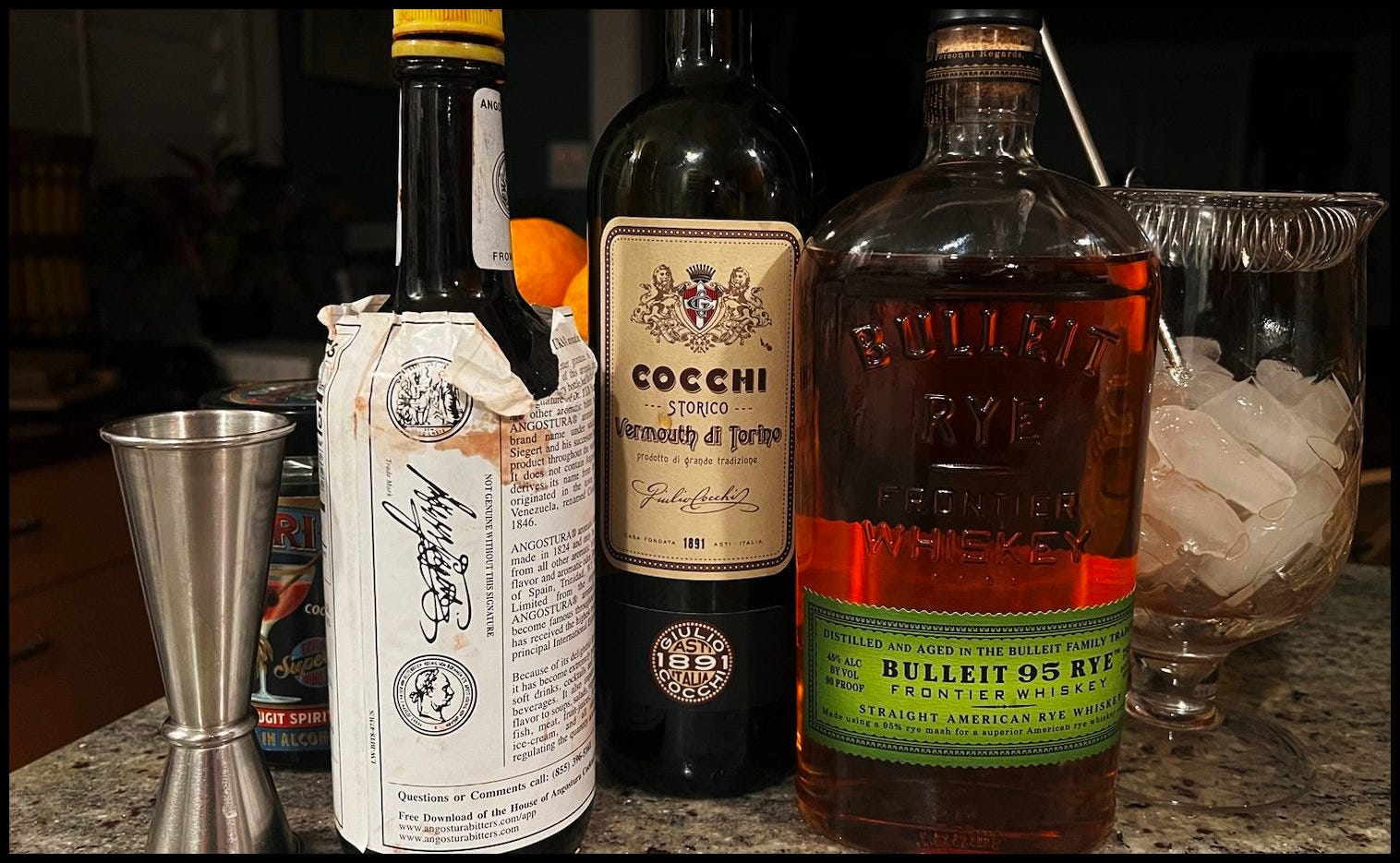
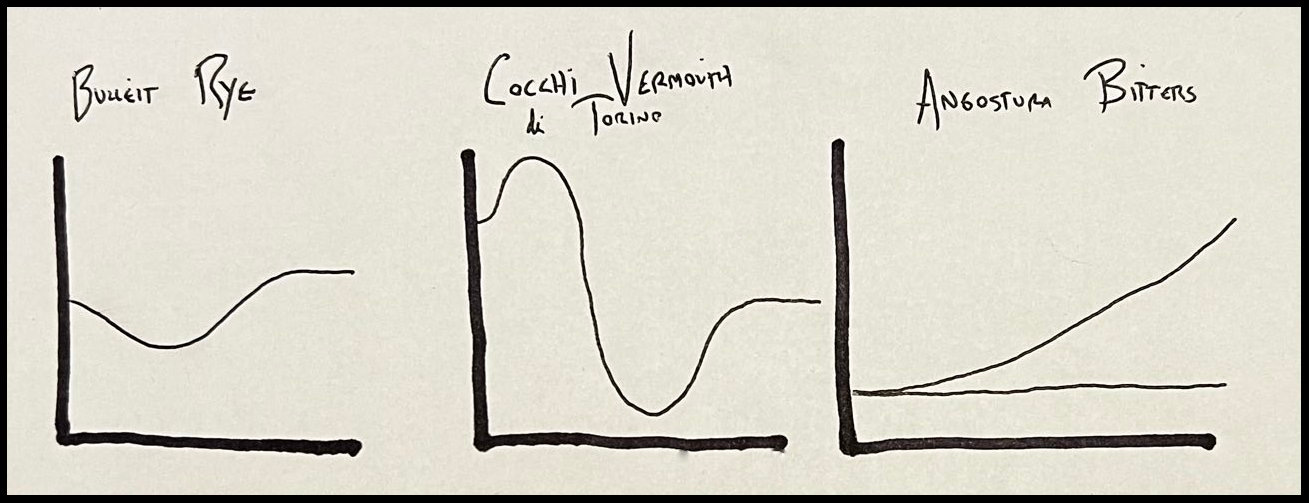
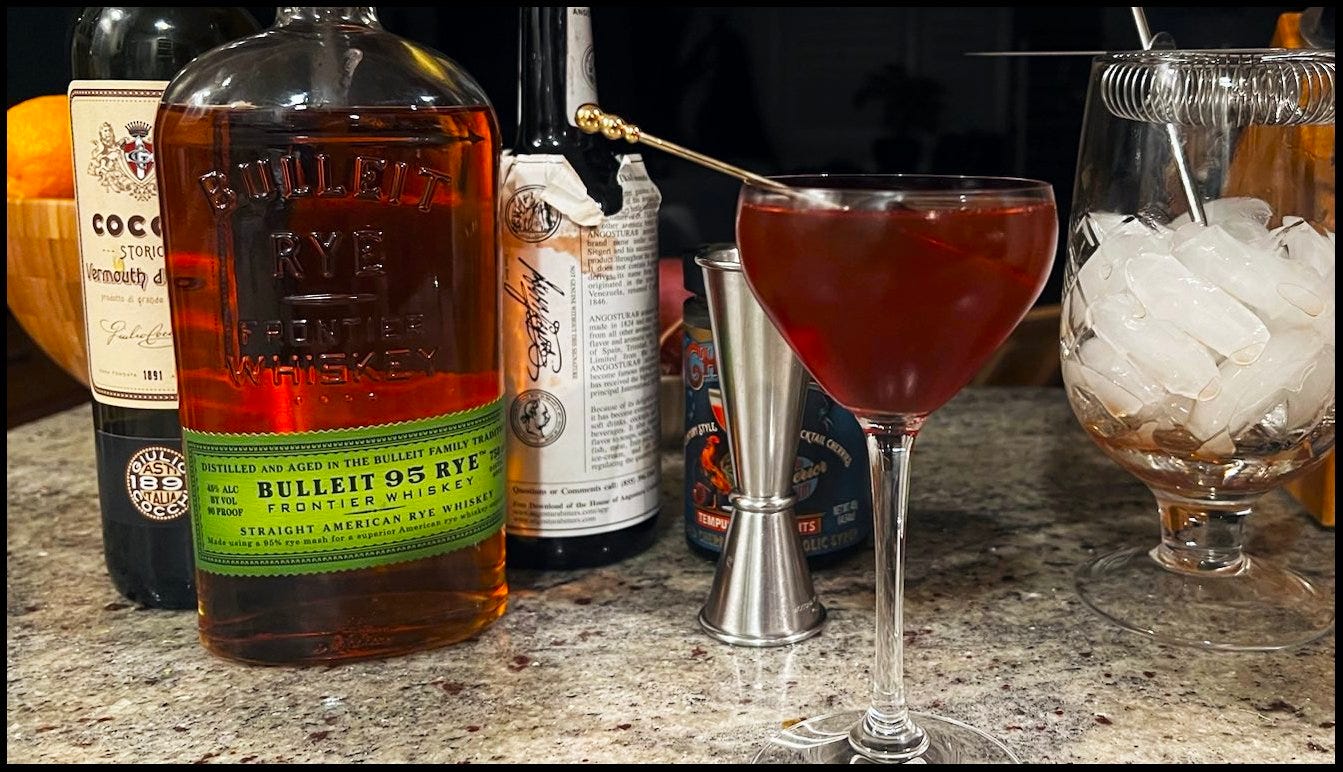
The one I tend to make the most is Bulleit Rye, Cocchi Vermouth di Torino, and Angostura Bitters. Every liquid ingredient has its own flavor curve, where and when on the palate it expresses itself. I think of their flavors like this:

Bulleit Rye: Starts very quiet, with a gentle light grain sweetness, goes a touch low in the midpalate, and then finishes higher with textured oak and the rye’s spice.

Cocchi Vermouth di Torino: Sweet and high fruity up front, then the midpalate swings dramatically down with a low vanilla hum, then it comes up to the rest of the herbs and a lightly sweet, light bitter finish.

Angostura Bitters: There’s a low bitter floor that persists the whole way, but it also has non-bitter flavor notes, which rise in baking spices and citrus through the palate. This complexity is one of the reasons Angostura is perpetually better than its competitors.

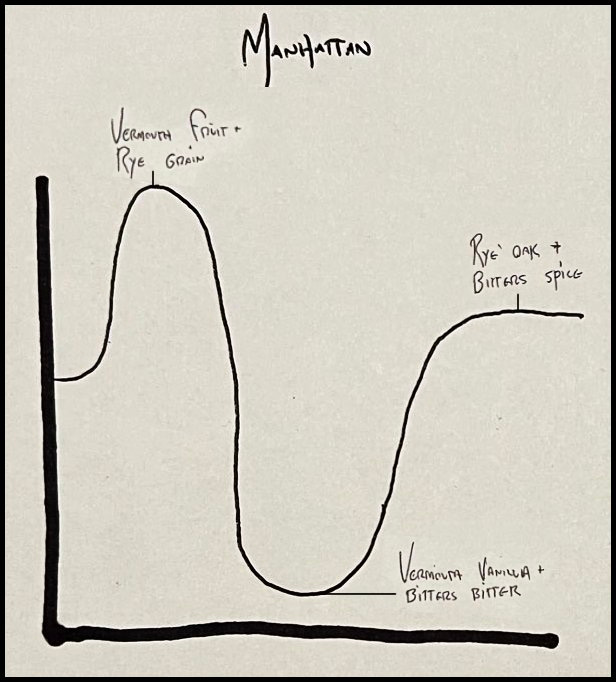
The Manhattan, put together:

There’s just so much movement in this version. It goes high to low and then mid-high again, and each peeling off one-by-one. Remember that the liquid is completely mixed, and each sip is exactly the same, so when you can find ingredients that give you this kind of ride just through the interactions of their innate personalities, you, my friend, have found a great drink.

My favorite Manhattan (so far):

  • 2.25oz Bulleit Rye
  • 1oz Cocchi Vermouth di Torino
  • 3 dashes of Angostura Bitters

Chill a coupe or cocktail glass. Then add all the ingredients to a chilled mixing glass with ice, and stir for 15-20 seconds (on decent ice) or 10-15 seconds (on shitty ice). Taste before you strain — you’re looking for the flavors to be clear and articulate. If the ingredients are all trying to speak at the same time, stir for 5 more seconds, but try not to overdilute. The Manhattan is frustratingly easy to under- or over-dilute. It’s not that hard, just a little annoying in the beginning. Once you know what you’re looking for, you can hit it every time.

Two Parting Questions:

  1. What did you think about this? Do the visuals make sense to you? Do you think about tasting some other way?
  2. Do you have a favorite Manhattan? If so, DM me, or leave it as a comment. I’d love to try it out. The work is never over.

Bottle Conditioned Cocktails: La Grenade

I find carbonated drinks to be mysteriously satisfying.

I know I’m not alone on this. It’s just a tingly feeling, a strange pleasure completely isolated from the thinking part of the brain, and yet so many of us find it so pleasant. It’s the kind of dumb sensory stuff that makes me feel like a gorilla, but regardless: there’s nothing quite like it.

One of the better trends in the craft cocktail world over the last couple years has been applying that sensation to our drinks. Not just adding soda water or sparkling wine to cocktails (as we have been since forever) but actually carbonating the cocktails themselves. The basic idea is instead of relying on a splash of carbonated liquid for your bubbles, use flat liquid and then carbonate the whole thing in whatever way you can. It works particularly well with cocktails that are designed for carbonation. So while a carbonated Negroni (Campari, Sweet Vermouth, and Gin) is weird and semi-unpleasant, a carbonated Americano (Campari, Sweet Vermouth, and Soda Water) is glorious.

There are two ways to carbonate. We’ll call them the easy way and the hard way.

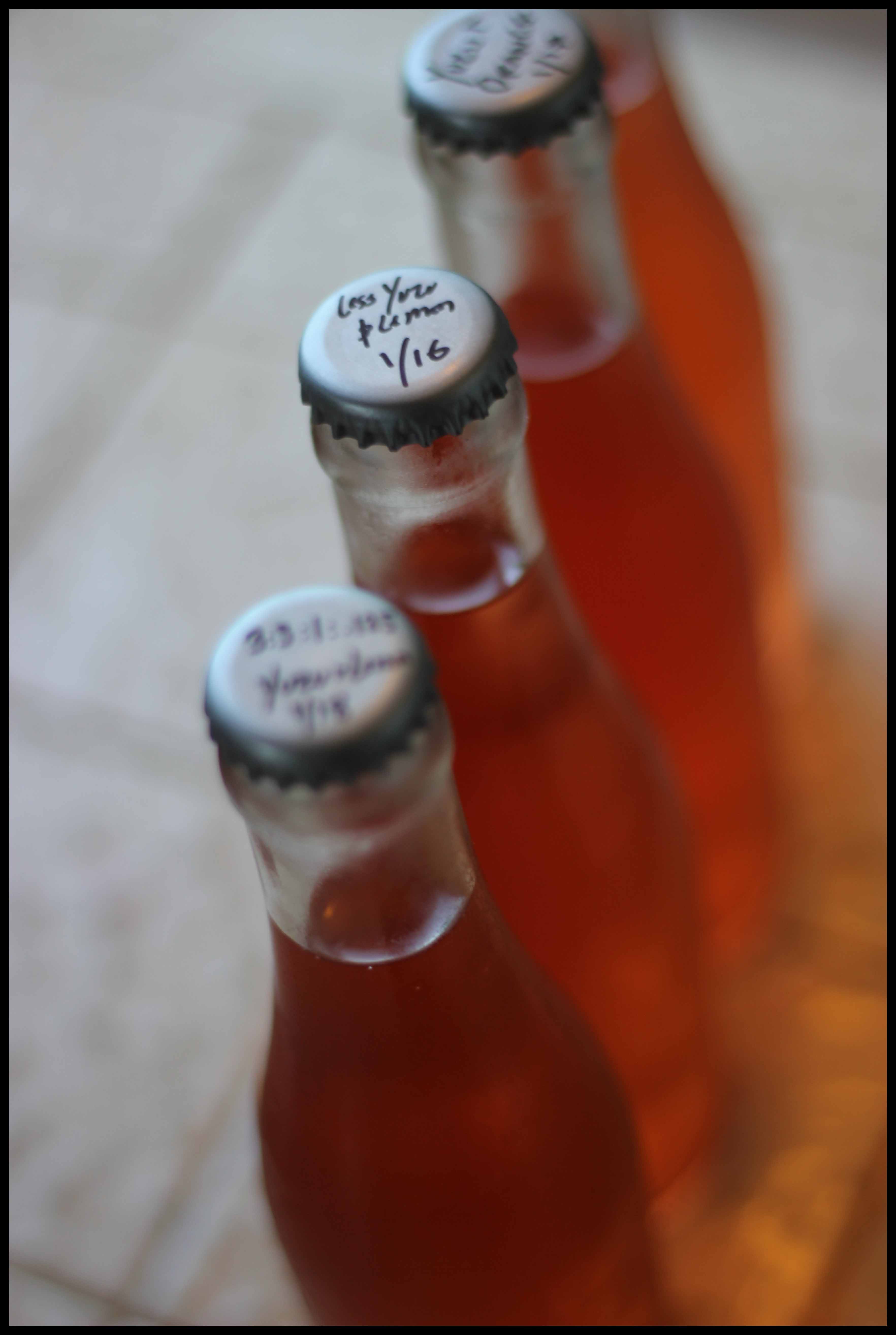
A work in progress...The Easy Way: As far as I know, this is a technique yet again pioneered (or, at least popularized) by Jeffrey Morganthaler, and is referred to in the home-brew business as “force carbonation.” You make your batch of cocktail, get it as cold as possible, somehow get your hands on CO2 (either a large tank or single-use cartridge), and hit the liquid with the gas in a pressurized environment. This is SodaStream, Soda Siphons, anything by iSi, and pretty much all DIY carbonation methods. It’s clean and simple, and produces larger-type bubbles. From there, either serve it, or bottle it for later (picture, right).

The Hard Way: Fermentation. Yeast + sugar = alcohol, heat, and CO2. When you’re done fermenting (in other words, when the yeast has eaten all the sugar it can), you’re left with low-alcohol mixture (beer, wine, etc), which, if you did it under pressure, is also carbonated. If not, the bubbles escaped to air, so you can add a small amount of what’s called “priming sugar” before bottling, and the yeast will finish off this sugar in the bottle, creating the carbonation you experience when you open it. This is called “bottle-conditioning” or “secondary fermentation.” The best beers and all Champagne producers do this, giving them their very small, delicate bubbles. (Aside: the most knowledgeable and passionate Bubble Connoisseur I know, Ms. Victoria Young, insists on such small bubbles.)

Now: me, you, or anyone with a soda siphon can do technique #1. I did a couple for the cocktail menu at Gang Kitchen. Don’t get me wrong: it’s hard to come up with a good carbonated cocktail recipe, as CO2 turns into carbonic acid (C2HO3) when induced into a solution, which fucks up the balance of whatever you’re trying to do. But as a technique, force carbonation is fairly easy.

As for technique #2, Champagne and beer are tricky enough, but it must be mind-bendingly difficult to bottle ferment a cocktail and do it in a way that’s not gross. Fermentation is primal. It muddies the waters, very unlike the clean measurements and individual ingredients we cocktail people are used to. Yeast affects flavor and final character dramatically, and a little carbonic acid is the least of your concerns. If you use the wrong kind of yeast, it’ll be disgusting. If you add your spirit at the wrong time, nothing will happen at all. If you miscalculate the sugar levels even a little, your bottles will literally explode.

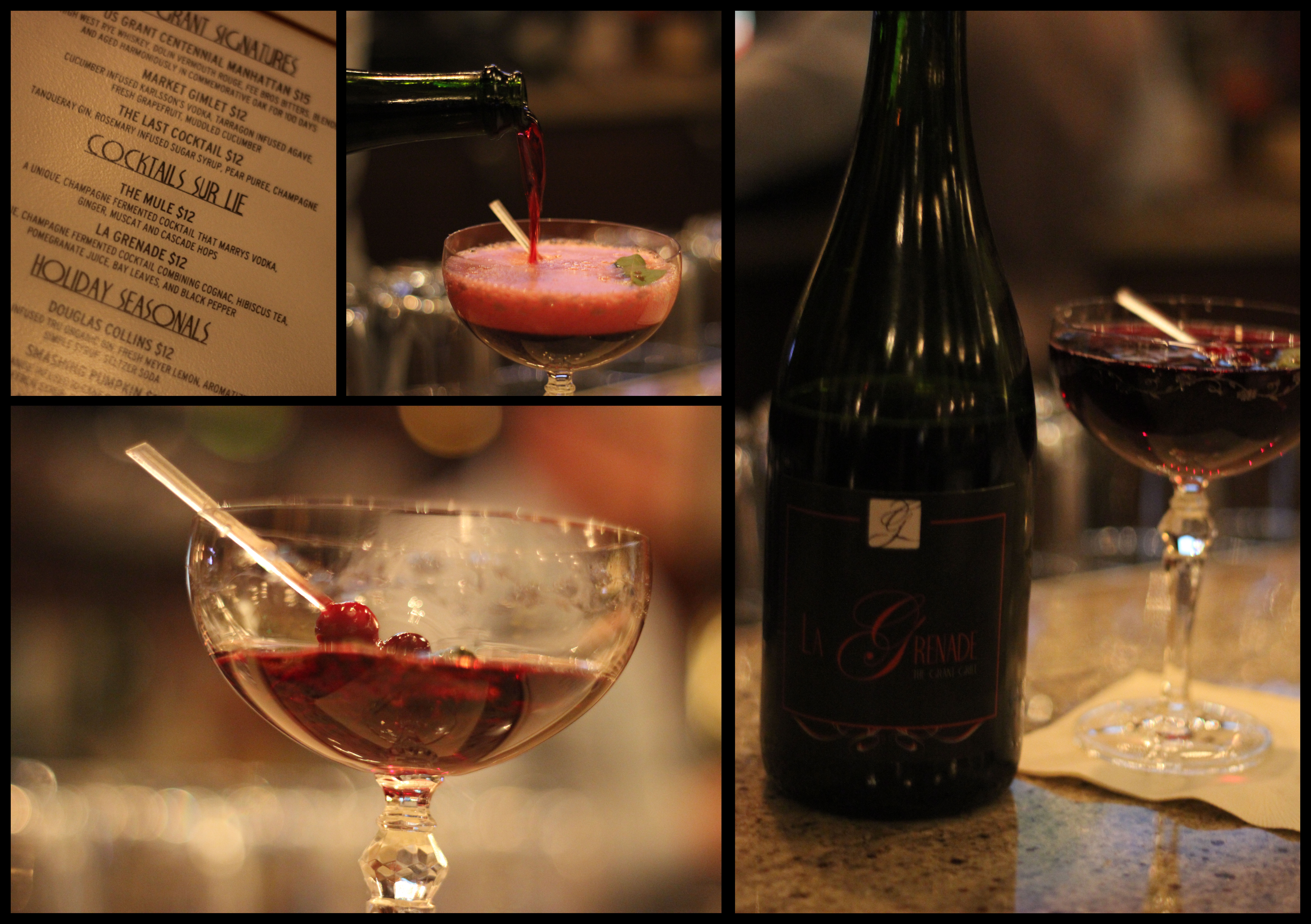
It’s hard. And Jeff Josenhans, at the Grant Grill, has managed to do it.

How cool.

La Grenade
Cognac
Hibiscus Tea
Pomegranite Juice
Black pepper
Bay leaf

Sadly I don’t have a recipe for you. I imagine, as a technical innovation, that’s under lock and key.

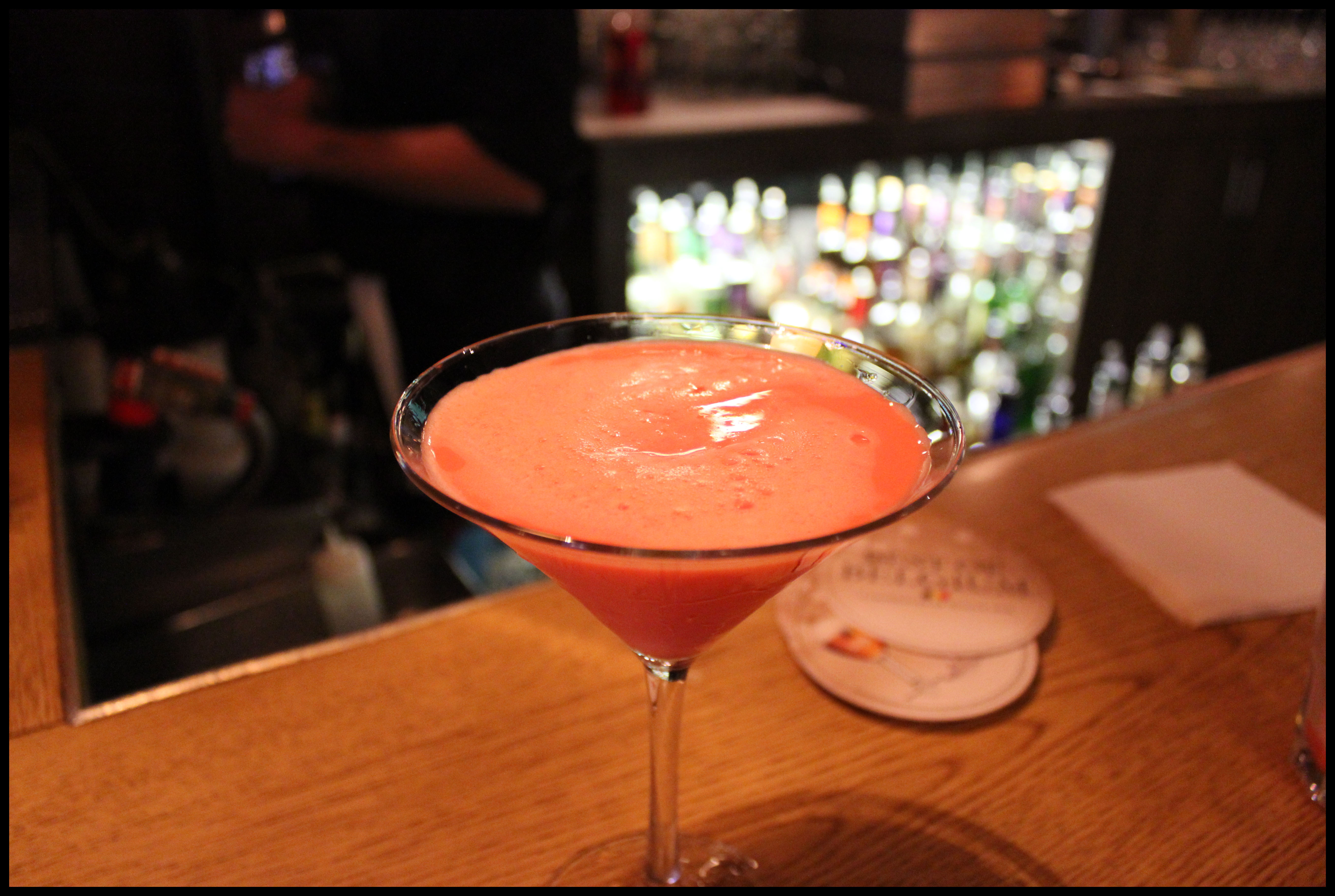
The cocktail is called “La Grenade,” which I wish was a reference to that exploding bottle business but is actually the French word for “pomegranate” (the same root as the pomegranate syrup Grenadine, if you were ever wondering). Initially the first impression is one of wine. The delicate carbonation combined with the floral element from the hibiscus and the tart juiciness of the pomegranate evoke a Lambrusco. The cognac is barely detectable, coming though as a kind of stickiness on the finish. The pepper adds a bit of spice, and the bay leaf just kind of hangs out.

If I’ve got my critical pants on, I’ll say I can’t help but feel like it might want for a little acid to help with that slightly thick finish. I notice that neither this nor the Mule (his other Cocktail Sur Lie, as he calls them, French for “on the lees” a.k.a. resting on yeast) use any citrus. I wonder if they mess with the fermentation process.

That said, this is delicious, something I would absolutely order again. As with anything cocktail-related I can’t do, I want to learn how to do this. Thus far, I’ve only learned enough to know how impressive it is that he actually pulled it off. This is a proper achievement. Check it out some time.

Fort Point (Smoked)

I used to work for a newspaper in Boston. Every couple of months we had a seasonal insert — “Summer Fun” or “Ski and Snowboard” or whatever — that were all themed articles, pretty much just filler to sell extra advertising space. So when I pitched them Christmas cocktails for the Holiday insert, I got an enthusiastic “why the hell not?!”

What are some nice holiday drinks? I spend an hour or so googling candy-cane martinis before I realized I could use this opportunity to literally subsidize my drinking, and decided to recruit my friend Nick for some boozy reconnaissance. We went to go to five different bars, and ask each bartender for two drinks that evoke Christmas for him or her in any way.

Two nice things came out of that night. The article was published (here), and I was given what is probably the best drink I know how to make.

It happens all the time at the bar: “I don’t know what I want. What’s your favorite drink?” I used to try to explain to them that my favorite is irrelevant, that I love bitter whiskey things but that’s a taste I’ve acquired over several years, that like a favorite movie or book or meal, one’s favorite drink can be tasty but not for everyone………… but I don’t do that anymore. When someone asks me for my favorite drink, I just say ok and make them this:

Fort Point (Smoked)
2oz Rittenhouse Rye
0.5oz Punt e Mes
0.25oz Bénédictine
Rinse of smoky scotch (Lagavulin works wonderfully, but really any smoky/peaty scotch will do).
Stir over ice; strain into cocktail glass rinsed with smoky scotch. Garnish with flamed orange peel.

Aside from the flamed orange peel, this is a creation of Misty Kalkofan and a subtle variation of the Fort Point, the house cocktail of Drink in Boston. The Fort Point is the same without the smoky rinse or the orange peel, so this isn’t different enough to earn its own name (nor should I name it, as I’m not its father), but this version is definitely my favorite.

Punt e Mes is a sweet vermouth made by same people as Carpano Antica, a little sweeter with brighter fruit flavors and a lot more bitter on the back end, making aromatic bitters unnecessary. With a backbone of rye and just a hint of that warm herbal sweetness from the Bénédictine, this is a phenomenal drink. It’s at once simple and grandly complex, each sip offering a different accent as it warms.

But the scotch. The scotch is what makes it both transcendent and niche. Without, it’s excellent for pretty much everyone who likes whiskey. With, it’s perfect for me. Though just a rinse it’s a definite presence, picking up where the others drop off and taking you blissfully into the finish. There are some flavors, some floral or smoky or herbal ones, which seem somewhat undimmed by mixing as if they exist on a different plane.

Remembering that, if you don’t like that medicinal peaty flavor of scotch, skip the rinse. But if you do, don’t. It’s divine.

BONUS! How to rinse a glass:

1. Pour a very small (<0.25oz) amount of rinsing liquid in the glass.

2. Tilt the glass over a container so the liquid approaches the rim, then slowly twist the glass while steadily dripping the liquid out, thereby coating the inside of the glass with the flavor without leaving too much volume behind.

3. Drink the liquid out of the container.

I really do love rinsing with scotch.

Widow’s Kiss

*** Note: a version of this article appears at RobbReport.com ***

“As the scene opens, you are up in your grandmother’s attic opening the dusty steamer trunk she brought from Europe in 1914. You reverently turn back layer upon layer of old lace and brocade … unveiling a packet of old love letters tied in silk ribbon. Ancient dried rose petals flutter down from between the envelopes.

This is what the Widow’s Kiss is like. Sweet, complex and darkly golden, thought-provoking and introspective. It is a cocktail of fall turning toward winter, and it wins [my] award as the most evocative drink ever. Have one by the fire.”

— Ted Haigh, Vintage Spirits and Forgotten Cocktails

There’s something about the Widow’s Kiss that compels people write about it romantically. It’s not just that it’s delicious, though it is. And it certainly has one of the best cocktail names in history. But there’s something else… as with the lovely Colleen Bawn, this drink uses Yellow Chartreuse and Bénédictine, both pungent herbal liqueurs, which lock into each other like a vacuum seal. They work wonderfully together, full and rich and infinitely complex. Add the apple brandy at their base and some Angostura bitters to spice the apples, and the result synergizes into wistfulness like a half-forgotten memory, and seems to force people to write about it like this:

On a chilly November evening, post-Dallas, post-Watergate, post-Florida, post-9/11, and not-yet-post-Iraq, there’s no small amount of satisfaction to be found in a drink that calls up a honeyed past, and provides a moment’s distraction from the bitter present.

— Paul Clarke @ The Cocktail Chronicles

Or consider The New York Herald, in the 1890s, writing an article about the drink’s creator George J. Kappeler and his bar the Holland House, declaring:

[The Widow’s Kiss is] the most passionate poem which the liquor laureates of the Holland house hand out.

Facile alliteration aside, I think you catch my point. People just can’t seem to help themselves.

Not that I blame them. The Widow’s Kiss is a wonderful drink, in any of its forms. Everyone agrees on the principal ingredients: Apple brandy (either the clean American kind or the earthier French Calvados), Yellow Chartreuse, Bénédictine, and Angostura bitters. Most agree on the proportions, preparation, and technique, as well, though there is some reasonable dissent. Here’s the thing: it’s really goddamn sweet. Tastes have grown drier in the 117 years since this drink’s invention. So there are three things that people do:

  1. Reduce the proportion of the liqueurs. It’s traditionally 2:1:1, and some very reputable people, like Jim Meehan in the PDT Cocktail Book, go instead 8:1:1. This or something like it is similarly recommended by Savoy Stomp, Eric Felten at the Wall Street Journal, and others.
  2. Do your best to water it down. Some, like David Wondrich in Imbibe, stick with with Kappeler’s original instructions to shake this drink instead stirring it. Shaking is considerably more effective to dilute and chill than stirring (100 seconds of stirring ≈ 12 seconds of shaking), and it also aerates, making the drink thinner. Others, as with the Stinger (another all-booze drink that’s too sweet), advise crushed ice to deliver the extra water.
  3. Deal with it. Accept the drink as it is and only serve it after dinner, at the end of the night, or any other time a sweet drink is called for.

After an exhaustive and grisly round of experiments, I am firmly in camp #3. My favorite recipe:

Widow’s Kiss
1.5oz Calvados [French apple brandy]
0.75oz Yellow Chartreuse
0.75oz Bénédictine
2 dashes Angostura bitters
Stir over ice, strain into cocktail glass; garnish with nostalgia.

Notes on execution:

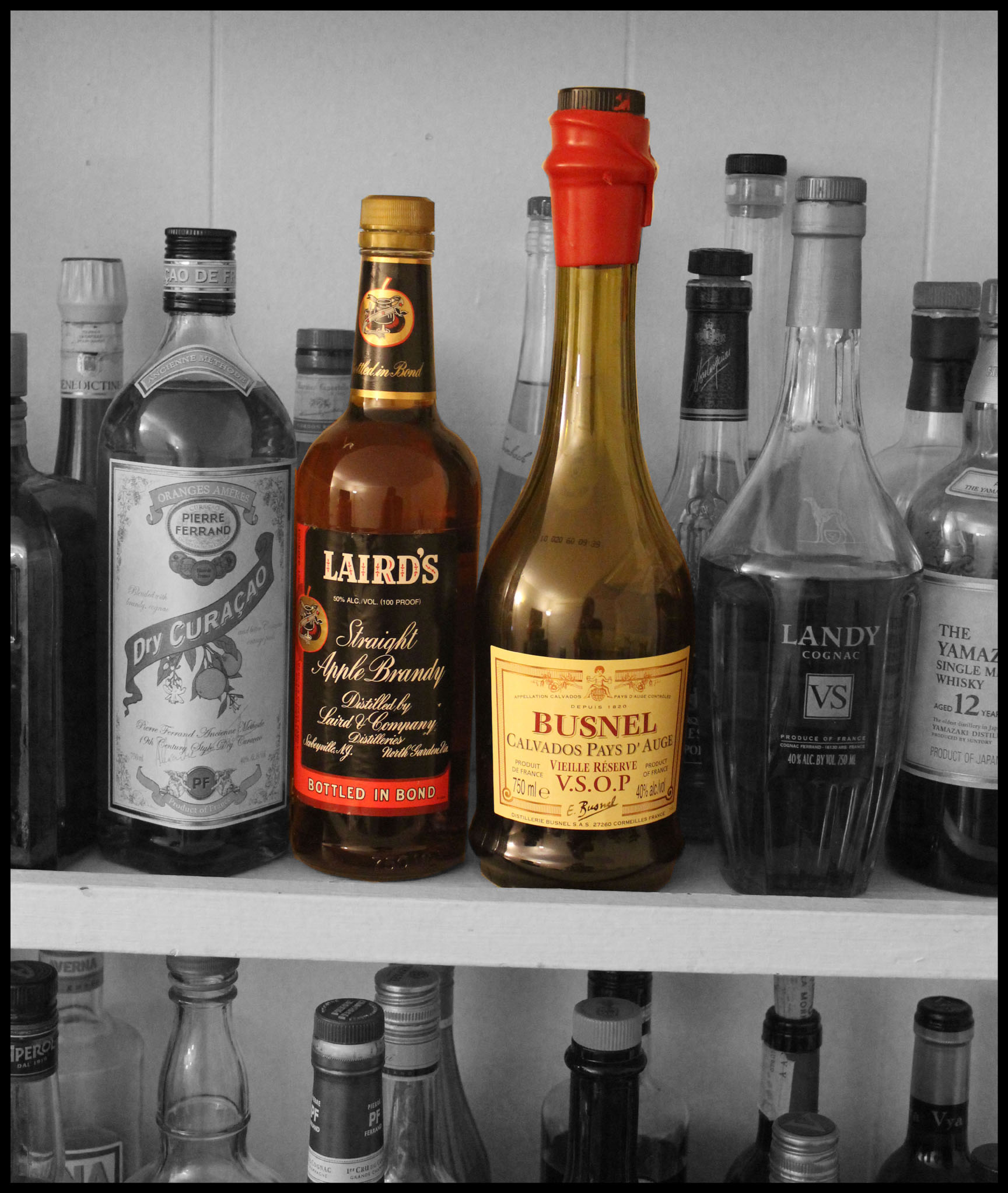
Insofar as calvados vs. apple brandy is concerned, go with calvados if you’ve got it. It’s a heavier spirit, more rustic and agricultural than American apple brandy, and it seamlessly fills the gaps left by the liqueurs and bitters. With calvados, use either no garnish or a neutral aesthetic garnish, like a cherry. If all you have is Laird’s Apple Brandy, or even worse, Applejack, feel free to make the drink but garnish with a lemon peel: the lemon oils offer a rather pleasant misdirection to compensate for the brandy’s lack of weight.

Whether to shake or stir (a.k.a. why above point #2 doesn’t really work): this kind of sweetness is only acceptable to the palate if it’s enrobed in velvet texture. Shaking makes it thinner, losing the silkiness and shoving the drink into diaspora: too sweet for a thin drink, too thin for a sweet drink. What I found curious about this experiment was that even though more dilution means less overall sugar/ounce, the shaken drink had an increased perception of sweetness. It needs the texture. That’s all there is to it. Stirring, for the win.

As for reducing the ratios of the liqueurs (a.k.a. How I Learned To Stop Worrying and Love the Sweetness): maybe you shouldn’t try to mitigate the sweetness. Maybe you should just accept that this is a sweet drink. My feeling is that the Widow’s Kiss is a perfect after-dinner-on-a-brisk-winter-night drink. Apple, honey, cinnamon spice… what could be better than that? It’s strong and warming, with no ingredients under 80 proof. It’s pungent and herbal, with complexity that unfolds over time. The sweetness helps neutralize the strength, the thickness helps justify the sweetness, and the flavors help recommend it all. They lean on each other like a tripod, and changing one brings the whole thing down.

That’s the problem with the PDT recipe. It’s fine, but it adapts the recipe to be an average anytime drink, as opposed to an exceptional after dinner drink. It loses the magic, the fifth essence, that ineffable harmony that makes Wondrich write things like “we don’t know if Kappeler had any particular widow in mind. If he did, she must have been something.”

Colleen Bawn

As I’ve already said, I think maybe more than once, it was in Boston that I learned how to drink. The bar that was singularly instrumental in teaching me was Green Street Grill in Cambridge.

It was the kind of bar people go out of their way for. Fortunately for me, I lived about 35 seconds from it, and it was there I had my first Old Fashioned, first taste of Fernet Branca, first flip, fizz, Collins, sour, etc., etc., etc. And it was there I had my first Colleen Bawn, then a fixture on their extended cocktail menu.

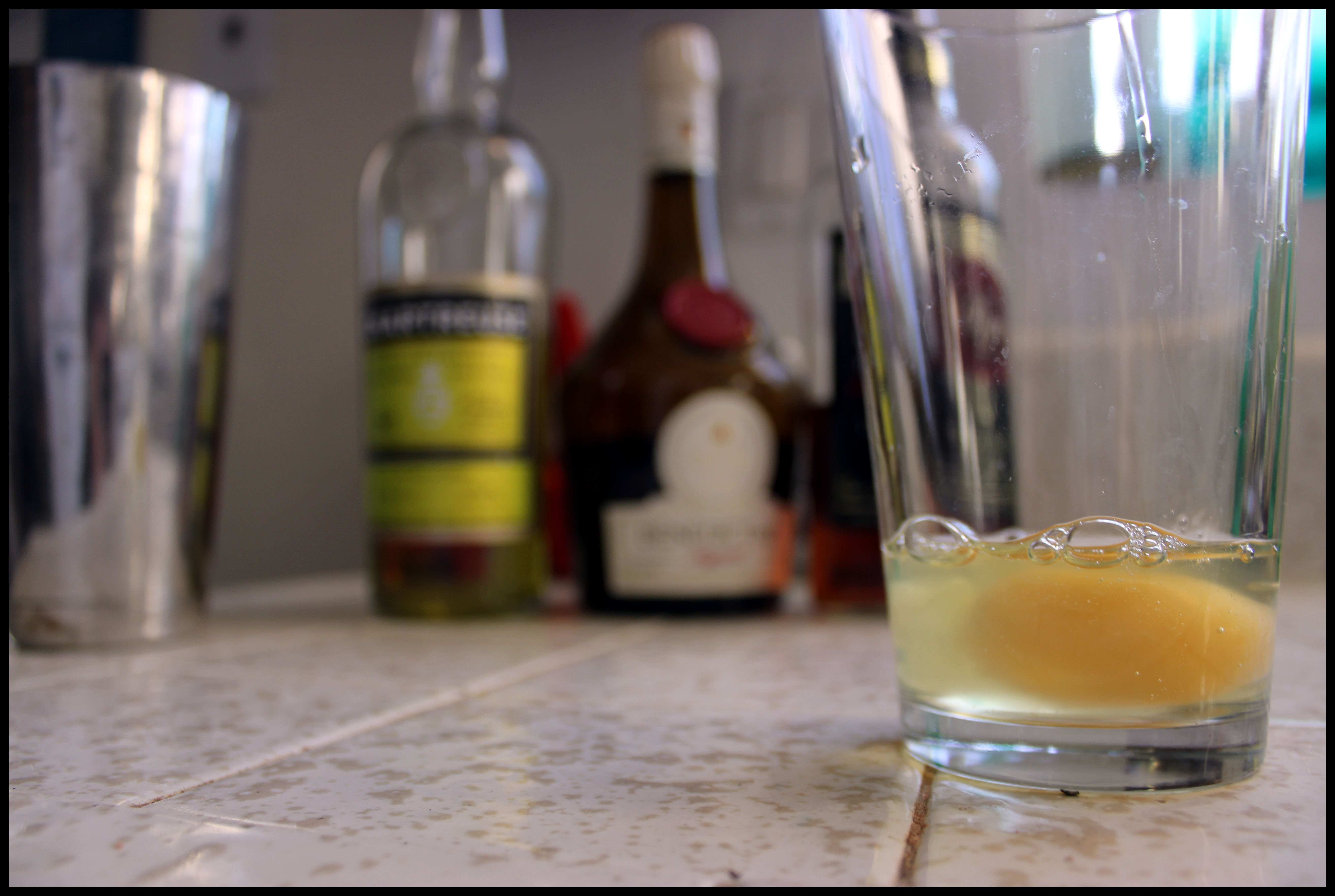
We ordered so many of them that winter that the bartenders used to groan when they saw Vikki’s bright red coat walk in the front door, because they knew they would be forced to make at least one egg drink. Eggs, you see, are a giant pain in the ass. You have to shake them once without ice and then once with, and with the ice you have to shake them forever, and you usually have to garnish ornately, artful dashes of bitters or hand-grated nutmeg or other such annoying flourishes that take up valuable doing-other-things time.

It’s worth noting, however, that we didn’t care about their groaning then, and I have even less sympathy for it now that I work with eggs myself. Never let a bartender make you feel bad about ordering a drink. If like Amaretto Sours, order an Amaretto Sour. I don’t care if you like Splenda Mojitos in January: you want what you want, and our job is to make it for you. Unless, of course, you order Ramos Gin Fizzes on a busy weekend night, in which case you can go fuck yourself.

Anyway.

The Colleen Bawn (meaning “fair girl,” from the Irish cailín bán) is the name of a play from 1860 by Dion Boucicault. It dramatizes the true story of Ellen Hainley, murdered at 15 by her wealthy husband and his servant. The murder of a beautiful young commoner and indictment among the aristocracy caused something of a stir, as you might imagine, and the story became about justice overcoming social class. Both men were hanged, and Hanley was interred under the inscription:

“Here lies the Colleen Bawn
Murdered on the Shannon
July 14th, 1819”

Once again, the connection between this cocktail and its name eludes me — my best guess is that it’s named after a “fair girl” because it’s so lovely, but who the hell knows? What we do know is that  it shows up in 1904 in Edward Spencer’s The Flowing Bowl, and it’s as good today as it was then:

Colleen Bawn
1oz Rittenhouse Rye
1oz Yellow Chartreuse
1oz Bénédictine
1 full egg
Shake without ice to whip the egg; add ice and shake with hearty vigor; strain into cocktail glass; garnish with grated nutmeg and/or cinnamon

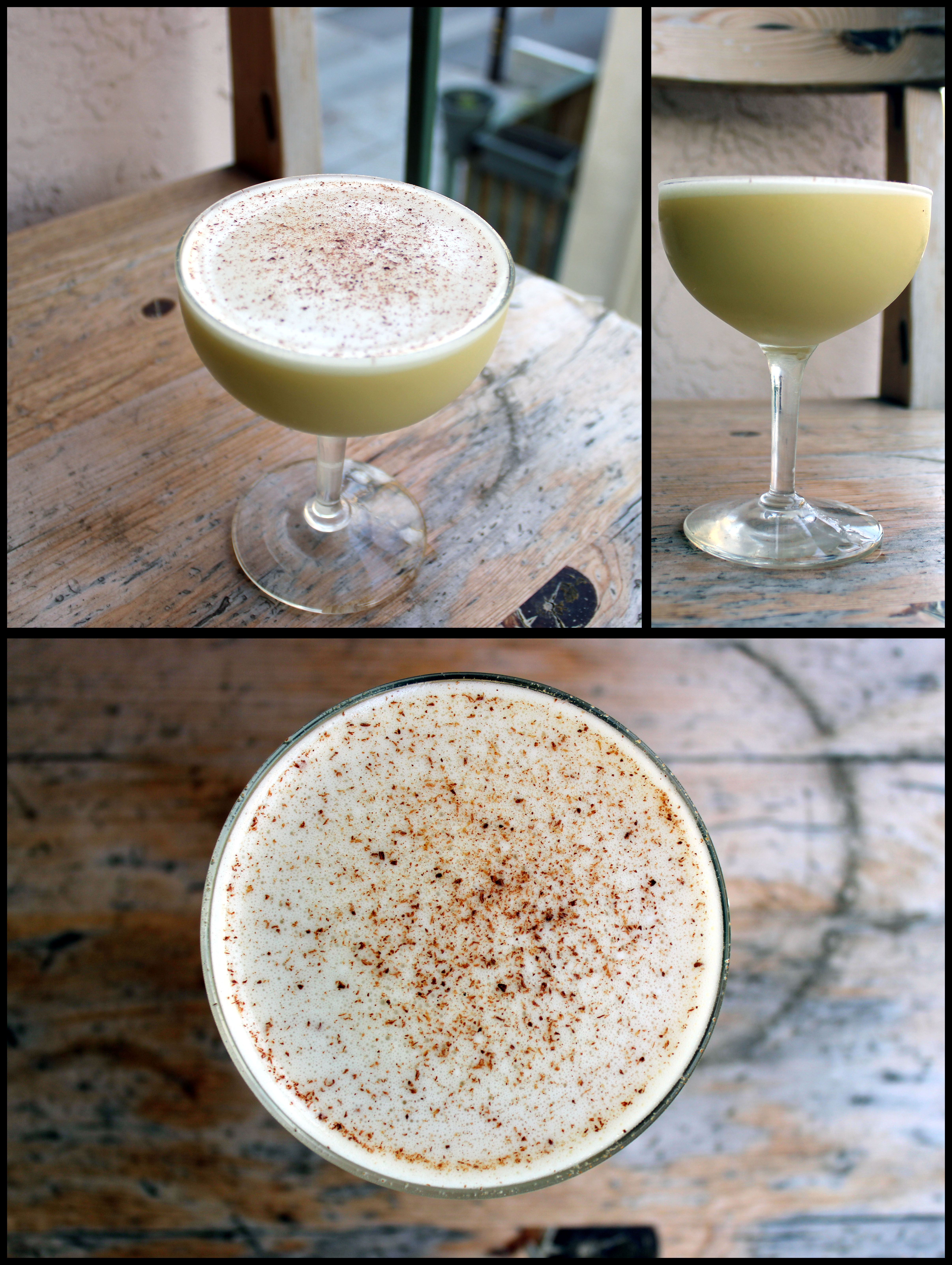
Yes, I realize I’m advertising a cold weather drink with pictures of sunshine. I live in San Diego. Deal with it.

The egg combined with the saffron in the Chartreuse gives the drink the color of custard, which texture-wise is not so far off. It is creamy with egg, smooth and a little thick. The rye, big as it is, is more for infrastructure than flavor; the liqueurs, as with the wonderful Widow’s Kiss, mix perfectly together. Individually, Yellow Chartreuse and Bénédictine are both full, pungent, herbal French liqueurs, and it seems kind of silly to put them together save for the fact that it works.

This is a drink of strange opposites: it’s highly complex but not difficult, it’s a little sweet but also a bit bracing. While it’s good any time, the thickness of the egg and the sweetness of the liqueurs (also that one cocktail is the equivalent of 3.2oz of 80 proof liquor) make the Colleen Bawn perfect as the last drink on a cold night.

Pink Squirrel

“Is there any alcohol in that at all?”

— Sam Seaborn

My grandmother’s go-to drink was whiskey & water. It was what she had around the house, and we her family used it sometimes as a weapon, deployed to mollify her late-afternoon grumpiness. I never did glean what her preferred whiskey was; it may have been Seagram’s 7,  but I’m pretty sure she didn’t give a damn one way or the other. It wasn’t special. There was no ceremony. For her, whiskey & water was a kitchen table, Tuesday afternoon drink.

For special occasions, though, when the outfits were removed from their thick reflective plastic, and the nice jewelry retrieved from the ornate chest on her dresser… special occasions called for a Pink Squirrel.

I had always assumed that it was a flapper drink, ordered at speakeasies by women in stringy dresses, and served in gently-sloped martini glasses so to not discompose one’s cloche. But it was not so. Paternity credit goes to Bryant’s Cocktail Lounge in Milwaukee, Wisconsin, who claim the drink was invented there by the owner, Bryant Sharp, in 1941. I’ve not seen any evidence, but in the absence of either competing claims or more information, we’re rolling with it.

It enjoyed some popularity even through the mid 70s, shifting  into obscurity not long after. They (Bryant’s) say it was originally with ice cream, but by the time it first showed up in print, in the 1966 edition of Old Mr. Boston, the dairy had morphed into heavy cream. And this is the recipe you’ll get pretty much anywhere. The original:

Pink Squirrel
1oz creme de noyaux
1oz white creme de cacao
1oz heavy cream
Combine ingredients in mixing tin; shake; strain into martini glass; no garnish.

Special thanks to the excellent bar at Hunter Steakhouse, the only bar I know absolutely for sure keeps a bottle of creme de noyaux.

There are a couple problems with this, the first and most obvious presented as a question: What the hell is creme de noyaux?

Noyaux (noy-yew) is a French word for “stone” or “kernel,” specifically the kernels found inside the pit of stone fruits (peaches, plums, apricots, etc.) Creme de noyaux is a bright red liqueur made from these peach kernels, which taste strongly of marzipan and bitter almonds. So it is, at it’s most basic level, a liqueur that tastes like almonds, even though it has no almonds in it.

It’s all but extinct now, particularly in the U.S., though you can find it here and there. The problem is that these kernels contain a compound which gets converted into hydrogen cyanide upon digestion. Which is bad. In fact, of all the words to follow “hydrogen” in terms of digestibles, “cyanide” is among the worst. So even the bottles you can find are probably flavored artificially, which is way easier than neutralizing cyanic compounds.

Sometimes arcane ingredients get resurrected, like creme de violette and Old Tom Gin, but I wouldn’t bet on a Noyaux revival because the liqueur is the capitalistically grim trifecta of being difficult to make, somewhat expensive, and in incredibly low demand.

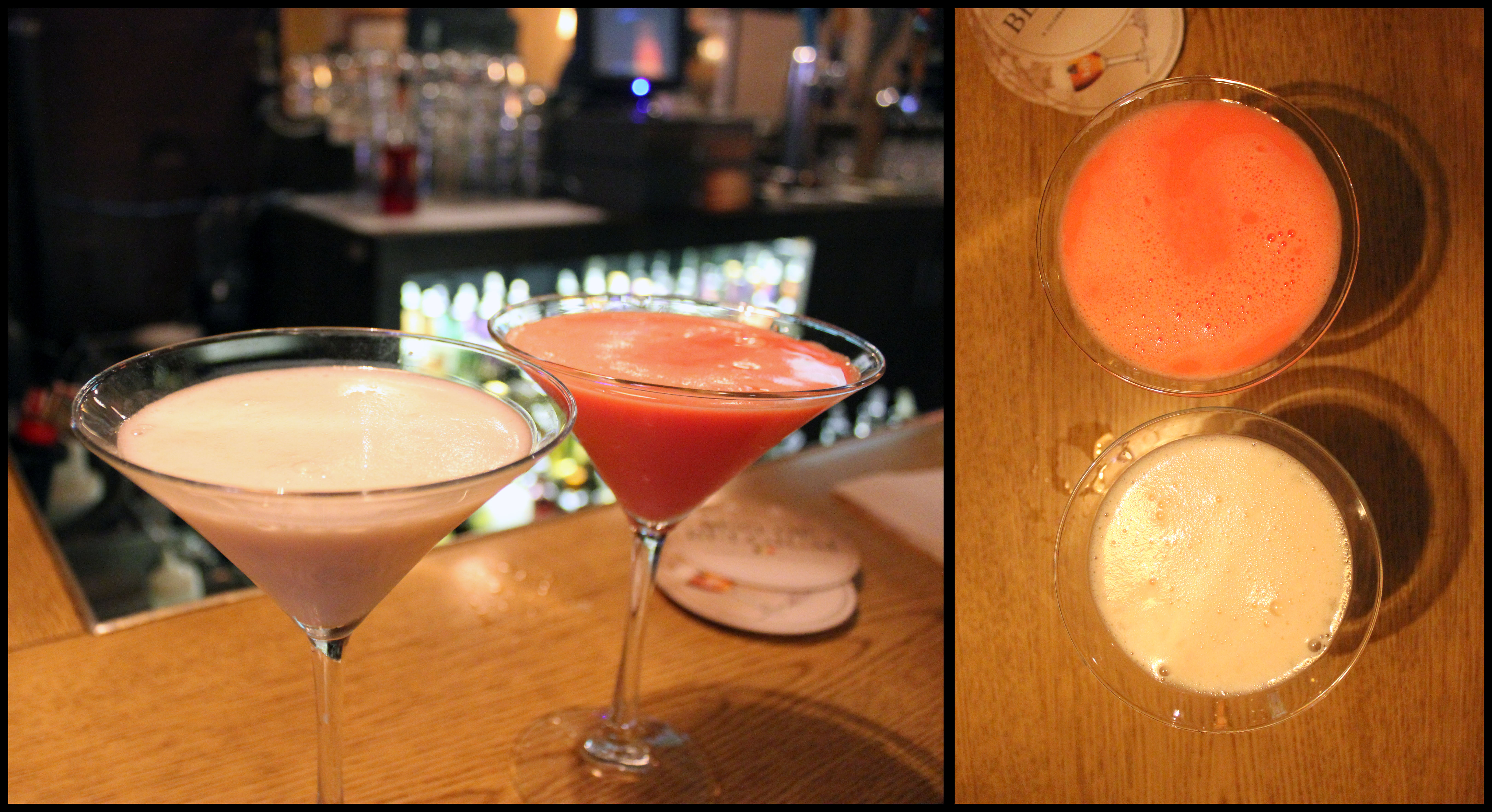
If you have creme de noyaux, artificial or not, go ahead and make that drink. Chocolate, almonds, and creme don’t need a cheerleader in me. For what it’s worth, I’ve never used heavy cream, opting instead for half & half or whole milk, pretty much whatever’s around. I wouldn’t go leaner than whole, but that and creamier will work fine. The faint bitterness of noyaux plays a small diplomatic role in mitigating sweetness, but be assured, this is bright pink dessert. It’s creamy. It’s sweet. It’s delicious.

If no noyaux, there are two alternatives. Well, three, assuming you’ve got a bucket full of peach pits and a heart full of danger.

(1) Make your own. A few intrepid bloggers have tackled the production, most notably Matthew Rowley, hydrogen cyanide be damned. I don’t recommend this, but do as you like.

(2) Use grenadine. Be advised, this makes an entirely different drink (often called Pink Squirrel #2). While it remains bubblegum pink, grenadine is chosen exclusively for its color, as the pomegranite/flower-water flavor has nothing whatsoever to do with bitter almond/marzipan of noyaux.  A chocolate and pomegranate mixture has charms all it’s own, but a Pink Squirrel it ain’t.

(3) Amaretto. Noyaux’s shares the tastes-like-almonds-though-there’s-no-almonds characteristic with (most) amaretto. Though amaretto is an almond liqueur, it usually gets its flavor from apricot pits. Flavor-wise, it’s a good call. But amaretto won’t get you a pink squirrel, rendering instead a light brownish-squirrel.

C’est la vie. We do what we can.

If you (for some reason) want to learn more about creme de noyaux, there is a reasonably complete discussion here.

BONUS PERSONAL FACT:

A short story: at my grandmother’s 70th birthday, in 1996, the whole extended family convened at a bar in Detroit. My aunt managed to source a bottle of creme de noyaux, and the Pink Squirrels were flowing with heady abandon. I was 12 at the time and, mesmerized by the lurid martini glasses abound, demanded a taste of this mysterious candy-colored beverage. It was so much better than the gross wine and barfy beer that I had tasted before that I proclaimed, much to everyones drunken amuseument, that “when I turn 21, my first drink is going to be a Pink Squirrel!”

Eight and a half years and 2500 miles from that point, my mother conspiratorially tells this story to my friends, so it’s decided and enforced that my first legal drink has to be a Pink Squirrel. We first tried the W Hotel in Westwood, who blinked absently at our requests for either the cocktail or the noyaux, so 12:05am on December 6, 2004 found us in the basement bar of the Beverly Hills Hotel, Pink Squirrel in hand. I took a picture and sent it to my Grandmother, who responded with the same kind of overwhelmed happiness that she did every time any of her grandchildren did anything.

12/6/2004 and 9/15/12:

“What did you expect?” Úrsula sighed. “Time passes.”
“That’s how it goes,” Aureliano admitted, “but not so much.”

— One Hundred Years of Solitude

Mane of Needles

“…soft as a mane of needles…”
The Mars Volta
Miranda That Ghost Just Isn’t Holy Anymore — B. Pour Another Icepick

At URBN, we take a measure of pride at being one of the only places in North Park to get a proper drink. Regardless of their individual background knowledge or off-menu skills, everyone behind our bar can make a great Old Fashioned, Manhattan, Negroni, etc. No one could legitimately call us a cocktail bar, and yet we’re a bar that can make great cocktails.

This is a tool in our belt that I refuse to give up. I don’t care one fucking bit that the nuance and balance of our drinks are wasted on 99% of our clientele. We don’t maintain quality just for them; it’s for us too. Or, at least, for me. Tending bar is not an inherently cerebral activity, and craft cocktails, for me, are what forestall the fungal ennui that grows on everything that doesn’t progress.

In that spirit, we left one spot on the winter cocktail menu for an drinker’s drink, something whiskey and potent. That drink is the Mane of Needles. Of the 10 or so cocktails on the new menu, this is the one I really like, the one for the enthusiastic minority of our customers that share my taste. It’s the only one I’d happily make for Scott Holliday or Misty Kalkofan or Tom Schlesinger-Guidelli or any of the other Boston greats who introduced me to this world. Borrowing inspiration from the Violet Hour’s wonderful Autumn Negroni, I combined my initial goal of marrying Fernet Branca and Benedictine with the layered-bitter thing that they did so well, and thus:

Mane of Needles
2oz Bulleit Rye
0.75oz Carpano Antica
0.5oz Campari
0.25oz Bénédictine
0.25oz Fernet Branca
1 dash Angostura Orange bitters

Stir ingredients in a mixing glass for 30 seconds; strain into a chilled cocktail glass; garnish with orange peel.

There’s something soft and accessible about Bulleit Rye, but at 90 proof it’s study enough to provide the infrastructure for this drink. I think of Carpano in this case as an emulsifier, with Campari’s robust bitterness playing against the sweet; the Bénédictine and Fernet, though just at a quarter-ounce each, are co-dependent enablers that play off each other to add spice and flourish. But it’s devil Fernet, with its peppermint oil and menthol, gives the Mane of Needles its name. The drink is, on the whole, soft and smooth with gentle bitterness and enough liqueur to make it silky, and yet while drinking it, the Fernet jumps up to offer little bridled pinpricks along the way.

This was also, of all the cocktails, the easiest to name. The experience of drinking it immediately reminded me of the Mars Volta lyric. It’s like petting a porcupine. But a delicious one.

Note: at URBN, we slightly modify the proportions to make it (1) easier to construct in a hurry, (2) less expensive for the consumer, and (3) not so much damn booze. The Mane of Needles (Album Version) is 1.5oz of Bulleit Rye, and 1.25oz of a 3:2:1:1 Carpano / Campari /Fernet / Bénédictine batch that we pre-make, with a dash of Angostura Orange bitters. This has the added effect of slightly increasing the ratio of rye to liqueur, which in the end makes the whole thing taste a little better anyway.

Trivia!“Soft as a mane of needles” is six words, which is the maximum amount of consecutive words you can quote from the Mars Volta — from any part of any of their songs — before you start getting strange looks. The full stanza, by way of proof:

“Punctuated by her decrepit prowl she, washed down the hatching gizzard.
Soft as a mane of needles, his orifice icicles hemorrhaged by combing her torso to a pile.”

See?

Autumn Negroni

When I was back in Chicago over Thanksgiving, Vikki, my sister Kelly and I took occasion to go to the Violet Hour — my favorite thus far of the Chicago cocktail bars, even if it is a faux-speakeasy. I’ve never really been into the whole  fake speakeasy idea, and am relieved that the trend seems to be dying. People sometimes forget that “pretense” is the root of “pretentious,” a fact I’m never more aware of as when I’m at a hidden, exclusive, “password-only” bar that I found by checking their address on yelp.

Regardless — once you find the stupid hidden door and wait at the stupid velvet curtain, actually being there is a very pleasant experience.

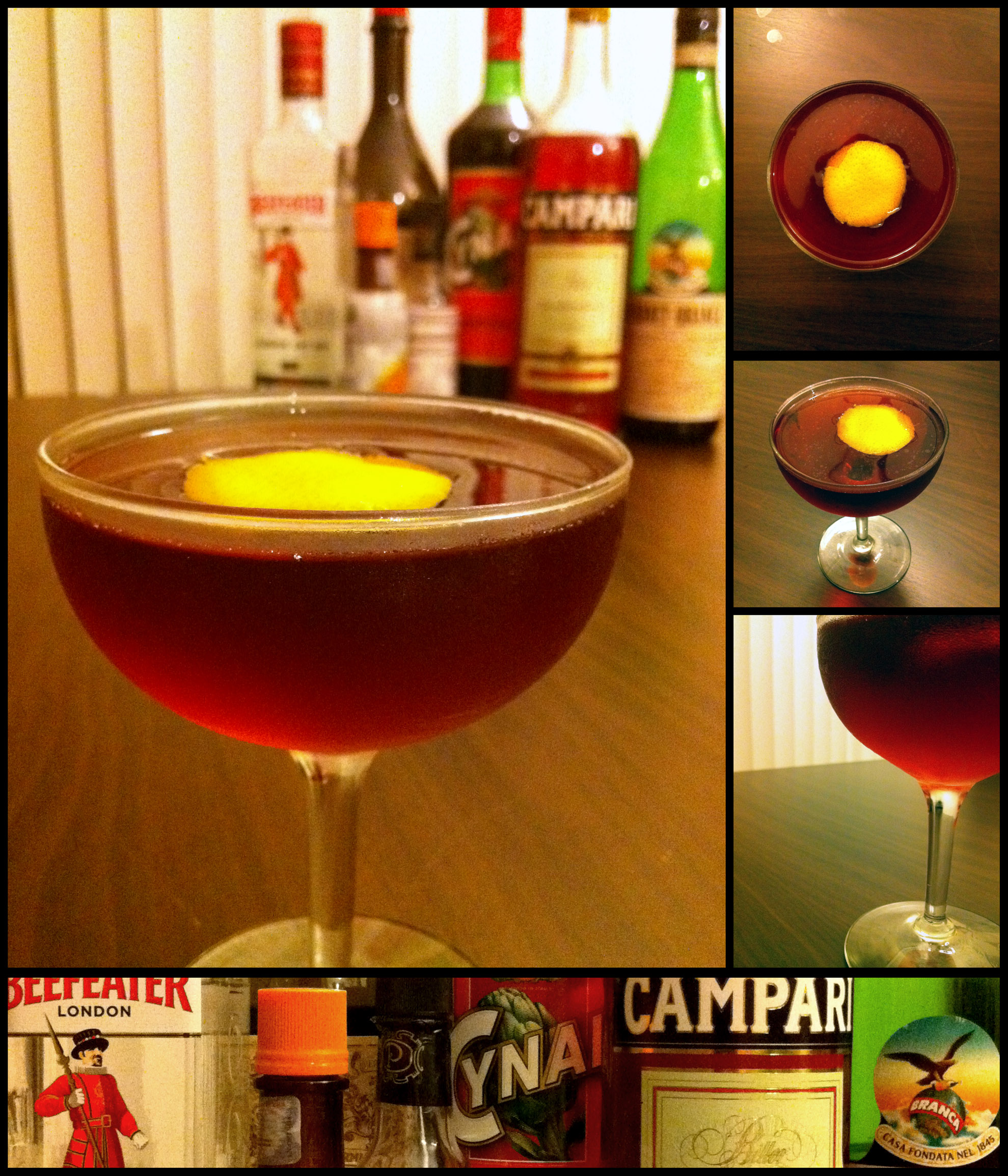
The standout drink I had there was called the Autumn Negroni, which on paper looked redundant. Five of the seven ingredients (71%) are bittering agents, and one could reasonably think that once you have Campari, Cynar, Fernet Branca, and Angostura Orange bitters, a dash of Peychaud’s seems like a waste of everyone’s time.

In practice, however, the bitters strip away individually and at different moments, yielding waves of flavors that make each each sip last like 10 seconds. Each ingredient picks up at the tails of the last one and carries the flavor for a while before handing off to another. It’s like a relay race, or cars of a train. This drink is so fucking good.

Autumn Negroni

2oz dry gin (Beefeater)
0.75oz Carpano Antica sweet vermouth
0.5oz Cynar
0.5oz Campari
0.25oz Fernet Branca
1 dash orange bitters (Angostura)
1 dash Peychaud’s bitters
Stir over ice and strain into coupe glass; garnish with orange peel.

I immediately asked them for the recipe, which they immediately gave me. Not to single out Saltbox, but I’ve made this drink for probably two dozen people, all of whom loved it, and all of whom now know where to get it if they ever find themselves in Chicago. I share recipes with anyone who asks. I firmly believe it makes all of us better.

Peychaud’s anise shows faintly on the nose alongside aromas of the sweet vermouth’s wine. But what’s so engaging about this drink is that you get to taste all the ingredients, more or less one after another. When taken, the sweetness of the amari mixes with the gin’s juniper, followed by the bittersweet Campari and the brightness of the orange bitters, but right when the Campari would turn rusty bitter that quarter ounce of Fernet Branca prickles up all peppermint and menthol, only to be batted back down by the long, earthy finish of the cynar.

Before this, I had no idea that bitters could layer in this way. I have since used this as the inspiration for the Mane of Needles, my favorite of the URBN cocktails and about which I’ll write soon.

This is the kind of drink that you keep going back to, keep taking small drinks because you identify something different in each sip, and when you feel like you’ve almost mapped all the flavors, you find there’s nothing left but sweetness on your lips and you have to do the whole thing all over again. Which is all I could ever ask from a cocktail. Four stars. A+.

Heering Flip

There are, believe me, no shortage of cocktail recipe books. And even someone with no experience with a single one of them could likely guess that most of them are complete garbage.

There are two easy ways to tell. The first is the easiest: generally speaking, the more recipes a book has, the worse those recipes will be. If the cover boasts more than, say, 750 of them, it’s probably an admittedly enormous collection of completely terrible drinks.  The second is almost as easy: flip to the recipe for a Margarita. If it calls for sweet and sour there (or really anywhere in the book), throw it away because it is worthless.

What we have left are the histories, the celebrated single-bar books, and the books with no recipe for a margarita (which is a promising sign). Beta Cocktails (formerly Rogue Cocktails) is an example of the latter. Written by Kirk Estopinal and Maksym Pazuniak, Beta Cocktails is a thin little number with about 40 recipes that range from imaginative to bizarre. It’s a fantastic and innovative mini-collection, great to jog the imagination, or just to try something totally new on a Sunday night.

Heering Flip

2oz Cherry Heering
0.5oz Bittermans Xocolatl Mole bitters
1 whole egg
1 pinch salt
Add all ingredients, shake with no ice to emulsify, add ice and shake the jesus out of it. Strain over fresh ice. Garnish the egg-foam head with three drops Mole bitters.

Yes, two ounces of Cherry Heering. Yes, a half ounce of bitters. See? Bizarre.

This isn’t so much a dessert drink as it is a dessert course. The nose was a predictable cherry and chocolate, but the first sip evoked chocolate milk and, strangely enough, pie. The egg serves to thicken the already very thick Heering base, and the salt only makes it more savory while offering a bit of sourness on the back end.

The overal impression was that the drink is cooler than it is delicious, but still very drinkable. And strangely balanced – while definitely a sweet drink, it’s not too sweet as the ingredients might suggest. It is, however, exceptionally thick and rich. This is for someone who’s done with their food but still hungry. I will definitely make this again.